
In Memoriam
Kitty Preyer
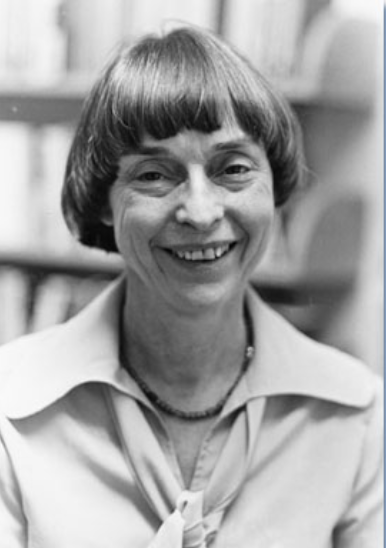
Kathryn Conway Preyer (1924-2005), known to her many friends and admirers as “Kitty,” was among the most accomplished legal historians of her generation, as her selection in 1999 as the first woman Honorary Fellow, the ASLH’s highest honor, attests. She also had great generosity of spirit and care for early career scholars. Her critique was legendary, because she combined passionate commitment to excellence and beautiful prose with helpful (and bracing) enthusiasm. Kitty’s esprit left a mark on the field, in particular on the Society, where the annual (and highly sought-after) Kathryn Preyer Award brings talented new legal historians to our annual conference, where they present their work. The Preyer Panel also features senior leaders in the field, who are inspired by Kitty’s mentorship and who comment on Preyer fellows’ work – generally to a packed conference room. Kitty’s legacy is thus celebrated annually, but some of our members may not know about her life and work.
Kitty was born in Baltimore on December 3, 1924 and died at home in Lexington, Mass., on April 19, 2005. She graduated from Goucher College and trained in history at the University of Wisconsin. For almost her entire teaching career, she taught at Wellesley, where she chaired the department and served on many key college committees. A Carnegie Fellow at Harvard Law School in 1962-1963, she also received a fellowship from Harvard University and a National Endowment for the Humanities Fellowship. She won the Surrency Prize of the American Society for Legal History in 1984 for her article, “Crime, the Criminal Law and Reform in Post-Revolutionary Virginia,” which was published in the first issue of the Law and History Review. She was an invaluable member of the Editorial Advisory Committee of The Documentary History of the Supreme Court, 1789-1800, and a longtime member of the Massachusetts Historical Society — the first woman named to its governing council and vice president from 1980- 1995. After her death, her family and fellow legal historians created the Preyer Awards, in recognition of her exemplary service and unsurpassed joy in fine new scholarship.
Kitty described her work as an exercise in probing “the various ways in which English law became altered in the post-Revolutionary United States and the means by which knowledge about the law spread to an audience far beyond bench and bar.” Nine of her articles were republished in Blackstone in America: Selected Essays of Kathryn Preyer (Cambridge Univ. Press, 2009). These essays demonstrate her ability to analyze and contextualize high-stakes political, jurisprudential, and constitutional debates of the early Republic.
It seemed natural that she would collect antiquarian books relevant to her academic interests. Her collection of old law books was her generous legacy to the Boston College Law Library, where they became the focus of an exhibition in 2006. They are now nestled there, waiting to support the scholarship of others.
John D. Gordan, III Maeva Marcus