
In Memoriam
James Brundage
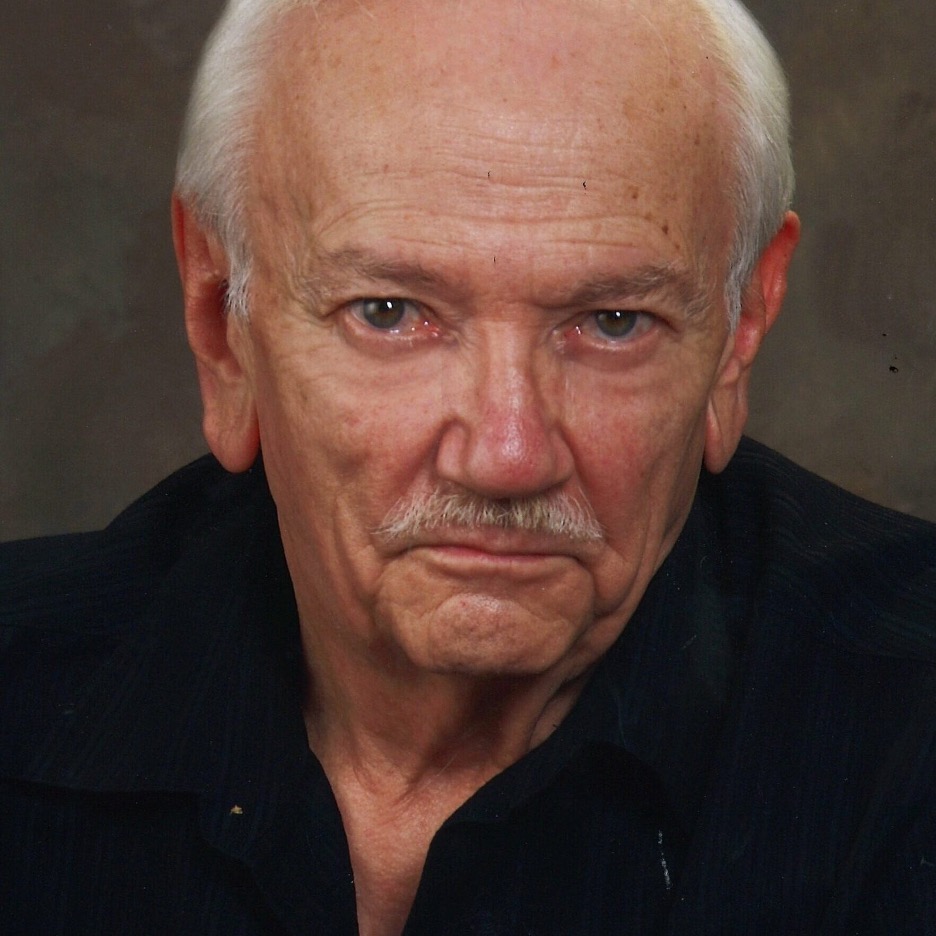
James A. Brundage (1929–2021) was one of the most important American medievalists of the twentieth century. His work was acclaimed here and abroad. Starting with a study of the canon law and the Crusades, Brundage’s interest in the laws of the medieval church gradually widened. It deepened as well. He brought to light the canonistic contributions to subjects as diverse as the ethics of the legal profession to the role of women introduced as witnesses in cases brought before the courts of the church. He was a regular and enthusiastic participant in the International Congresses of Medieval Canon Law. They are held every four years, alternatively in Europe and the United States, and his scholarly contributions to the field were published in its Proceedings of the Fifth, Seventh, Ninth, Tenth, Twelfth and Thirteenth Congresses―extending from 1976 to 2018. He also attended numerous meetings of the ASLH. The subjects he illuminated in these and many other settings ranged widely―from legal ethics to sexual practices. His standing among his fellow canonists led to regular invitations to contribute to the Festschriften compiled to honor many American and European scholars. He was chosen to deal with legal education in the law of the church as it was taught in medieval European universities for the fundamental History of Medieval Canon Law published by Catholic University Press in 2008. Most notably, his introduction to the general subject, Medieval Canon Law, published by Longman in 1995, quickly became a standard and reliable point of entry and reference. It has been widely used by both experts and tyros alike.
Brundage was born in Lincoln, Nebraska and attended the University of Nebraska. He graduated from Nebraska with a BA in 1950 and a MA 1951. His MA thesis was a translation of Henry of Livonia’s Chronicle, which described the Christianization of modern Latvia. He published his translation in 1961 and issued a revised edition in 2003. Henry of Livonia introduced him to the history of the Crusades, but when he went to Fordham University for a Ph.D. the Crusades took a temporary back seat to the agricultural fields of England. His supervisor was Jeremiah O’Sullivan, one of a small group of Catholic scholars who were brought to the University in 1930s to enhance the graduate program. Brundage’s dissertation was an edition of the account books (compoti) of the Cistercian monastery at Whalley that he completed in 1955. He did not find the work captivating. After he left Fordham, agricultural history disappeared permanently from his scholarly interests. In 1957, he was appointed as an assistant professor at the newly established University of Wisconsin, Milwaukee (UWM) where he remained until 1989 when he was appointed the Ahmanson-Murphy Distinguished Professor of History at the University of Kansas. He retired from Kansas in 2000. He is buried in the Pioneer Cemetery for faculty and staff on the Kansas campus.
His scholarly interests developed in many intriguing ways. After arriving at UWM he returned to the crusades and published a Documentary History of the Crusades in 1962 and The Crusades: Motives and Achievements in 1964. At the same time, he turned to an entirely new field, legal history. In spite of having had no formal training in law or legal history (although Stephan Kuttner’s ‘Bulletin of Medieval Canon Law’ began to be published in Fordham’s journal Traditio in 1955), Brundage very quickly developed expertise in medieval canon and Roman law that he then applied to the history of the crusades. The result was the publication of his Medieval Canon Law and the Crusader (1969), a path-breaking book that would help to convince historians that legal history was not just the study of doctrine but also a tool to understand the actions of people in society.
Brundage’s intellectual horizons always expanded as he sought new fields to cultivate. In 1974, he published a biography of Richard the Lion-Hearted while at the same time he wrote his first essays discussing the ethics of the legal profession and the jurisprudence of marriage and sexual relationships. His research into sexuality also resulted in a massive work Law, Sex, and Christian Society in Medieval Europe (1987). He became famous in the profession for his clever titles of essays as his wit and quiet but sly sense of humor inside and outside the classroom emerged in his scholarship: “Carnal Delight: Canonistic Theories of Sexuality” (1983) “Let me count the ways: Canonists and Theologians Contemplate Coital Positions” (1984), and “Allas! That Evere Love was Synne” (1986) and, of course, the famous “Feeling Randy” sexual flow-chart that he published in his Law, Sex, and Christian Society. Medievalists discussed and commented on it (mainly outside the classroom), and the flow chart was even reproduced and analyzed in an essay in The Atlantic (January 27, 2014).
Brundage’s investigations into legal practice culminated in his last book and magnum opus The Medieval Origins of the Legal Profession: Canonists, Civilians, and Courts (2008). While Law, Sex, and Christian Society is probably better known, this remarkable synthesis needs to achieve the recognition among historians of European law that it fully deserves.
It is quite striking that Brundage ploughed old fields and several new ones side by side until the end of his life. He never stopped thinking and working on Henry of Livonia, the Crusades, sexuality, and the legal profession.
Brundage’s teaching covered the same broad range as his scholarship. He taught a panoramic array of undergraduate and graduate courses and was especially patient with students who needed special tutoring to master the scripts of medieval manuscripts or the complicated and opaque organization and language of medieval law books. He was generous with his time and unstinting with his attention and care to help students achieve much more than they otherwise would have. He was the epitome of a caring teacher.
Brundage was elected fellow of the Medieval Academy of America in 1990, became a fellow of the Royal Historical Society, was a life member of Clare Hall Cambridge, and a member of the Board of Directors of the Stephan Kuttner Institute of Medieval Canon Law.
Jim Brundage never forgot that he came from Nebraska, and virtually his entire life was spent in heartland America. He moved easily in a circle of international scholars without ever acquiring the pretensions that characterize some of that group. He was an honest mentor and friend. We will miss him.
(Charles Donahue, Richard Helmholz, Ken Pennington, Edward Peters)