In Memoriam
David J. Langum, Sr.
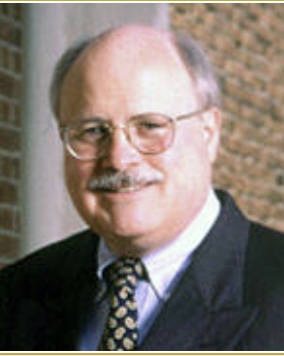
David Langum died on March 29, 2026 at age 85 in his home in Birmingham, Alabama.
An eminent legal historian and prolific scholar, David authored eight books and dozens of academic articles and book reviews. He taught legal history, property law, evidence, and real estate law at the Cumberland School of Law of Samford University as a professor of law from 1985 to 2005 and served as a research professor there from 2005 until his death.
David, born in 1940 and raised in Elgin, Illinois, graduated from Dartmouth in 1962 and Stanford Law School in 1965. He received a Doctor of Juridical Science degree from the University of Michigan in 1986. After law school, he was an associate for two years with a San Francisco law firm before serving as a partner in a San Jose law firm, from 1968 until 1978. He then joined the faculty of the Detroit College of Law from 1978 to 1983 and was interim? dean of the Nevada School of Law in Reno from 1983 to 1984.
David’s first and best-known book, Law and Community on the Mexican-California Frontier: Anglo-American Expatriates and the Clash of Legal Traditions, 1821-1846 (University of Oklahoma Press, 1987) received the James Willard Hurst Prize for Outstanding Scholarship in Legal History, the Caroline Bancroft History Prize, the J.S. Holliday Award for Excellence of Scholarship in the Area of Nineteenth-Century California History, and the Herbert Bolton Award in Spanish Borderlands History. The book has become a classic, read by generations of legal historians interested in the conflict of legal cultures, Southwestern American law and history, and colonialism.
His two other major books were Crossing Over the Line: Legislating Morality and the Mann Act (University of Chicago Press, 1994) and a biography of the activist lawyer William M. Kunstler, published by New York University Press in 1999. He co-authored a history of Cumberland, From Maverick to Mainstream, published by the University of Georgia in 1999. His other books include a co-authored biography of California pioneer Thomas O. Larkin, published by the University of Oklahoma Press in 1990; a biography of the nineteenth-century California entrepreneur Mary Bennett Love, published by Texas Tech University Press in 2014; and a biography of an ancestor, titled Antonio de Mattos and the Protestant Portuguese Community in Antebellum Illinois (Morgan County Historical Society, 2006). His memoir and final book, The Joy of Scholarship: Teaching Law and Writing History, was self-published in 2020.
David was an active scholar until the very end of his life, and a book he co-edited with one of his daughters, Virginia E. Langum, Women Traveling by Themselves in Nineteenth Century America: A Critical Anthology of Anglo-American Women’s Travel Writing, will be published later this year by the University of South Carolina Press.
David was a member of the Board of Directors of the American Society for Legal History from 1992 to 1995 and served as program chair in 1991. During the autumn of 1991, he was a Golieb Fellow at New York University.
A harsh critic of governmental abuse of power, David served as president of the Alabama chapter of the American Civil Liberties Union (ACLU) from 2000 to 2002 and as a director from 1999 to 2009. Calling attention to misuse of power also motivated David’s book about the Mann Act and his biography of Kunstler. David relished confrontations with abusive authorities, and he once spent a day successfully challenging a traffic ticket in a small Alabama town. David also was instrumental in helping to integrate special needs children into Alabama public schools.
On a personal note, David was one of the reasons I chose to teach at Cumberland. When he interviewed me in 1988, I asked whether Cumberland was big enough for two legal historians. “Your work would complement mine,” he replied. For nearly forty years, we critiqued one another’s manuscripts and had countless conversations about legal history. He was a loyal friend and mentor, and a model of collegiality.
David was exceptionally frank and ingenuous; he disdained feigned courtesy, which on occasion could ruffle feathers. He once emphatically informed me that he had never liked the wine I brought when invited to dinner. I asked him to suggest a substitute, and he recommended a wine that tasted better and cost less.
Finally, David was a committed philanthropist. He also believed that too many academics fail to reach a broader audience. This inspired him in 2001 to establish the Langum Foundation, which confers the annual David J. Langum Prize in American Legal History or Biography to a book that has outstanding scholarship and is accessible to general readers. Recent recipients include Beth Lew-Williams, Risa Goluboff, Sarah Seo, and John Wood Sweet. The Langum Foundation also awards a biennial prize for publications or films about persons who make significant contributions to their local communities, and from 2002 until 2024 awarded an annual prize for American historical fiction. In 2025, David also donated his house to the Langum Foundation, for use as a retreat for writers of history and literature.
William G. Ross
Albert P. Brewer Professor of Law and Ethics
Cumberland School of Law, Samford University