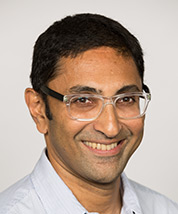
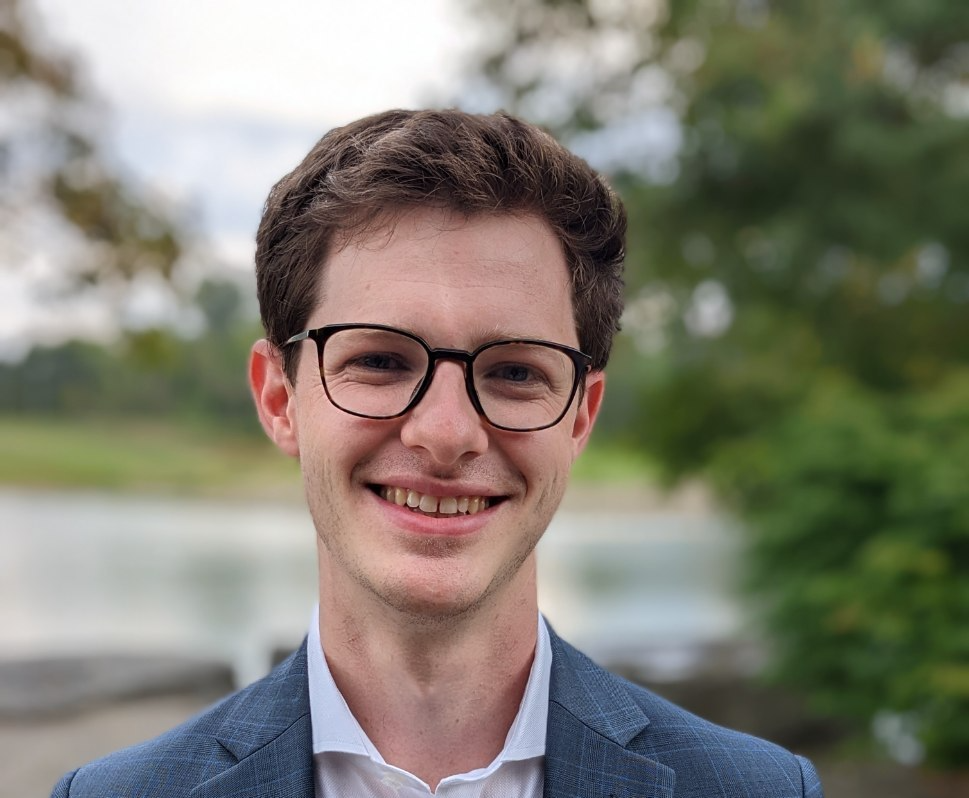
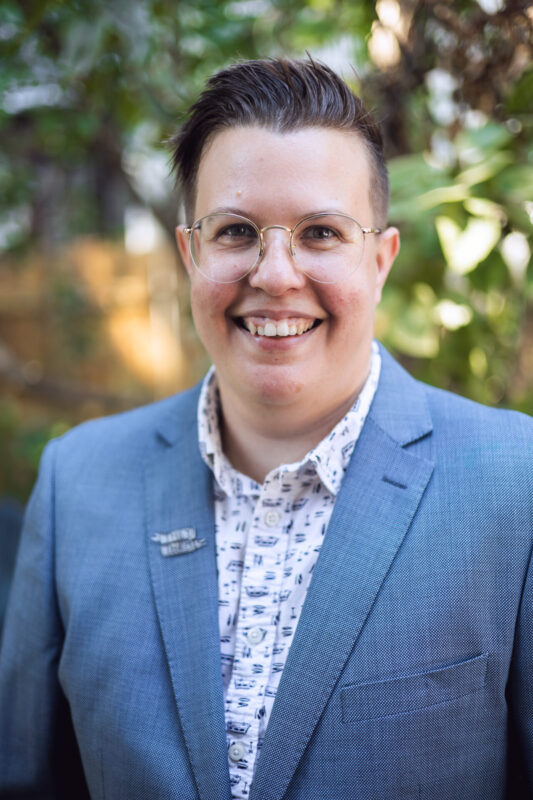
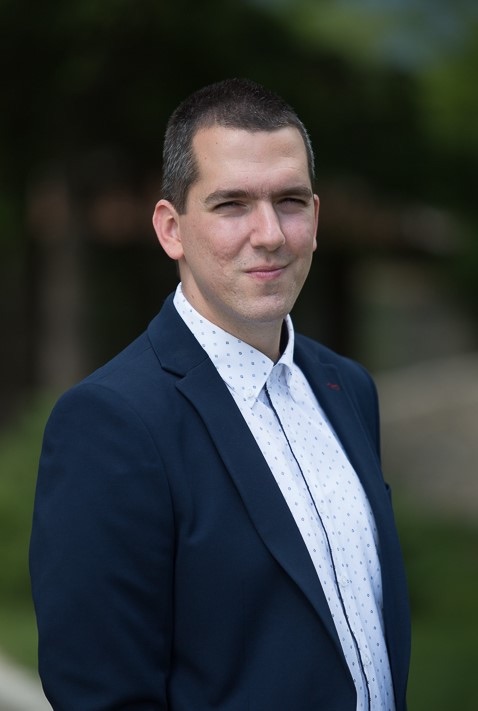
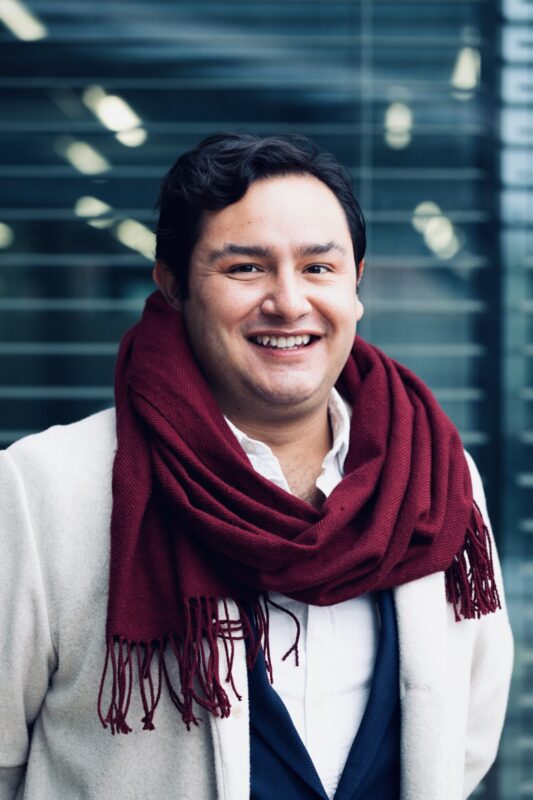
I am the Winship Distinguished Professor of History and Associate Professor of Atlantic World History at Emory University, where my research focuses on race, slavery, and property ownership in Latin America. My first book, Patchwork Freedoms: Law, Slavery, and Race beyond Cuba’s Plantations (Cambridge, 2022), explored how rural Afro-descendants’ claims to property coalesced into freedom demands and the political pursuit of independence for the island. It received four prizes, including the Peter Gonville Stein Prize from the ASLH. My next book examines Havana’s seventeenth-century popular economy, the role of credit, and enslaved people’s experiences of collateralization. I also collaborate with colleagues based in Cuba and am involved in a three-year NEH project on ideologies of value and early-modern Atlantic World economies.
I have served the ASLH as a member of the program committee and the Peter Gonville Stein Book Prize committee, and as co-organizer, with Prof. Bianca Premo, of a virtual working group on consent (2025–26). The ASLH was an essential space for building intellectual community in the formative years of my career, and it remains a place where I feel that I can ask big questions fearlessly. That kind of intellectual space grows ever more valuable as resources within our institutions shrink. As a member of the board, I would continue supporting the Society’s initiatives for emerging scholars while advocating for the development of more programs for mid-career and senior scholars, ensuring that the ASLH nurtures its members at every stage of their careers.
Deborah Dinner:
I am the Dorothea S. Clarke Professor of Law at Cornell University, where I am also a member of the graduate fields in History and Feminist, Gender, & Sexuality Studies. I study the legal history of gender and capitalism, with particular attention to the relationship between law, social movements, and political economy. My book, Feminism Lost: Work, Care, and the Law, 1964-1996, is forthcoming in the Cambridge University Press Studies in Legal History series (Spring 2027). I am now pursuing projects on identity and the regulation of risk: one examining debates over sex discrimination in private insurance during the 1970s and 1980s, and another tracing the history of viatical settlements from the Progressive Era through the AIDS epidemic.
I have benefited enormously from the intellectual community, professional support, and collegiality of the ASLH, from graduate school through the mid-career stage. I have enjoyed contributing to the Society in a variety of roles, most recently as Co-Chair of the Program Committee for the 2025 Annual Meeting. I have also served on the Surrency Prize Committee (Chair and Member, 2020-22), the Cromwell Prize Committee (2019), the Dudziak Digital Legal History Prize (2019), the Reid Prize Committee (2014-15), and the Local Arrangements Committee (2012).
As a member of the Board of Directors, I would work to strengthen the Society by broadening representation across chronological and geographic periods as well as diverse institutions, championing the Society’s longstanding and deep commitment to junior scholars, and increasing member engagement between annual meetings.
Kellen Funk:
I am the Michael E. Patterson Professor of Law at Columbia Law School, with affiliate faculty status in the Department of History at Columbia University. I principally study the history of American civil procedure and remedies, drawing on cultural and intellectual history as well as emerging methods in data science and digital legal history.
My first book is Law’s Machinery: Reforming the Craft of Lawyering in America’s Industrial Age (Oxford 2025). It accounts for the modernization of American legal practice in the hands of New York lawyers who inhabited a context of liberal Protestantism and merchant finance. My latest work takes up the history of bail bonding practice and bail reform from the Early Republic (“Bail at the Founding”) through the Gilded Age (“The Reconstruction of American Bail”).
ASLH has been an intellectual home since my earliest days in graduate school. I was a Hurst Fellow in 2015, and I sent so many drafts to the Preyer Committee they read nearly my whole dissertation. In 2016, I hosted a pre-conference on digital methods for the Society and am now pleased to serve on the Dudziak Digital Legal History Prize Committee with one of the scholars who was introduced to digital methods there. I have also had the pleasure of serving on the Publications Committee since 2022, when the Society’s contract with Cambridge was significantly revised to account for a more digital, open-access world.
I am honored to be considered for the Society’s Board of Directors.
Marie-Amélie George:
I am a professor of law at Wake Forest University and a scholar of LGBTQ+ legal history. My 2024 book, Family Matters: Queer Households and the Half-Century Struggle for Legal Recognition, appeared in the ASLH’s Studies in Legal History series with Cambridge University Press. My current project is titled A Fierce Rage: AIDS and the Radical Reimagination of American Law.
The ASLH is a special organization: it brings together a diverse, deeply engaged, and genuinely friendly worldwide network of scholars. I discovered the Society in my second year of graduate school. Since then, I have regularly attended and presented at annual meetings, helped organize two pre-annual meeting symposia (2025, 2026), co-convened an ASLH virtual working group (2025-2026), and published in the Law & History Review and its online companion, the Docket.
The Society has generously supported my work through its intellectual exchanges, two Cromwell Fellowships (2016, 2020), and the Wallace Johnson Program for First Book Authors (2019). I have sought to give back, serving on the Cromwell Article Prize Committee (2024-2026, chair 2025-2026) and the Cromwell Fellowship Committee (2020-2023). I have also completed reviews for the Law & History Review and Cambridge University Press.
I would be honored to serve on the ASLH’s board of directors, where I would seek to advance the Society’s efforts to support emerging scholars and emerging fields alike. It would be a privilege to help make the ASLH as welcoming a home for the next generation of scholars as it has been for me.
Jonathan Gienapp:
I am Professor of History and Law at Stanford University who focuses on the constitutional and legal history of the early United States.
My latest book, Against Constitutional Originalism: A Historical Critique (Yale UP, 2024), explores the intersection between law and history by critiquing how originalism, the controversial and now-ascendant theory of U.S. constitutional interpretation, engages with the American constitutional past. I am also the author of The Second Creation: Fixing the American Constitution in the Founding Era (Harvard UP Belknap, 2018), which explores how the U.S. Constitution was debated in the decade after it was ratified. I am currently at work on a book on the forgotten history of the Preamble to the U.S. Constitution.
I have long been an active member of ASLH, regularly attending the annual meeting since graduate school. From the beginning, I have been struck by the collegiality and rigor of the organization and have come to regard it as one of my primary intellectual homes. I have appreciated contributing to the organization by serving on the Graduate Student Outreach Committee (2019-21), which afforded a meaningful opportunity to expand opportunities for junior scholars, and, more recently, the John Phillip Reid Book Award Committee (2026-28).
I would be honored to serve on the Board of Directors and help continue ASLH’s longstanding commitment to legal historians of all ranks.
Will Hanley:
I am an associate professor in the history department at Florida State University. I study the socio-legal history of the modern Middle East. My first book was Identifying with Nationality: Identifying with Nationality: Europeans, Ottomans, and Egyptians in Alexandria (2017). My current project is a Cairo centered study of international law between 1870 and 1940. I have a keen interest in computational methods, and I have posted various open data sets on Zenodo, github, and elsewhere.
I was a fellow at the Hurst Summer Institute in 2011, a beneficiary of the ASLH’s remarkable and deliberate embrace of global legal history, a long-standing effort animated by intellectual curiosity and generosity on the part of a sophisticated discipline that chose to expand its horizons. This expansion infused a distinctly American approach to legal history into global history in ways that have substantially improved global history itself. I was Law and History Review Associate Editor (Book Reviews, Non-Americas) from 2012 to 2017, and I’m currently on the Jane Burbank Global Legal History Prize committee.
I would be honored to serve on the Board of Directors of this high-functioning, supportive professional association. I think that it’s in the interest of our field to continue to expand its digital infrastructure, including improving the core data for LLM/AI renditions of legal history. I teach at a public institution in a state where academic speech is under considerable pressure and would seek to represent that concern.
Mary X. Mitchell:
I am an assistant professor in the federated department of history at the New Jersey Institute of Technology and Rutgers University – Newark. A lawyer by prior training, my research focuses on the intersections between law, science, technology, and environment. My first book, Unsettling Sovereignty: International Law, Nuclear Weapons, and US Extraterritorial Power in Postwar Oceania will be published by the University of Chicago Press in October of 2026. It uses legal wrangling over atmospheric nuclear weapons detonations and contamination in the Marshall Islands as a window onto the ways in which sovereignty shifted shape in an era of decolonization marked by mass-scale technologies and wide-ranging technogenic pollution.
My introduction to the Society was through the very first Student Research Colloquium in 2014. I later benefitted tremendously from the Society’s other programs for emerging scholars. Since then, I have been an active participant in the meeting and the Society. I served on the Cromwell Article Prize Committee from 2022-2024, taking a turn as chair in 2024. I also served on the Program Committee for the upcoming meeting in Banff.
I am honored to be considered for a position on the Board of Directors. If elected, I would seek to continue the Society’s efforts to welcome scholars from sister subdisciplines, to support junior scholars from a wide range of institutions, and to ensure that all of the Society’s programs showcase fantastic research covering the many time periods, subjects, and geographies in which legal historians work.
Bhavani Raman:
I am Associate Professor of History at the University of Toronto, concerned with empire, administration, and law. My monograph Document Raj: Scribes and Writing in Early Colonial South India (Chicago, 2012), re-examined the relationship between law, evidence and the materiality of paperwork through a focus on British colonial archives and non-English (Tamil) recordkeeping traditions. My second book project re-reads the colonial history of security laws as the jurisprudence of rebellion. It focuses on how this jurisprudence accrued from the legal challenges faced by the British East India Company, leading it to assemble the architecture of the security state from multiple resources, including and beyond the prerogative, into novel laws on state offences, martial law, preventive detention, and sedition. My other interests include legal histories of littoral environments and oceanic mobility.
I have found an intellectual home in the ASLH for more than a decade. I deeply appreciate its vibrant community and commitments to making legal history a hospitable space for global research, early-career scholars, and students. It has been a delight to contribute to this vision through my service on the Program Committee (2020, 2021), as faculty co-director of the Graduate Student Research Colloquium (2022, 2023), and Early Career (Virtual) Legal History Workshop(2024).
I would be honored to serve on the Board of Directors. I will seek to advance the Society’s efforts to bring together legal historians across diverse topical and geographical areas, while supporting its innovative work to grow our community and the field.
John Fabian Witt:
I am the Duffy Class of 1960 Professor of Law at Yale, where I hold a secondary appointment in the History Department. I have published six books in the history of American law, beginning with The Accidental Republic (Harvard UP 2004), and including The Radical Fund (Simon & Schuster, 2025), American Contagions (Yale UP, 2020), Lincoln’s Code (Free Press, 2012), and Patriots and Cosmopolitans (Harvard UP, 2007). I review books in our field for outlets like The New Republic and The Nation and author articles in torts and legal history.
I was brought into the field as a graduate student at the Society’s Toronto meeting in 1999. The intellectual curiosity of the Society’s membership and its commitment to scholarship and teaching have been sustaining values for me ever since. I co-directed the Society’s Hurst Summer Institute in Madison in 2025 and expect to do the same in 2027. I have served on the Honors Committee (2022-2025), the Reid Prize Committee (2019-2022), the Publications Committee (2004-2007), and the Program Committee (2003 and 2005 meetings and as chair for the 2006 meeting). I have been awarded the Society’s Cromwell and Reid book prizes, as well as the Bancroft Prize and the ABA’s Silver Gavel Award. I am a member of the American Academy of Arts & Sciences and I serve as Trustee of the William Nelson Cromwell Foundation.
It would be an honor to serve on the Society’s Board of Directors and to help carry forward the Society’s projects.
Nurfadzilah Yahaya:
I am Assistant Professor of History at Yale University, where I work on the legal and environmental history of Southeast Asia and the Indian Ocean world across the British and Dutch empires. My first book, Fluid Jurisdictions: Colonial Law and Arabs in Southeast Asia (Cornell, 2020), followed the Arab diaspora in the Indian Ocean through courtrooms, showing how a mobile minority helped shape the legal infrastructure of two empires. I have completed two further books: Overflow, a history of land reclamation across the British Empire, and Oil Capture, a legal history of petroleum in colonial Indonesia. The ASLH has been my intellectual home since my first annual meeting as a graduate student in Philadelphia in 2010; the Hurst Summer Institute followed in 2013, and I have returned regularly, most recently to San Francisco and Detroit. I have served on the Program Committee (2014-15), the H-Law board (2016-19), the Publications Committee (2020-21), the Nominating Committee (2021-24), and the Hurst Institute Selection Committee (2017, 2019, 2023), a particular pleasure as a former Hurst fellow. I would be honored to serve on the Board of Directors, and would bring sustained editorial experience, on the boards of the Journal of Global History, Journal of Southeast Asian Studies, and Journal of Indian Ocean World Studies. I would work to deepen the Society’s ties to legal historians in Asia and beyond, widen the regions, legal traditions, and periods represented at its meetings, and sustain its commitment to graduate students and early-career scholars.
Nominees for Nominating Committee:
Christopher W. Schmidt:
I am a Professor at Chicago-Kent College of Law, a Research Professor at the American Bar Foundation, and from 2013 to 2024 I served as Editor of Law & Social Inquiry.
I have written two books, The Sit-Ins: Protest and Legal Change in the Civil Rights Era (University of Chicago Press, 2018) and Civil Rights in America: A History (Cambridge University Press, 2021), and I am now writing a history of the U.S. Supreme Court and its evolving relationship with the American people. In 2016, I received the ASLH’s Surrency Prize.
ASLH has been at the center of my intellectual and professional development since graduate school. As my career progressed, I have been committed to giving back to the Society as much as I can. I have served on numerous committees, including the Preyer Memorial Committee, the Cromwell Dissertation Prize Committee, and the Hurst Institute Selection Committee. I was a member of the Board of Directors (2016–2019) and co-chair of the 2022 Local Arrangements Committee. Much of my recent work has been in support of junior scholars. I twice served as a faculty leader for the Student Research Colloquium, and since 2023 I have been the faculty coordinator of the Johnson Program for First Book Authors.
If given the opportunity to serve on the Nominating Committee, I would use my role to continue the Society’s efforts to draw more scholars into the fold of legal history and to support the careers of junior scholars.
Karl Shoemaker:
I am the Robert and Sylvia Wagner Professor of History and Law at the University of Wisconsin, Madison. I study medieval legal history, and I am interested in the history of criminal law.
My book, Sanctuary and Crime in the Middle Ages, 400-1500 (Fordham University Press, 2011), was awarded the John Nicholas Brown Book Prize from the Medieval Academy of America. I am also the editor or co-editor of Who Deserves to Die?: Constructing the Executable Subject (with Austin Sarat, UMass Amherst Press, 2011) and A Global History of Crime and Punishment in the Medieval Age (Bloomsbury, 2023). My current book project, which examines the legal history of the devil, will appear with Cambridge University Press. I have been a fellow at the Institute for Advanced Study, Princeton, and my research has been supported by several NEH awards.
I have been a regular attendee at ASLH annual meetings for over two decades and I value the intellectual community cultivated there. I co-chaired the Program Committee in 2013 (Miami). I served on the ASLH Board of Directors from 2014-2017. I have served on multiple selection committees for the Hurst Institute, and I am chair of ASLH’s Stein Book Prize Committee.
I would be honored to serve on the Nominating Committee, and to use that position to foster the growth and vitality of our field. If selected, I would advance the Society’s efforts to bring together and represent legal historians in an expanding range of chronological, geographical, and topical areas.
Virtual Working Group 2026-2027: “Law in the Making of Modern Capitalism”
Virtual Working Group 2026-2027: “Law in the Making of Modern Capitalism: Reading Group on Methodological Inquiries”
This reading group will bring together scholars working on the legal history of capitalism to examine the methodological choices, assumptions, and ambitions that shape research in this field. It will place historians based in history departments, historically trained scholars working in law schools, and legal scholars who use history in doctrinal, theoretical, or normative inquiry in conversation.
The group’s discussions will revolve around several overlapping clusters of questions. The first concerns explanation and causation. What kinds of explanation should legal-historical scholarship seek to provide? How can scholars explain relationships among law, economic organization, political conflict, and social hierarchy without reducing law to economic interest or treating doctrine as autonomous? A second cluster concerns sources, actors, and scale. What counts as a legal source when studying corporations, households, markets, labor relations, social movements, financial institutions, or administrative agencies? Who counts as a legal actor, and how can scholarship recover the agency of people whose encounters with law rarely appear in appellate decisions or official legal records? A third cluster concerns theory and contemporary relevance. What role should theories of capitalism play in legal-historical research, and how explicitly should scholars state their theoretical commitments? Should legal history speak to current legal and political debates, and what are the possibilities and risks of using historical research for doctrinal, theoretical, or normative purposes?
The purpose of the group is not to resolve these methodological and theoretical tensions into a single model of legal-historical scholarship. Rather, it is to make otherwise implicit choices visible and open them to productive examination.
Format:
We seek a diverse slate of 12-15 participants.
The organizers will collaborate with participants to establish the full reading list—to be comprised of short, published works that balance topics of interest– in advance of the first meeting in mid to late September. During the second half of the academic year, we may also consider including works authored or in progress by members of the group, if appropriate. The readings will not be heavy; we will not include entire published books, but rather, illustrative excerpts and articles that will serve as a starting point for a vibrant exchange, which is the chief aim of the group.
Membership in the group is open to scholars from all backgrounds (including early- and mid-career scholars) and from all geographical locations. We are hoping for a collective of scholars working in a range of fields and periods of history of law and capitalism. Don’t hesitate to get in touch with the organizers for questions or to join our mailing list and receive Zoom links and draft papers.
Schedule:
We will meet virtually for 1.5-hour sessions for eight sessions throughout the academic year (Sept-May), roughly every month excluding December. To accommodate participants, meetings are provisionally set to rotate between Tuesday and Friday at 12:30 EST.
A short statement explaining your interest in history of law and capitalism, whether you have specific ideas for readings you’d like to discuss communally, or whether you would be interested in discussion your own work in progress (150 words max)
Indication of your availability on Tuesday and Friday and any other scheduling issues we should know about (we can be flexible).
Selection of participants will take place approximately one week after the application deadline and will be broadly inclusive, aiming to create a group of diverse ranks and varied expertise by region, period, topic, and approaches.
Workshop Coordinator Bios:
Alon Jasper is a Lecturer at Tel Aviv University, Faculty of Law. Alon’s research examines the legal history of infrastructure, regulation, and public power, with a particular focus on the ways legal institutions have shaped—and been shaped by—large-scale systems of transportation, communication, and economic coordination. His dissertation (TAU) explored the legal and political history of railroad governance in the nineteenth-century United States, tracing how railroads became a site for debates over public authority, private power, racial segregation, Indigenous sovereignty, common carriage, governmental ownership, and the emergence of modern regulatory thought. Alon also writes on the history and theory of public law, digital infrastructures and rights, the administrative state, and institutional aspects of courts. Alon can be reached at alonjasp@tauex.tau.ac.il.
Dana Zuk is a fourth-year S.J.D. candidate at Harvard Law School and a Law and Political Economy Graduate Student Fellow. She works at the intersection of legal history, labor history, and political economy. Her dissertation, currently titled “The Making and Unmaking of the Modern American Middle Class,” examines the 20th-century shift of class mobilization from the point of production to consumer markets. Her work has been presented at several conferences and workshops and won Harvard Law School’s Law and Political Economy Prize for best paper. Before beginning the S.J.D., she received an LL.M. from Harvard Law School. She also holds degrees in law and in philosophy from Tel Aviv University. Dana can be reached at dzukreifer@sjd.law.harvard.edu
Virtual Working Group 2026-2027: “Histories of Law and Technology”
Virtual Working Group 2026-2027: “Histories of Law and Technology”
We are delighted to invite legal historians and historians of technology to participate in the “Histories of Law and Technology” virtual workshop during 2026–2027. The group will explore the historical relationship between law and a variety of different technologies, including agricultural, military, industrial, domestic, communication, surveillance, transportation, and reproduction. We imagine historical explorations of key sociolegal concepts such as “technology,” “invention,” and “innovation” that engage not only constitutional law and intellectual property law, but also torts, contracts, and family law (among others), while considering questions of empire, race, Indigeneity, and sovereignty.
Format: In this workshop, we will discuss pre-circulated drafts of works in progress. We will meet monthly during the September 2026–May 2027 academic year (except for December), for a total of eight meetings. We will meet at a set time (to be determined by participants). Each workshop is 1 hour in length.
Participating in the Workshop: Participation in the group is open to scholars from all backgrounds and locations interested in the history of law and technology. (While maintaining a focus on technology, the group will also welcome those working in the history of science and medicine who are also engaging with law and technology.) We especially invite junior scholars, international scholars, as well as historians of technology who would like to become involved with the ASLH. We expect participants to attend most, if not all, of the meetings.
Presenting a Paper in the Workshop: If you would like to present a work in progress in the workshop, please indicate so in your application.
A short statement explaining your interest in the topic (300 words max)
Indication of your scheduling preferences for time of day (EST) and day of the week
*If you want to present a paper, please provide a potential title*
Workshop Coordinator Bios:
Jason Schulman, PhD, is an adjunct instructor in History at New York University and the Jewish Theological Seminary, where he has taught courses on the US constitution, legal theory, and the criminal justice system. His interests are in American constitutional history, religious history, and the history of technology. He is the co-coordinator (with Amy Bix) of the CJH Scholars Working Group on Jewish History and Technology. He is the editor of Holocaust Education in America: Politics and Pedagogy, 1982–2025 (Texas Tech University Press, 2026). He was a 2025 Fulbright Scholar to Australia.
Kara W. Swanson, JD/PhD, is Professor of Law/Affiliate Professor of History at Northeastern University. Her research examines the intersections among technology, science, medicine and law throughout US history, with particular attention to intellectual property and property law, gender and sexuality, race and racism, and empire. Before coming to Northeastern, she was the Berger-Howe Fellow in Legal History at Harvard Law School. Her first book, Banking on the Body: The Market in Blood, Milk and Sperm in Modern America (Harvard University Press, 2014), was a medicolegal history of human body property. Her article “Inventing the Woman Voter: Suffrage, Ability, and Patents,” 19 J.Gilded Age & Progressive Era 559 (2020), received the Martha Trescott Prize from Society for the History of Technology. Her book-in-progress is Inventing Citizens: A Surprising History of U.S. Inventors, Patents, and Civil Rights.
ASLH Article Prize Winners 2025
The William Nelson Cromwell Article Prize
Aaron Hall, “Bad Roads: Building and Using a Carceral Landscape in the Plantation South,” Journal of American History 111, no. 3 (2024): 469-96.
Aaron Hall’s “Bad Roads” traces the making, significance, and effects of ordinary public ways that ran through the South in the age of slavery. This important article speaks to scholarship on legal history, state building, slavery, and the carceral state, and challenges existing ideas of public and private. In this piece, Hall draws upon an inchoate, rarely studied set of documents to explain how roads were a significant and singular site of governance in slave states. He shows how public power helped construct private planter authority, as well as gave rise to a unique carceral spatial regime. Hall’s article is beautifully written and works with complex archival materials in a way that makes truly intricate and difficult historical work feel effortless. “Bad Roads” ties together multiple topics in legal and political history, including the role of state power in road building, the mechanics of how roads enabled policing, and the way public roads structured and complicated slavery—much like, as he shows, public roads themselves both connected and bounded private property and enslaved people’s lives. This article has important implications for our understanding both of slavery and its development and the post-emancipation evolution of policing and turn toward mass incarceration. We know that slavery existed because state law sanctioned it, but Aaron gives us a chance to really see how in even the most quotidian ways, the state made slavery and slavery made the state.
Grace E. Mallon, “Negotiated Federalism: Intergovernmental Relations on the Maritime Frontier, 1789-1815,” William and Mary Quarterly 81, no. 4 (2024): 687-720.
Grace Mallon’s “Negotiated Federalism” examines the federal government’s efforts to enforce its new authority after the Founding. Federal officials quickly realized that they required the participation and consent of state governments, as federal laws could not take effect without the legislation, investment, and manpower of state governments. The piece showcases how Atlantic port cities presented a crucial test case for negotiated federalism, where the federal government sought to exercise power in spaces where states had already entrenched their authority. As early federal officials set up customs and lighthouse services, rebuilt coastal fortifications, and enforced regulations, they had to negotiate with states to determine “which powers each level of government could exercise.” As a result, federal power depended on a state’s willingness to negotiate its authority. The crisply written article tackles big questions of federalism through granular details of practical problems and personality conflicts. Based in impressive primary source research in state and federal official records and correspondence, Mallon brings multiple areas of scholarship together to describe how power was worked out ‘in the course of ordinary government administration instead of in high theory. “Negotiated Federalism” takes something that we feel is well-understood (federalism at the founding) and through a creative path through the archive mines new and provocative ways of seeing the past that help us see the present more clearly.
The Sutherland Prize
Michael Lobban, “The Travels of Treason,” The Modern Law Review 87, 1 (2024): 24-51.
Michael Lobban’s “The Travels of Treason,” traces the evolution of treason within English law and provides a remarkably comprehensive account of the development of this important area of law within its imperial contexts. With striking clarity, Lobban demonstrates the situational flexibility of the concept of treason, which might be narrowly cabined in the metropole and creatively expanded upon in the colonies and other imperial arenas. Key innovations included expanding the target of treasonous conduct from the royal person to government more broadly, permitting the prosecution of constructive forms of treason far beyond the categories envisioned in the 1351 legislation underpinning the English common law approach, and (in the South African context) allowing for an unprecedented expansion of the concept through the acceptance of elements of the Roman law of treason. While Lobban focuses primarily on the substantive law of treason, he also illuminates procedural flexibility in its prosecution, most notably in the denial of due process to those facing treason prosecutions outside the metropole. In these ways his article beautifully showcases how legal historians of the British world must attend not only to questions of reception, but also to differences in procedure, interpretation, and application. Finally, Lobban usefully highlights the ways in which the manipulation of treason outside the metropole ultimately came back home to roost, particularly when cases tried abroad were ultimately appealed to the Privy Council. This is an article of remarkable scope and ambition which provides a nuanced reading of the state of the law in a variety of legally distinctive jurisdictions and, at the same time, achieves an impressive intervention in the history of the law of treason.
The Surrency Prize
Shumeng Han and Ren Xiangyi, “Disobedient Children, Hybrid Filiality: Negotiating Parent–Child Relations in Local Legal System in Republican China, 1911–1949,” Law and History Review 42:2 (2024): 319–42.
In their article “Disobedient Children, Hybrid Filiality: Negotiating Parent–Child Relations in Local Legal System in Republican China, 1911–1949,” Shumeng Han and Xiangyi Ren bring analytical clarity to a complex process of legal change. Through a sensitive and systematic reading of four decades of intergenerational property dispute cases in Jiangjin county, China, the authors illuminate a transformation of the fundamental Qing legal principle of filial piety. What began as a unified concept harmonizing individual filiality and morality with imperial loyalty and legitimacy, the authors explain, branched over time into multiple hybrid forms in Republican China. The article demonstrates how dual processes—changing legal rules and institutional nation-state building—coproduced forces within and without law that spun filial piety into different successor strands: individualist, nationalist, legal, and sentimental, each carrying forward a fragment of the original principle of filial piety. With precision, the article documents a Qing-Republican legal transition that is not a simple transplantation story of one order replacing another. Rather, as the authors conclude, “legal actors recreated and particularized the inherited conception [of filial piety] in their legal practice by drawing on sources from code, customs, and their specific historical context,” thus making and using diverse and even contradictory new strands. With this remarkable work of research and interpretation, “Disobedient Children, Hybrid Filiality” shows how the meaning of legal concepts may be transformed amid wider societal and regime change—and how to study such transformation with nuance, rigor and imagination.
Honorable Mention: Kate Alba Reeve, “Between Empire and State: Haudenosaunee Sovereignty at the League of Nations,” Law and History Review 42:3 (2024): 499–520
Jane Burbank Global Legal History Prize
Du Fei, “Fatima’s Inheritance: Law, Islam, and Gendered Archive-Making in India’s Early Modern Global Connections,” Past and Present 266:1 (2025): 40-74.
In this piece, Du uses a source long familiar to South Asianists—a collection of letters and documents which includes a short account of a court case between a free Muslim woman and enslaved people she owned, conducted in multiple legal fora across the Indian Ocean—to ask new questions. Du considers the case at three levels: the case summary itself and its process, in a pluralistic legal world where “Islamic law” was central but not hegemonic or monolithic; the way it came to be included in a South Asian manual of different prose genres that usually focused on male actors; and the way that manual itself became an iconic source for western orientalists with their own ideas about gender and Islam. In doing so, he draws on scholarship from multiple fields to show how women in the Indian Ocean world helped “co-produce” legal and archival records, only for their presence to be silenced through the layers of recension that create primary sources in the form they come down to us. Du’s excavation of Fatima’s case can serve as a model for legal historians of any era or region in teasing apart the different gendered actors and social meanings that construct the records we use.
Honorable Mention: Rui Hua, “The Cheese, the Worm, and the Law: Grassroots Legal Cosmopolitanism in the Manchurian Borderland, 1906-1927,” Modern Asian Studies 58:4 (2024): 1201-1221.
The Mary L. Dudziak Digital Legal History Prize
“Petitioning for Freedom,” directed by Katrina Jagodinsky and the Digital Legal Research Lab at the University of Nebraska Lincoln (https://petitioningforfreedom.unl.edu/).
“Petitioning for Freedom,” developed by Katrina Jagodinsky and her team at the Digital Legal Research Lab at the University of Nebraska Lincoln, offers a deeply researched and carefully curated online database of over 2,000 habeas petitions filed across the American West in the nineteenth and early twentieth centuries. The database inventory continues to be updated monthly with a diverse array of petitions from those challenging slavery, peonage, removal and deportation, state custody over Indigenous wards, and abusive husbands’ custody over their dependents. The database offers a regularized schema of records whose handwritten originals are often buried under the haphazard organization and inconsistent recording practices of their rendering courts, and alongside this, the project site provides numerous essays and stories drawn from the habeas proceedings to help researchers at all levels understand the records and make informed interpretations about the deployment of legal power against and on behalf of the less empowered peoples of the American West.
Honorable Mention: Stephen Robertson, Harlem in Disorder: A Spatial History of How Racial Violence Changed in 1935 (Stanford University Press, 2024; https://harlemindisorder.org/).
ASLH Book Prize Winners – 2025
The Peter Gonville Stein Book Award
Matthew Sommer, The Fox Spirit, the Stone Maiden, and Other Transgender Histories from Late Imperial China (Columbia University Press, 2024)
Looking back at a lifelong engagement with Chinese legal history in the Ming and Qing dynasties, with a special focus on gender and sexuality, Matthew Sommer breaks new ground in his most recent book, The Fox Spirit, the Stone Maiden, and Other Transgender Histories from Late Imperial China (Columbia, 2024), uncovering several cases with transpeople who have been hiding in plain sight in the source material. The core of the book is based on routine and palace memorials from the First Historical Archives in Beijing, but Sommer also supplements his deep source base with popular tales about “the strange,” treaty port journals and newspapers, case books, legal codes, and compendia of traditional Chinese medicine. In contrast to his previous two books, which theorized about gender and sexuality based on thousands of legal cases, this book presents a concise series of case studies that identify what Sommer calls “transgender paradigms” in Chinese legal and social history. Among the figures that appear in these microhistories, we encounter a diverse set of gender non-conforming individuals, including eccentric midwives, cross-dressing clergy, unconventional physicians, and fox spirit mediums. One of the most interesting findings of the book is that while magistrates who prosecuted cases against trans people tended to rely on legal provisions banning heterodoxy, they were often confronted with the fact that there were no appropriate statutes that could prosecute cases involving trans people. Instead, they had to resort to interpretations of law that reveal interesting assumptions about gender, the body, law, procreation, and the fear of the unknown. This compelling and generative book is both a deep dive into complex and dense sources as well as a refreshing intervention into several subfields of legal history.
Honorable Mentions: Laura Benton, The Called it Peace: Worlds of Imperial Violence (Princeton University Press, 2024)
Samuel Fury Childs Daly, Soldier’s Paradise: Militarism in Africa after Empire (Duke University Press, 2024)
The John Phillip Reid Book Award
Kunal M. Parker, The Turn to Process: American Legal, Political, and Economic Thought, 1870–1970 (Cambridge University Press, 2024)
Kunal Parker’s The Turn to Process is a brilliant intellectual history of how social science thinkers in law, political science, and economics between 1870 and 1970 stopped emphasizing ostensibly knowable truths and focused instead on methods, techniques, and processes. Parker shows how this transformation was entwined with the rise of the administrative state. After documenting this major epistemological shift, he argues that during the Cold War, once-supple claims about the importance of process and method were narrowed and decontextualized, playing oppositional roles to democratization, civil rights, and managed capitalism. This highly effective, very creative book places law, as practice and as a field of inquiry, in a larger context and illuminates essential questions about the history of knowledge and intellectual authority.
The William Nelson Cromwell Book Prize
Sarah L. H. Gronningsater, The Rising Generation: Gradual Abolition, Black Legal Culture and the Making of National Freedom (University of Pennsylvania Press, 2024)
Elegantly rendered and beautifully constructed, Sarah Gronningsater’s traces the experiences of a formative generation of New Yorkers – people born into the quasi-freedom granted by New York’s emancipation laws. By using a varied and creative source base, Gronningsater chronicles how their lives were shaped by gradual emancipation, and how their experiences and struggles within that legal regime translated into political activism in their later years. Gronningsater convincingly shows how legal consciousness gained early in life connected a generation of freedpeople who later used that knowledge to influence the larger national conversation about citizenship and racial equality in the United States.
ASLH Dissertation Prize Winners 2025
William Nelson Cromwell Dissertation Prize
Michael Borsk, “Measuring Ground: Surveyors and the Properties of States in the Great Lakes Region, 1783-1840.” (Queen’s University, 2024)
“Measuring Ground” is a comparative study of state formation through surveying techniques and paperwork in Upper Canada and Michigan Territory from the 1790s-1837. Borsk argues that the very processes of surveying and of building the archives asserted state power and authority. Surveying regulations structured the production of knowledge around boundaries, a process which depended upon indigenous participation and recognition for legitimacy. However, surveying also ultimately eroded indigenous claims to jurisdiction and sovereignty, as it converted surveyors into actors with legal authority. Turning their attention to surveyors’ papers, Borsk demonstrates how these documents and their associated archival processes produced knowledge, which in turn drove policy. The authority to determine boundaries and ownership migrated from surveyors’ offices to the courts, which applied their own standards of law and evidence.
This innovative study is based on deep archival research and makes provocative connections between the geographic and epistemological elements of the legal processes of colonization in the Upper Midwest. It expands and refines our understanding of how defining and securing individual property rights has related to state formation. Borsk also describes the way in which archival methods and processes interacted with legal rules and procedures to produce knowledge and authority, and ultimately to construct government. This work traces how indigenous knowledge and participation ironically played a key role in ultimately extinguishing indigenous claims to territory. This scholarship opens new lines of research and offers novel ways of conceptualizing the law itself.
Shay R. Olmstead, “’Refuse to Run Away’: Transsexual Workers Fight for Civil Rights, 1969-1992.” (University of Massachusetts, Amherst, 2024)
“’Refuse to Run Away’” is a history of thirty cases from the 1960s to the 1990s in which transsexuals (they use the contemporary term) challenged workplace
discrimination on the basis of sex or disability. Administrative agencies and courts rarely granted these plaintiffs favorable rulings. Even when they did, they did so by redefining “sex” under the law in ways that benefitted only normative, “respectable” claimants and ultimately harmed other sexual minorities. Moreover, variations in decisions among states and agencies led to the creation of multiple “cis states.” Victims of discrimination fared better when they brought claims under “disability,” because federal legislation was not written in a way that obviously excluded transsexuals from protection or defined “disability” in a way that was incompatible with transsexuality. However, in response to some scattered successful litigation, Republicans in Congress amended the Americans with Disabilities Act to exclude transsexuals, effectively closing that avenue for remedying discrimination.
Olmstead’s description of the shift from sex-based to disability-based discrimination claims is highly persuasive, and invites the reader to contemplate the liquidity of the category of “disability.” They present their analysis as evidence that legal campaigns alone are insufficient to bring about civil protections against discrimination in the workplace, and argue that political organizing must be part of the equation as well. Their discussion of rights protections is revelatory and potentially offers lessons for current campaigns to protect marginalized people.
ASLH Max Planck Dissertation Prize for European Legal History in a Global Perspective
Vladislav Lilić, “Empire of States: Law and International Order in Ottoman Europe, c. 1830-1912.” (Vanderbilt University, 2024)
Vladislav Lilić’s superb dissertation, “Empire of States: Law and International Order in Ottoman Europe, c. 1830-1912,” makes a strikingly original contribution to European and global legal history by supplanting familiar narratives of Balkan state formation. The dissertation traces how small Balkan states took shape not through the influence of surging nationalism but through conflicts conducted in the medium of imperial law. Lilić demonstrates that in Montenegro and Serbia varied sets of legal actors—from viziers and Ottoman officials to pastoralists and journeymen—engaged in legal disputes that gradually reset the coordinates of political belonging, property, and public order. As a result, provincial states emerged within the empire before featuring as states in the international order. The dissertation is elegantly structured and based on extensive research in multiple languages and archives, and it combines a deft narrative style with nuanced interventions in the literature on European sovereignty and legal pluralism in global perspective.
Daniel R. Quiroga-Villamarín, “‘Architects of the Better World’: Democracy, Law, and the Construction of International Order (1919-1998),” (Graduate Institute of International and Development Studies, 2024)
Daniel R. Quiroga-Villamarín’s outstanding dissertation, “‘Architects of the Better World’: Democracy, Law, and the Construction of International Order (1919–1998),” constitutes a seminal contribution to both the history of international law and global legal history. By tracing what he designates as the “international parliamentary complex” during international law’s move to institutions in the short twentieth century (1919–1998), Quiroga-Villamarín reconstructs the formation of international parliaments from interwar Geneva to the conclusion of the Cold War. Attending to architectural and material templates originating in Europe and their subsequent translations across continents, the dissertation spatializes history and historicizes space, shifting the perspective from figurative “architectures” to tangible built environments. The conceptual framework proves particularly innovative, foregrounding how architecture simultaneously mirrored and enabled aspirations of global order. Drawing on extensive archival research in Europe, Africa, and the Americas, it situates its argument within a rigorous methodological apparatus and advances its findings in elegant and compelling prose.
 Aaron Hall, “Bad Roads: Building and Using a Carceral Landscape in the Plantation South,” Journal of American History 111, no. 3 (2024): 469-96.
 Michael Lobban, “The Travels of Treason,” The Modern Law Review 87, 1 (2024): 24-51.
 Shumeng Han and Ren Xiangyi, “Disobedient Children, Hybrid Filiality: Negotiating Parent–Child Relations in Local Legal System in Republican China, 1911–1949,” Law and History Review 42:2 (2024): 319–42.
 Du Fei, “Fatima’s Inheritance: Law, Islam, and Gendered Archive-Making in India’s Early Modern Global Connections,” Past and Present 266:1 (2025): 40-74.
 “Petitioning for Freedom,” directed by Katrina Jagodinsky and the Digital Legal Research Lab at the University of Nebraska Lincoln (
 Laura Benton, The Called it Peace: Worlds of Imperial Violence (Princeton University Press, 2024)