Land-Grab Universities (https://www.landgrabu.org/) a remarkable project led by Dr. Robert Lee, Lecturer in American History and Fellow of Selwyn College, Cambridge University who put together an interdisciplinary team that included a journalist (Tristan Ahtone), a data visualizer (George McGhee), a web designer (Cody Leff), a cartographer (Margaret Peace), and a photographer (Kalen Goodluck). The website’s powerful visualization of expropriated Indigenous land has garnered international attention and spurred historical investigations at many of the 52 universities, such as Cornell University, that were built on and with Indigenous land acquired as a result of The Morrill Act, which President Lincoln signed into law in 1862. The quality of the website, coupled with the project’s commitment to sharing its data and computational programs via a GitHub repository are the distinguishing features of this project, as is its mission to use historical investigation to spur educational change. The project seeks to increase the number of Indigenous students enrolled at the 52 universities that benefitted from this historical process of dispossession. Overall, Land-Grab Universities brilliantly combines original research, computational method, and sophisticated data visualization to make its scholarly and social impact.
Gloria McCahon Whiting for “Race, Slavery, and the Problem of Numbers in Early New England: A View from Probate Court,” William and Mary Quarterly, 77, no.3 (2020):405-440.
Gloria McCahon Whiting’s “Race, Slavery, and the Problem of Numbers in Early New England: A View from Probate Court” is a creative, brave, and rigorous exemplar of legal history scholarship. Through an insightful, imaginative analysis of tens of thousands of probate court transactions in Suffolk County, Massachusetts, from 1639 to 1769, Whiting shows how historians can use legal archives to analyze both the structural contours of coercive institutions and the qualitative experiences of the individuals who strove to make lives within them.
Whiting’s use of legal archives makes an important intervention in slavery studies, where recent debates have questioned the reliance on such materials for their potential to repeat the violence that the law once rendered against enslaved persons. Using these archives can affirm the vision of those in power, dehumanizing the enslaved by representing them only through aggregation and abstraction. Whiting, however, shows the utility of these materials. In her hands, aggregation does justice to historical subjects by accurately rendering the systems of power they endured. With careful counting, she upends conventional assumptions about the practice of slavery in colonial New England, demonstrating that enslaved persons of African descent quickly replaced indentured European labor and that Native Americans were never a significant source of bound labor in the region. She also uses the records to reveal qualitative insights into enslaved persons’ efforts to shape their own lives: to form families, make claims on owners and their heirs, hold property, engage in commerce, and seek freedom. Whiting excavates the persuasive talents of a bondsman name Titus who convinced the heirs of a slave owner to draft manumission papers. She writes about a girl in bondage named Rose who learned to read, studied religion, and convinced an owner that his claims to property in her were illegitimate. She traces kin relationships and documents property holdings of enslaved persons. She asks readers to imagine the world map that hung above the bed of an enslaved man named Philip and to consider what he might have imagined and remembered as he gazed at it. This article, modest and measured in tone, is an understated, yet vitally important and courageous piece of scholarship that uses law to understand the dynamics of power and the humanity of the powerless.
Christine Walker for Jamaica Ladies: Female Slaveholders and the Creation of Britain’s Atlantic Empire (Omohundro and University of North Carolina Press, 2020).
Published by the Omohundro Institute of Early American History and Culture and built upon painstaking and wide-ranging archival research across Britain, Jamaica, and the United States, Jamaica Ladies struck the committee as a tour de force. Walker focuses on free and freed women of European, Euro-African, and African descent who inhabited this island in the first century after it came under English rule and offers a complex, multifaceted portrait of their activities as colonizers and slaveholders with the broader aim of exploring “the gendered dimensions of power” in the Anglo-Atlantic world. She examines Jamaica’s first century under English rule, as slavery expanding rapidly across the British Atlantic colonies, and her most compelling insights derive from a seemingly forgotten pile of testamentary devices housed in the Jamaican archives. It may be that Walker has analyzed every will penned by property-holding women in Jamaica during her period of study. The granularity of the lived experiences that Walker carefully pieces together from these terse and fragmentary legal records, as well as from a rich assortment of mercantile and personal correspondence, enables her to make a compelling case that these women were “handmaidens of empire.”
Walker thus challenges the conventional renderings of the British Caribbean as “a hypermasculine space,” and implicates its titular subjects in the building of Britain’s largest and wealthiest slaveholding colony. The activities of these Jamaica Ladies are surveyed in the first three intricately wrought chapters of the book, situated respectively in Port Royal, urban Kingston, and the plantations of the rural parishes. Transported to these colonial spaces, the reader finds free and freed women playing critical roles as proprietors and managers of plantations and businesses as well as households, forging links in imperial commercial networks and structuring everyday life in the colony’s ports and backcountry. In so doing, Walker makes indelibly clear, these propertied women both contributed to and profited from the exploitative extraction, brutal discipline, and deadly violence that marked this slave society.
The complicated interplay between gender, race, sex, and power is even more brilliantly illuminated in a second set of chapters which explore the socio-legal practices of inheritance bequests, nonmarital relationships, and manumission. Following the paper trails left behind by her historical subjects with an acute grasp of the legalities of colonial life, Walker vividly demonstrates the gendered nature of slaveholding – the distinctive dynamics, as well as the intimacies and animosities that developed between female enslavers and the men, women, and children they acquired as property and sometimes incorporated into their own families and wider kinship networks. The accumulated details of these everyday interactions between owners and captives add up to far more than the sum of their parts, persuasively illustrating how women’s possession of other people enhanced their own sovereignty, enabling them to command more wealth and independence than their counterparts in other parts of the British Empire. And yet the relatively autonomous actions of these female slaveholders did not always or only operate to strengthen the institution of slavery in the Anglo-Atlantic world. They also exposed strains and contradictions in the gender and racial hierarchies that were supposed to govern colonial life, strategically “creating loopholes for a select few to escape bondage” that threatened to “collapse the boundaries between enslavement and liberty.” In this way, Walker’s careful analysis of the role of women property holders helps reduce the historiographical division between studies of the West Indies and the rest of British America. Indeed, Walker’s analysis offers a model for rethinking who used law to build the empire, how they did so, and to what ends.
In providing this provocative and persuasive account of the world these female slaveholders helped make, Walker makes a significant contribution to the field of American legal history. Though focused on a British colony that did not become part of the United States, her analysis of how women used wills and their management of property and households and the people in them sheds new light on the roles of law and gender in slaveholding society more generally. Skillfully tacking between legislative codes and surviving wills, inventories, deeds, and other documents that were not originally written for the benefit of historians, Walker exhibits a deep appreciation of what these paper records can and cannot tell us about the society within which they were created. The historical narrative she crafts from these materials is nothing short of revelatory, bringing to light the mixed motives, ideals, and interests that free and freed women brought to the work of building “a brave new world, one that hinged on relentless profit-seeking, coercive colonialism, and profound exploitation.” And because this is a past that is not even past, her book has much to teach us about the dilemmas of our own times.
Alyssa G. Penick, for “The Churches of Our Government: Parishes, Property, and Power in the Colonial and Early National Chesapeake,” PhD diss., (University of Michigan, 2020).
In a beautifully rendered and sweeping dissertation, “The Churches of Our Government: Parishes, Property, and Power in the Colonial and Early National Chesapeake,” Alyssa G. Penick tells a revisionist history of disestablishment—how “the legal concept of an establishment of religion evolved from dismantling the established church.” This ambitious dissertation covers a century spanning the late colonial period through the early republic while homing in on specific localities to reveal the myriad ways the Anglican church stood at the center of civic life. Employing an expansive understanding of religious influence, Penick demonstrates the role of statutory and common law in maintaining the church’s powers. Her insightful writing brings alive how the church engaged in everything from policing the public good, to meting out social welfare, to executing law. The manner of disestablishment determined the degree to which it would continue to do so. Disestablishment, Penick insists, was a fundamentally “material process.” Methodologically creative and deeply grounded in archival materials, the dissertation details the church’s substantial wealth, garnered not only through glebes but also through other types of real property, taxation, and enslaved persons. The key to maintaining this wealth, Penick contends, was a common law corporate status: “Vestrymen and church wardens came and went, but parishes existed in perpetuity as corporate entities.” Revolutionaries inverted the meaning of “establishment,” from enforcing orthodoxy, to a new sense of “using state power to protect religious freedom.” That new meaning, in turn, elicited different state-level responses, which Penick brilliantly teases out through a comparison of how Virginia and Maryland, neighbors with distinct patterns of church property-holding, translated the abstract idea of “disestablishment” into concrete legislation with real-world consequences. Disestablishment thus not only changed the structure of the church, it also rearranged the material landscape, loosening church control of white people’s moral conduct while tightening surveillance of the poor and free Black people and changing property relations and social welfare programs. By challenging common individual-rights narratives of religious freedom, this provocative and inventive dissertation gives us a new history of disestablishment but it also provides intellectual grist for our own times.
Priyasha Saksena for “Jousting Over Jurisdiction: Sovereignty and International Law in Late Nineteenth-Century South Asia” Law and History Review 38, no. 2 (May 2020), 409-457.
Priyasha Saksena’s erudite, thoughtful, and well-written article offers a provocative reevaluation of the role international law and especially debates over the nature of sovereignty in controversies over the legal status of princely states in post-1858 colonial India. Tracing competing arguments as they migrated from European treatises on international law to the Political Department of the Government of India as well as the nominally independent states of Baroda and Travancore, Saksena shows how British Indian policymakers adapted pluralist conceptions of divisible sovereign power to support expanding claims over nominally independent South Asian states, while advocates for the princely states responded with equally compelling legal and political arguments that defended their autonomy by privileging an understanding of sovereignty as singular and territorial. In so doing, this article challenges some longstanding and fundamental assumptions about the relationship between modern state sovereignty, discourses of “civilizational” difference, and colonial rule. It also makes a nuanced and powerful case for understanding leaders of princely states—and their legal advocates—not as “collaborators” with British rule but rather as engaged in active if sometimes subtle resistance to it. The article concludes by gesturing to how these conflicts in late nineteenth-century India traveled, serving as precedent for analogous, if distinct, colonial situations across the globe, especially Africa. Thus, in shedding light on the relatively understudied world of late nineteenth century princely states, Saksena presents readers with a compelling argument and method for bringing the exciting and growing fields of South Asian, imperial, and global and international legal histories into a single frame.
Sonia Tycko for “The Legality of Prisoner of War Labour in England, 1648-1655,” Past and Present 246 (Feb 2020), 35-68.
Bringing us back two centuries and across a hemisphere, Sonia Tycko’s meticulously researched and methodically argued article excavates the legal acrobatics that allowed for foreign, especially Dutch and Scottish, soldiers captured by English forces in the mid-seventeenth century to be forced to serve as labor on projects ranging from the drainage of the fens to Caribbean plantations. The Council of State and various private interests saw multiple opportunities in putting prisoners of war to work but were stymied by strictures in the laws of war and jus gentium on the rights of such prisoners, especially prohibitions on enslaving fellow Christians. A bizarrely effective solution was found in reimagining the legal status of such prisoners not as conscripts but rather as akin to convicts and vagrants, offering a precedent for in turn making them an offer they could not refuse to enter into contracts, effectively rendering them legally “free” rather than forced labor. In closely tracking this development, Tycko shows how a population largely consigned to an historiographical footnote in the general story of indentured labor was not only critical to understanding the malleable nature of legal status in the seventeenth-century but also profoundly troubling to our understandings of the critical legal concepts of contract and consent. The article also impressively traces how these arguments developed and were contested among various different actors and interests, offering a creative and original model for linking domestic, international, and Atlantic history—not to mention social, labor, colonial, military, and carceral histories—through the history of legal thought and practice.
Kalyani Ramnath for “Intertwined Itineraries: Debt, Decolonization, and International Law in Post-World War II South Asia,” Law and History Review, 38, no. 1 (February 2020), 1-24.
“Intertwined Itineraries” charts a whole world of law in motion. From the courts of Madras to the rice and rubber fields of Southeast Asia, and from there to the law libraries of the Netherlands and India, she traces the travels of a single dispute and its afterlives across several genres of legal writing. She assembles a disparate cast of characters – a Tamil-Speaking Chettiar widow in Madras, a Polish scholar-in-exile, a Dutch scholar of international law in Utrecht – and threads her narrative needle through the most unlikely of places. The result is nothing less than a complete retelling of the histories of decolonization and international law in the Indian Ocean world, and of the many lost streams, disputes, and lives that poured into it. “Intertwined Itineraries” is an ambitious, bold, and breathtakingly creative piece of scholarship.
Alejandro de la Fuente and Ariela J. GrossBecoming Free, Becoming Black: Race, Freedom, and Law in Cuba, Virginia, and Louisiana (Cambridge University Press, 2020).
Entering into a terrain of longstanding scholarly debate, Alejandro de la Fuente and Ariela Gross’s Becoming Free, Becoming Back (Cambridge University Press, 2020) traces the winding path from black slavery to black citizenship in Cuba, Louisiana, and Virginia. It avoids traditional claims of moral superiority for Latin American systems of bondage. Instead, it shows how in all three societies race became a cornerstone for constructing the normative logic of slavery. With remarkable nuance, their book underscores the ways Iberian legal customs of manumission did make a difference by allowing for the creation of a free black population. Beautifully written, thoroughly researched, and persuasively argued, it impressively deploys cultural history— emphasizing context and contingency—to undermine the seeming historical inevitability of citizenship becoming closely intertwined with whiteness. This is comparative history at its finest.
Nandini Chatterjee for Negotiating Mughal Law: A Family of Landlords Across Three Indian Empires (Cambridge University Press, 2020).
Negotiating Mughal Law is a wonderful combination of philology, imagination, archive sleuthing, and sharp intelligence. Based on a painstakingly collected set of documents in a few languages from a society that lacked a centralized legal archive, it is a micro-history of a family of landlords in central India over several centuries. Chatterjee provides a rich narrative of law as put into practice in the daily lives of a wide range of people. Her attention to methodology is a model of the care and self-criticism that underlies the very best historical research, and for this reason the book is of great value beyond its specific geographical and temporal context.
Honorable Mention:
Samuel Fury Childs Daly for A History of the Republic of Biafra: Law, Crime, and the Nigerian Civil War (Cambridge University Press, 2020).
Kalyani Ramnath, for “Intertwined Itineraries: Debt, Decolonization, and International Law in Post-World War II South Asia,” Law and History Review, 38, no. 1 (February 2020), 1-24.
“Intertwined Itineraries” traces a routine case for debt recovery across jurisdictions in South Asia during the upheaval of decolonization and post war independence. In so doing, Ramnath weaves together histories of decolonization, legal pluralism, migration, jurisdiction, and professional legal networks in the making of international law. Beautifully written and well researched, Ramnath shows the reader how numerous and less well known partitions shaped the Indian sub-continent in 20th century South Asian political history.
Honorary Fellows
Shaunnagh Dorsett, Distinguished Professor at the Faculty of Law, University of Technology Sydney, and Faculty Research Fellow at the Faculty of Law, Victoria University of Wellington
Víctor Tau Anzoátegui, former Titular Regular Professor of the History of Argentine Law in the Faculty of Law and Social Sciences of the University of Buenos Aires and Senior Researcher at the National Council for Scientific and Technical Research of Argentina
James Q. Whitman, Ford Foundation Professor of Comparative and Foreign Law at Yale Law School
Kathryn T. Preyer Scholars
Naama Maor for In Search of the “Real Culprits”: The Adult Delinquent in a Progressive Era Juvenile Court
In her elegantly written and deeply researched paper, Naama Maor analyzes previously unexplored cases against adult defendants in the trailblazing Denver Juvenile Court between 1907 and 1927. Maor finds that the court’s reliance on a new, capacious, and ambiguous category of offenses – contributing to the delinquency of a child – facilitated enforcement that both reflected and shaped gendered ideas about age, consent, and criminal liability for the acts of another. In pursuing cases against adults through children, judges, probation officers, and district attorneys invested great power in the hands of the same children the law deemed inculpable due to their age. The paper persuasively shows that in their rush to try these cases, state officials inadvertently gave rise to a potent opposition to the court’s jurisdiction, which challenged the assertion that adults could receive a fair trial in a juvenile court.
Teal Arcadi for Concrete Leviathan: Interstate Highway Litigation and the Clash of Experts and Citizens in Modern America
Teal Arcadi explores how the construction of the National System of Interstate and Defense Highways prompted protests and litigation that reformed administrative law and modern American governance from the 1960s onward. His paper explains that when interstate construction began in the late 1950s, it became synonymous with destruction of neighborhoods and parks bulldozed to make way for the “concrete monsters,” as some came to call the interstate highways. “Freeway revolts” erupted in the nation’s cities, with participants demanding altered construction practices that gave citizens and communities more say in the state building process underway. While cultural and urban historians have recounted these uprisings, their legal and governmental impact warrants further treatment, which Arcadi ably provides. Arcadi advances three important and compelling arguments. First, the freeway revolts have a broader governmental history that elucidates the long-simmering and cross-partisan tension between administrative authority and participatory democracy that boiled over after the New Deal. Second, the freeway revolts brought distinctive reforms to the practices of modern American state building, particularly in leading to the canonical Supreme Court case Citizens to Preserve Overton Park v. Volpe in 1971. Third, despite the reformist inclinations present in Overton Park, the case produced an uneven legal and physical landscape of state building. Ultimately, the paper identifies the emergence of a legal context that prioritized the protection of open spaces at the expense of poor and minority urban communities.
Cromwell Fellowships
Myisha S. Eatmon, Assistant Professor of History at the University of South Carolina for Litigating in Black and White: Black Legal Culture, White Violence, Jim Crow, and Their Legacies. Benjamin Lyons, who received his PhD from the Department of History at Columbia University, for The Law of Nations & the Conduct of Early American Diplomacy. Aden Knapp, PhD candidate in History at Harvard University, as well as a visiting scholar at the Lauterpracht Centre for International Law at the University of Cambridge and a visiting scholar at the University of Copenhagen’s iCourts project, for Judging the World: The United States and International Courts, 1898–1971. Jessica Fletcher, PhD candidate in history at Vanderbilt University, for Before the Amistad: Cuba, Haiti, and Caribbean Political Consciousness in Early Nineteenth-Century US Freedom Suits.
Small Grants Award Winners
For the second year, in 2021 the ASLH awarded small grants of $1,000 each to support projects by ten graduate students and early career students.
Jared Berkowitz, PhD candidate, Brandeis University Du Fei, PhD candidate, Cornell University Idriss Fofana, JD, Yale, PhD candidate, Columbia University Luke Haqq, JD, University of Minnesota Peter Labuza, Lecturer, San Jose State (PhD 2020, USC) Derek Litvak, PhD candidate, University of Maryland-College Park Melody Shum, PhD candidate, Northwestern University Caleb Smith, PhD candidate, Tulane University Wallace Teska, PhD candidate, Stanford University Grace Watkins, DPhil candidate, Oxford University
2021 Student Research Colloquium
Julia Bacchiega, Universidad de San Andrés Serena Covkin, University of Chicago Jelani Hayes, Yale Law School Dipanjan Mazumder, Vanderbilt University Rana Osman, University of London Chao Ren, University of Michigan Laura Savarese, Yale University (Herbert A. Johnson Fellow) Magdalene Zier, Stanford University
Wallace Johnson First Book Program Participants
Brooke Depenbusch, Colgate University, In the Shadow of the Welfare State: General Relief and the Politics of Precarity from the Age of Roosevelt to the Age of Reagan Maeve Glass, Columbia University Law School, America’s Constitution: A New History Timo McGregor, Postdoctoral Fellow Center for European Studies Yale University, Properties of Empire: Mobility and Vernacular Politics in the Dutch Atlantic World, 1648-1688 Myisha S. Eatmon, University of South Carolina, Litigating in Black and White: Black Legal Culture, White Violence, Jim Crow, and Their Legacies Raha Rafii, Post-Doctoral Research Fellow, Institute of Arabic and Islamic Studies, University of Exeter, Judges and Judging in the Islamic Near East: The Medieval Adab al-qadi Genre
J. Willard Hurst Summer Institute in Legal History Participants
Lauren Catterson (Hendrik Hartog/Princeton University Fellow), PhD candidate, University of Toronto Jon Connolly (Morton Horwitz Fellow), Assistant Professor, University of Illinois Chicago Hardeep Dhillon (Harry Scheiber Fellow), ABF-NSF Post-Doctoral Fellow in Law and Inequality Zachary Herz (Charles McCurdy/University of Virginia Law School Fellow), Assistant Professor, University of Colorado. Naama Maor (Mary Frances Berry Fellow), Postdoctoral Teaching Fellow, University of Chicago Ángela Pérez-Villa (Rebecca Scott Fellow), Assistant Professor, Western Michigan University Sarath Pillai (Hurst Alumni Fellow), PhD candidate, University of Chicago Jake Subryan Richards (David Seipp Fellow in English Legal History), Assistant Professor, London School of Economics Geneva Smith (Robert Gordon Fellow), PhD candidate, Princeton University Lila Teeters (William Nelson Fellow), PhD candidate, University of New Hampshire Lauren MacIvor Thompson (Reva Siegel Fellow), lecturer, Perimeter College Kent Weber (Barbara Welke Fellow), post-doctoral fellow, Dartmouth College
Recipients of the Society’s Projects and Proposals Committee Funds
The Wheatley Peters Project, proposed by Cornelia Dayton, is an excellent, well-conceived and ambitious project that has already garnered positive attention upon its initial preliminary launch. It aims not only to make important historical documents available to a wider public but also to showcase historians’ methods of using such research in their work. It will provide transcriptions, interpretations and interactive commentary on key archival material related to the lives of Phyllis Wheatley, her husband John Peters, and other Black Americans during the eighteenth century. ASLH funding will help establish the site as a model of digital engagement and may help attract additional resources to the project.
The Digital Legal Studies Forum, proposed by Katrina Jagodinsky, encourages excellence in digital history by bringing together established and junior scholars in a productive
and thoughtful way. As the proposal states, Forum organizers “aim to bring talented new voices into the field, promote novel forms of scholarly interchange, and to seed new forms and venues for public history.” The event, a project of the Center for Digital Research in the Humanities at the University of Nebraska Lincoln, will draw dozens of historians, archivists, and scholars from around the West and Midwest, putting them in productive conversation with their peers, while also engaging new work that uses digital legal projects to explore issues pertaining to slavery reparations and treaty reconciliation. ASLH funding will provide needed financial support to make the forum a success.
Craig Joyce Medal
Sarah Barringer Gordon, Past President, ASLH
2020 Annual Meeting Prize, Honors, and Fellowship Winners
The ASLH is delighted to announce our 2020 prize, honors, and fellowship winners!
Sean Fraga of the University of Southern California for “They Came on Waves of Ink: Pacific Northwest Maritime Trade at the Dawn of American Settlement, 1851-1861,” https://seanfraga.com/wavesofink/.
“They Came on Waves of Ink” makes wonderfully creative and compelling use of digital technologies to bring a dusty legal source—a nineteenth-century federal ledger from the Puget Sound Customs District—to life. As Fraga’s site explains, “But if the ledger is like a window onto the past, then its meticulous lines of data are like blinds, closed and shut tight. There is no plot here, no story; the characters float loose on a non-narrative sea. Digital analysis is a way of curling open the blinds—to see what lies on the other side.” By transcribing, analyzing, and visualizing thousands of scribbled ledger lines, Fraga enriches our understanding of the circuits of commerce and administrative power in the nineteenth-century Pacific Northwest. His site should inspire legal historians to use digital tools to re-imagine their sources and to uncover elusive historical connections that lie on the other side.
The subject of “The Forgotten History of Metes and Bounds” would not seem promising—the long forgotten colonial method of town lot demarcation by metes and bounds. Though regarded by historians as a relic deserving only antiquarian interest, in Brady’s hands it commands our attention as a vital legal tool that enabled communities to use the law to craft a legal order for an uncharted terrain through the creation of property rights. It has long been a commonplace that recording boundaries and conferring title create something we call “property,” but Brady’s article expands our understanding of the social and economic role of property rights as they functioned in practice. Her mastery of seemingly arcane procedures and the legal rights they created reveals the many ways that the law of metes and bounds provided a supple and flexible means of securing the property rights that served the social and economic ordering necessary to foster communities bound together by law. The reliance on impermanent features of a local landscape–such as trees or heaps of stones–might seem to produce only confusion and discord; indeed, conventional economic theory treats it as impeding market transactions, thus slowing growth. To the contrary, Brady illustrates the capacity for legal history to destabilize commonly-held assumptions about the law’s effects on capital and markets. More specifically, she takes aim at the idea that standardization of property forms facilitates market transactions by lowering information costs. She shows that customization of property is not necessarily inefficient. Rather, it is a rational strategy to promote growth within local, closely-bound communities. Brady’s article illustrates the use of legal history to complicate the empirical claims of law and economics.
For subtlety, nuance, and complexity of analysis by a junior scholar, this is the best book in a year in which many superb books were nominated. Erman makes important and ambitious claims about the evolving constitutional meaning of citizenship in the U.S. empire after the annexation of Puerto Rico in 1898. The book vividly recounts and perceptively analyzes the debates between and among Puerto Rican and U.S. judges, lawyers, administration officials, and legislators over the denial of full citizenship rights to Puerto Ricans. Erman shows how post-Civil War conceptions of full citizenship, rights, and statehood gave way to a regime of constitutionally permissible racist imperial governance.
In an extraordinarily creative and imaginative dissertation, “Captured Consent: Bound Service and Freedom of Contract in Early Modern England and English America,” Sonia Tycko explores the repeated appearance of consent as part of the meaning of compulsory service in the early modern period. The appearance of language of consent in contracts by people who had no right to refuse was not a veneer disguising coercion or an understanding of labor as a communal resource. Instead, this “coerced consent” expressed practices and understandings associated with the origins of “freedom of contract.” As she innovatively argues, “consent was a tool for masters to discipline and appropriate the labor of the less powerful.” Her argument carefully explains how, as far back as the late sixteenth century, consent became a way to distinguish coerced labor from slavery with “an air of civility” while nonetheless still designed to reproduce inequalities rather than to create equality. By revealing this dynamic—sometimes seen as part of nineteenth or twentieth century labor history—in the early modern period, Tycko forces us to reconsider the very foundations of consent and contract and makes a signal contribution to the historiography on contract, labor, and freedom. Tycko also offers nuanced readings of an impressive array of primary sources and reveals the social realities against which a vocabulary about contract arose in particular labor relationships, from indentured servitude to military impressment to kidnapping. She mines documents that others might skim and brings to the surface the way in which the very words betray underlying power dynamics. The important transatlantic lens persuasively establishes her argument as part of larger seventeenth-century English assumptions, in Great Britain and the British colonies. This dissertation rewards the reader on every page—and, impressively, becomes even more interesting on rereading. Tycko’s dissertation serves as a model of the well-crafted and carefully executed dissertation in legal history.
Simon P. Newman’s ‘Freedom-Seeking Slaves in England and Scotland, 1700–1780’ explores the experience of enslaved Africans who were brought to Britain in the eighteenth century from North America. It demonstrates that in a society where the legal status of slaves was unsettled – even after landmark cases such as Somerset v. Stewart – the lives of Africans brought to England remained precarious. Using newspaper accounts, legal records and visual sources, it shows how familiar the British were with the buying and selling of slaves or the use of the press to offer rewards for the return of those who had run away. In so doing, this pathbreaking article sheds important new light on the experience of slave lives in England and Scotland, and how the very ambiguity of English law allowed owners to continue to treat as their enslaved servants as property.
Honorable Mention: Emily Kadens of Northwestern Pritzker School of Law for “Cheating Pays,” Columbia Law Review 119 (2019): 527-589.
We are delighted to announce that the prize for the best article published in Volume 37 (2019) of the Law and History Review goes to Kaius Tuori for his exceptionally important article, “Narratives and Normativity: Totalitarianism and Narrative Change in the European Legal Tradition after World War II,” published in the May issue. Tuori’s article provides us with a fascinating account of the formation of the “European Idea” in the aftermath of World War Two, and its reliance on a claim to a shared European legal culture founded in Roman law – a particular feature of German scholarship. The centrality of law and legal institutions to European union has been a major theme of modern European legal history: Indeed, it was a major theme in the formation of our sister society, the European Society for Comparative Legal History. But in that identification of law and legal history with the European idea too little attention has been paid to narrative origins. Tuori remedies that gaping hole, and in the process shows how the postwar transition of scholars such as Franz Wieacker from active proponent of Nazi legal science to esteemed Europeanist and Roman law traditionalist resulted in a hybrid narrative of European legal history that incorporated elements of the Nazi narrative of Europe in the return to Roman law. The complicated process was nudged along too by German legal scholars in both geographical exile and “inner” exile who produced Roman law studies that served as counter-narratives to Nazi legal reformers’ efforts to replace the civil law tradition with national German law in the law curriculum and the law books. Tuori’s essay is not only a fine piece of research, it is compelling and important intellectual history.
R. W. Kostal’s Laying Down the Law: The American Legal Revolutions in Occupied Germany and Japan (Harvard University Press, 2019) depicts the staggering tasks of remaking the legal landscape of defeated Axis powers after World War II. This project envisioned replacing fascist legal orders with liberal ones committed to individual rights and the rule of law. On this foundation, it was supposed, democracy could be built. Working with the self-interested jurists and bureaucrats of the defeated nations, Americans often operated, especially in the case of Japan, with only the vaguest notions of the legal systems they set out to reconstruct. Kostal contributes to the history of American foreign policy and to the comparative history of the rule of law by showing the accomplishments, hubris, and limitations of laying down the law. Perhaps the largest contribution of his well-researched and thoughtful book is to explore how and why liberal nations after World War II came to think they had the right to reshape in their own image the legal orders of conquered countries.
This is a fascinating study of an important but underanalyzed topic – the contested and dynamic process of the emergence of “modern” copyright law in China from the 1890s through the 1950s. Highly innovative in its analysis and magisterially executed, the book offers a brilliant interdisciplinary history of how authors, publishers, booksellers, and readers negotiated with one another. Uncovering market practices in the “new knowledge” economy, Wang maps the everyday life of copyright and piracy in relation to the emerging modern state and “new knowledge.” This exceedingly rigorous, subtle, and well-researched book has major implications for understanding the interplay among law, society, culture, and politics not only in modern China but also in many places with similarly complicated experiences with modernity.
“A Court of Sticks and Branches: Indian Jurisdiction in Colonial Mexico and Beyond” studies how jurisdiction was understood and produced by Mixtec actors in southern Mexico. Premo and Yannakakis’s case study of a land dispute between two rivaling villages show how communities adapted and translated imperial law and Iberian judicial practices into local understandings of jurisdiction, thereby inserting jurisdiction into the legal repertoires available to native peoples. The authors focus on a routine community dispute case that was never submitted to the jurisdiction of higher imperial authorities in Madrid or Rome, or even in the venerated General Indian Court of Mexico City. Rather, this dispute emerged in the outskirts of empire, and their study illuminates how people molded jurisdiction and litigiousness to their own cultural norms. Carefully researched and clearly written, readers see that jurisdiction at the edges of empire was much broader than indigenous people’s use of courts and recourse to the law. As the authors note, global legal orders may be studied through notarial documents and imperial codes, however “native subjects” built those orders—literally with “sticks and branches” on the muddy fields of a makeshift court in Teposcolula, Mexico
Honorary Fellows
Paul Brand, Emeritus Fellow of All Souls College, Oxford
Joan W. Scott, Professor Emerita at the Institute for Advanced Study
Robert W. Gordon, Professor of Law at Stanford Law School.
Ivón Padilla-Rodríguez a doctoral candidate in history at Columbia University, for her paper, “‘Los Hijos Son La Riqueza Del Probre:’ Postwar Mexican Child Migration and the Making of Domestic (Im)migrant Exclusion, 1940-1965.”
Ivón Padilla-Rodríguez gives us a spellbinding sociolegal history of twentieth century child migrants at the borders outside and within the United States. Most scholars have focused on US officials’ concentration on single males after World War II. Padilla-Rodríguez employs overlooked sources to shine a spotlight on the many forms of rights violations Latinx children and their parents have endured between 1940 and 1965. She demonstrates the complicity of welfare and government officials in confining non-citizen children in detention center “cages” and in deporting them on “penal hell” ships. She shows, too, how those officials criminalized non-citizen and U.S. citizen children for their labor mobility and academic truancy and deprived them of access to a quality education. In Padilla-Rodriguez’s gifted hands, contemporary policies of immigration detention emerge as part of a long, sad history, rather than as a fresh departure.
Smita Ghosh, a graduate of Penn Law School and a doctoral candidate in history at the University of Pennsylvania, for her paper, “Policing the ‘Police State’: Detention, Supervision, and Deportation During the Cold War.”
Smita Ghosh offers a fascinating account of the fight against the detention, supervision, and deportation of “red,” or communist, aliens. Her imaginative archival research shows how the American Committee for the Protection of the Foreign Born and its lawyers seized on the language of the Cold War to depict the McCarran Internal Security Act as a threat to the American “way of life” that would encourage “Gestapo-type” tactics and promote a “police state.” They also capitalized on the whiteness and assimilability of Eastern European aliens in the United States; their undeportable status because other countries refused to accept them; and the growing corpus of administrative law. The American Committee and its lawyers won the release of detained immigrants and limited the most draconian efforts to supervise non-deportable non-citizens. “Policing the ‘Police State’” provides a rare “success story” for “undesirable” aliens during the Cold War era and an extraordinarily illuminating prism on the expansion of state power.
Cromwell Fellowships
Giuliana Perrone is an Assistant Professor of History at the University of California, Santa Barbara. She is in the process of turning her dissertation into a book entitled, The Problem of Emancipation in the Age of Slavery: Law and Abolition after the U.S. Civil War. Perrone’s work argues that although slave emancipation occurred after the Civil War, slavery itself persisted, enacted through mechanisms of private law doctrine, including contract, property, and debt relations. The work further explores how Southern judges continued to apply pre-war private law doctrine which served to quickly close the possibility of real freedom for former slaves.
Marie-Amélie George is an Assistant Professor at Lake Forest Law School. She is in the process of revising her dissertation into a book entitled, Attaining Equality: How American Law Came to Protect Gays and Lesbians. The book examines how gay and lesbian rights became recognized in such a short period of time in the late twentieth century. Instead of examining high court opinions she argues that much of the work was done at the state and local levels, via shifts in family and criminal law, as these are the legal fields that regulate the daily life. Such everyday law consequently shaped conceptions of gays and lesbians as community members. The work makes this argument by exploring debates between criminologists, social workers, school boards deciding on curriculum, and everyday custody decisions made in family court. By the time the Supreme Court ruled in favor of marriage equality, the very conception of what it meant to be gay or lesbian had shifted from a harmful deviation to a benign difference.
Paul M. B. Gutierrez is an Assistant Professor of Political Science at the University of Florida, and currently a Chancellor’s Fellow in the School of Law at the University of California Berkeley. He is in the process of revising his dissertation into a book, entitled, Colonizing through Contract: The Settler Colonial Entanglements of Dartmouth College v. Woodward. Gutierrez’s research centers on the history of the corporation as an agent of colonization and state formation in early America. More specifically, his research addresses the post-Revolutionary reception of the corporate and colonial charters that for two hundred years had been the primary means by which the English Crown commissioned modes of government and enterprise for transoceanic commerce and settlement. His work further explores the place of the corporation in the legal history of American settler-colonialism, situating the Marshall Court’s jurisprudence and the theory of the corporation alongside decisions regarding contracts clause and land claim cases arising from the rapid development and speculation in lands occupied by Indian tribes.
Jilene Chua is a PhD candidate in History at John Hopkins University who is writing her dissertation on U.S. imperial rule in the Philippines and how law shaped this colonial relationship. Its working title is Chinese Encounters in the Philippines Under U.S. Legal Colonialism. The dissertation identifies how particularly tense relations between the Chinese community and the native Filipino population, erupted and waned at certain moments and how U.S. rule and law stoked such tensions through property rights, citizenship, and particular racialized and gendered concepts of the juridical being. More specifically, she examines a long series of legal cases brought by Chinese litigants in the Philippines, which ranged from co-wives vying for the property of their deceased Chinese husband to commercial cases where Chinese merchants challenged the legitimacy of laws that outlawed Mandarin-language record keeping. Whereas legal historians have produced excellent work on U.S. territories such as Puerto Rico, there has been little scholarship on the how law worked in Philippines under U.S. colonialism.
Michael McGovern is a PhD candidate at Princeton who is working on his dissertation entitled Just in Numbers? Statistics and Civil Rights in the Postwar United States. The dissertation explores debates over statistical proof in two core areas of late twentieth century constitutional jurisprudence – death penalty cases and employment discrimination cases. He examines how litigants and other legal actors mobilized statistics for instrumental purposes and the changing ways that statistics were both produced, understood, and deployed. In the process, he unpacks the rhetorical moves by advocates and statisticians as they sought to stake a particular position for particular purposes. The dissertation stands at the important intersection of legal history and the history of science.
Small Grants Award Winners
A special offering in 2020 for graduate students conducting digital research. Funded by gifts from ASLH members.
Alexander M. Cors of Emory University, whose project is entitled, “Colonialism on the Move: Land and Legal Disputes in the Mississippi Valley, 1760-1810.”
Amanda Faulkner of Columbia University, whose project is entitled, “Making Identity in the Early Modern Dutch World.”
Elsa Hardy of Harvard University, whose project is entitled, “A Visit to the Red House: Conjugal Visitation on Parchman Farm, 1918-2016.”
Miriam F. Lipton of Oregon State University, whose project is entitled, “Bacteriophages and Antibiotics: How the Soviets and Americans Dealt with a Public Health Crisis when Faced with New Tools.”
Chao Ren of the University of Michigan, whose project is entitled, “Oily Arguments: Institutional Disputes and Native Property Rights in Colonial Burma.”
Doris Morgan Rueda of the University of Nevada, Las Vegas, whose project is entitled, “Saving The Bad Kids, Caging Los Chicos Malos: Juvenile Justice and Racialized Surveillance in the U.S.-Mexico Borderlands, 1900-1970.”
2020 Student Research Colloquium
Nicole Breault (University of Connecticut)
Marjorie Carvalho de Souza (University of Naples)
Hannah Hicks (Vanderbilt University)
Aden Knaap (Harvard University)
Michael McGovern (Princeton University)
Katherine Sinclair (Rutgers University)
Heather Walser (Penn State University)
Grace Watkins (Oxford University)
Call for Papers: Chicago 2020 Conference
The Program Committee of the ASLH invites proposals for complete panels and individual papers for the 2020 meeting to be held November 11-14 in Chicago. Panels and papers on any facet or period of legal history from anywhere in the world are welcome. We encourage thematic proposals that transcend traditional periodization and geography.
Limited financial assistance (covering airfare and ground transportation only) is available for presenters in need, with priority given to graduate students, post-doctoral fellows and scholars from abroad.
Panel proposals should include the following: a c.v. with complete contact information for each person on the panel, including chairs and commentators; 300-word abstracts of individual papers; and a 300-word description of the panel.
The Program Committee also welcomes other forms of structured presentation for a 90-minute slot, including lightning round (1-2 chairs, 8-12 presenters for a few minutes each on projects in a related field at any stage of development), skills/pedagogical workshop (chair, 3-4 presenters), or roundtable format (1-2 chairs, 3-4 presenters). The Committee will also consider author-meets-reader panel proposals concerning books with a publication date of 2019. We encourage panels that put two or three books in conversation, with up to three commentators total. Sufficient information following the general guidelines for panel proposals should be provided for the Committee to assess the merits of the presentation.
Individual paper submissions should consist of an abstract, a draft paper (where possible), and a c.v. Given the number and high quality of panel and other complete sessions submitted, individual papers are much less likely than full sessions to be accepted. Would-be individual paper submitters are encouraged to connect with other scholars to coordinate the submission of complete session proposals.
The Program Committee additionally seeks proposals for full-day or half-day pre-conference symposia crafted around related themes to augment traditional conference offerings. Please provide a program title, the intended length of program, a program description, a c.v. and contact information for each presenter, and any information technology requirements. The Program Committee is available to consult with organizers of such symposia as they develop their proposal.
As a general matter, we will not be able to accommodate special scheduling requests, so prospective presenters, chairs, and commentators at the main conference should plan to be available on Friday, November 13, and Saturday, November 14. The ASLH has a strict one-appearance policy. Prospective participants may submit proposals for multiple sessions, with the understanding that the panel chair will be responsible for promptly finding an appropriate substitute member for any session from which a participant has to withdraw.
The Program Committee encourages panels that include participants from groups historically under-represented in the organization, and that include participants who represent a diversity of rank, experience, and institutional affiliation.
The members of the Program Committee are Fahad Bishara, Eliga Gould, Sophia Lee, Tahirih Lee, Alison Lefkovitz, Cynthia Nicoletti, Bhavani Raman, Karl Shoemaker, Simon Stern, and Victor Uribe. The co-chairs of the Program Committee are professors Kristin Collins (collinsk@bu.edu) and Ari Bryen (ari.z.bryen@vanderbilt.edu).
All program presenters must be current members of the Society by the date of the Annual Meeting. All proposals must be submitted through the ASLH website, which will be available to take submissions shortly. When available, the submission portal will be available here.
The deadline for submissions is Friday, March 27, 2020.
2019 Annual Meeting Recap
Famously nicknamed “the hub of the solar system” by Oliver Wendell Holmes, Boston has served over the centuries as a center of legal events and controversies that have shaped American legal history. The ASLH was delighted to return to Boston for its 2019 annual meeting, which was held at the Boston Park Plaza Hotel from November 21, 2019 to November 23, 2019.
Program committee chairs Daniel Sharfstein and Michelle McKinley organized 48 panel sessions and 12 author-meets-reader sessions in addition to a number of pre-conference workshops. We were joined by 441 registered participants.
The meeting was sponsored by Harvard Law School and Boston University Law School, and the Plenary Lecture was delivered by Annette Gordon-Reed of Harvard Law School.
As always, the ASLH was delighted to recognize exceptional scholarship in legal history and service to the Society by awarding a number of prizes, honors, and fellowships at our annual luncheon. Read more about our wonderful prize and fellowship winners here. And check out photographs of the proceedings below!
Travel Guide for 2019 Annual Meeting
Greetings Legal Historians! Welcome to Boston!
Famously nicknamed “the hub of the solar system” by Oliver Wendell Holmes, Boston has served over the centuries as a center of legal events and controversies that have shaped American legal history. The 1741 Writs of Assistance case and 2003’s Goodridge v. Department of Public Health were both decided about a mile from our meeting site in the Boston Park Plaza Hotel.
The Boston area’s many law schools and history departments are home to some of the longest running legal history workshops and seminars in the country. We hope you’ll find time while you’re here to visit some of the area’s remarkable libraries, archival collections, and museums. The Boston Public Library—worth a visit for the building alone—is just a short walk from the hotel.
Please stay tuned for details about our two great receptions. Harvard Law School will host Friday’s plenary and reception at its campus at 1585 Massachusetts Avenue in Cambridge. Boston University Law School will host Saturday evening’s reception at its campus at 765 Commonwealth Avenue. Many thanks to these outstanding institutions for being such generous hosts!
HOTEL
The Boston Plaza Hotel is well-located on the eastern edge of the Back Bay, just steps from Boston’s beautiful Public Garden, the shops of Newbury Street, and a short cab ride to the terrific trattorias of the North End (the heart of Italian Boston) or the excellent restaurants and bars of the South End. The Esplanade along the Charles River offers beautiful vistas and easy paths for runners and walkers https://www.bostonparkplaza.com/.
NOVEMBER WEATHER
November can be surprisingly mild or shockingly cold – so plan ahead. The average high temperature is 52̊ and the average low is 38̊, but who knows these days? For up-to-the-minute forecasts, check out https://darksky.net/forecast/42.3583,-71.0603/us12/en.
TRANSPORTATION
Getting to Boston:
By air: Most travelers to Boston come into Logan Airport which is very close to the center of town and relatively easy to reach by public transportation. Some flights also come into Manchester, NH, and TF Green Airport in Providence, RI, but it is more difficult to get into Boston from these airports.
By train: Boston is served by Amtrak along the Acela and North East Regional lines. Most trains come into South Station from which it is easy to get around the city by public transportation. Boston is also connected to Providence and many points in the Boston metro-area by the MBTA commuter rail. Some commuter rails come into South Station. Trains from the North (including Amtrak trains coming from Maine or New Hampshire) stop at North Station.
By Bus: A number of bus lines (Greyhound, Peter Pan, Megabus, Bolt Bus, etc., as well as regional bus lines linking cities in MA, NH, ME) also come into South Station. The bus station is in a separate building that is a very short (outdoor) walk from the train station and T station.
Silver Line: Boston’s regional mass transit system is called the MBTA (locals call it the “T”). The easiest way to get to the hotel from the airport on the T is to take the (free) Silver Line shuttle that runs from the airport to South Station. The shuttle stops at all the terminals outside baggage claim on the lower level.
From South Station, you can take the Red Line outbound train, toward Alewife/Cambridge. At the “Park Street” stop, you can either transfer to an outbound Green Line train (there are 5 different Green Line trains, but all of them take you to the Arlington stop near the hotel), or you can walk from the Park Street stop to the hotel, which is .5 miles away. (Note: The Green Line is notoriously slow on its outbound route, so you may save time by walking to the hotel from the Park Street station.)
Blue Line: You can also take an airport shuttle bus to the “Airport” stop on the Blue Line of the T. From there you would take an inbound Blue Line train and transfer to any outbound Green Line train at Government Center.
By Taxi or Rideshare:
There are taxi stands at every terminal at Logan. A ride from the airport to the Park Plaza Hotel should take between 15-30 minutes and cost between $25-35 depending upon traffic. Note: If you are arriving at rush hour, traffic can be quite bad!
There are also well-posted signs directing travelers to ride-share pickup locations for Lyft, Uber, etc.
Getting around town:
Maps: For interactive and downloadable maps of Boston and its transportation systems, see https://www.bostonusa.com/mapexplorer/
The “T”:
While the T is not the most efficient or effective subway system, the Park Plaza Hotel is at the center of the network, making it relatively easy to get anywhere the T goes without much trouble.
The Orange Line runs south to Jamaica Plain. The Green Line branches out westward to Boston University, Boston College, Brookline, and Newton. The Red Line runs south to Quincy and northwest to Cambridge and Somerville. The Blue Line runs northeast past the airport to East Boston and Revere Beach.
There is also a dense and effective network of buses that fill gaps in the subway service.
Though it may be less useful for short trips, it is worth noting that the commuter rail connects central Boston with some areas that would otherwise be hard to reach by public transportation. The trains run south to Providence connecting with the South Shore on the way. They also run west to Newton, Concord, and most of the western suburbs. And they run north to the North Shore and Cape Ann.
For more information on the T (including a map of the subway system) and getting around Boston, see: https://www.bostonusa.com/plan-your-trip/getting-around/
By Car:
Boston is not an easy place to drive if you’ve never been here before. The streets are often narrow, and we pride ourselves on navigating a confounding warren of one-way streets which can easily turn you around. Parking is not easy and the various cities in the metro-area all have their own resident parking restrictions. (It pays to read the parking signs carefully!)
That said, GPS makes driving easier and it’s usually possible to find a parking spot. Most meters are now connected to a parking app which allows you to pay for parking by phone.
Boston is well served by traditional taxi companies, Lyft and Uber. There are also a number of car-sharing companies with cares around town.
While it’s not the easiest city to bike in, Boston is still filled with bikes and, because the distances are short, it is easy to get around. There are excellent bike baths along the Charles River and also along the old railroad line all the way out to the old battlefields of Lexington and Concord.
It’s often easier and more fun to explore Boston on foot. Grab a map and explore, or check out organized walking tours on the “Freedom Trail” https://www.thefreedomtrail.org , or “Boston By Foot” http://www.bostonbyfoot.org/.
Boston: A city of neighborhoods. You’ll be staying in the heart of downtown, within easy reach of many restaurants and attractions. But if you want to explore, Boston is a city made up of distinctive neighborhoods, each with its own character. For an overview of Boston’s neighborhood, see https://www.bostonusa.com/about-boston/boston-neighborhoods/.
ATTRACTIONS
You don’t have to go far to enjoy Boston’s many attractions. Historic sites, museums, music, brewpubs – all are within easy walking distance from the Boston Park Plaza Hotel. Here are a few choice sites near the hotel:
Here Boston claims the country’s oldest park and first public botanical garden. The Common, founded in 1634, serves as a gathering place for protest and celebration, and is speckled with monuments commemorating Massachusetts history. Perhaps the most famous of these is the Robert Gould Shaw Memorial, honoring the Massachusetts 54th Volunteer Infantry unit and their leader. Other spots of interest include the Soldiers and Sailors Monument and Frog Pond. The latter of these will be undergoing its seasonal transition from reflecting pool to skating rink. The Common also serves as first stop of the Freedom Trail (see below). Boston’s Public Garden, located next to the Common, was founded in 1837 is home to the city’s avian icons, the Swan Boats and the Make Way for Ducklings statues.
The Boston Public Library is equally famous for its architecture and the treasures behind its doors. Opened in 1852, the library enjoys status on the National Register of Historic Places and boasts sweeping staircases, grand windows, and intricate murals. Visitors are welcome to roam on their own or take part in a free, one-hour art and architecture tour. The library offers rotating exhibits of its rare books and documents and boasts a restaurant and two cafes. For tour times, see: https://www.bpl.org/visit-central-library/art-tours/
The Freedom Trail is amongst Boston’s most iconic of attractions and welcomes over 4 million visitors each year. The Trail is a 2.5 mile red line that connects visitors to 16 stops, chronicling 250 years of the city’s history. Sites include the Faneuil Hall, the Boston Massacre Site, the Old State House, and the USS Constitution. Make sure you stop by the Granary Burying Ground, which serves as the final resting place for the likes of John Hancock, Paul Revere, James Otis, and Samuel Adams. The Freedom Trail’s website includes sample itineraries based on the amount of time available to visitors. See also the Black Heritage Trail, the Irish Heritage Trail, the Native American Trail, and the Boston Equality Trail.
Eddy was the founder of the Christian Science religion and Boston is home to the “Original Mother Church,” built in 1894 and located in the Christian Science Plaza at 200 Massachusetts Avenue (about 1 mile from the hotel). The Mapparium is a huge, 3-storied stained-glass world globe, created in 1935. You can walk through the globe and see the world as it was organized in 1935. Very cool! The Library has other interesting exhibits.
Located in Boston’s Fenway neighborhood, the museum houses the eclectic art collection of Isabella Stewart Gardner (1840-1924), including works by John Singer Sargent, Sandro Botticelli, James McNeill Whistler, and Giotto. A new wing designed by Renzo Piano leads seamlessly to the Venetian-inspired palazzo housing the core of the collection. You won’t want to miss the stunning courtyard, with ancient sculptures surrounded by thoroughly modern (and breathtakingly beautiful) plantings, changed seasonally by the Gardner’s gardeners. As if that weren’t enough, there is the unsolved mystery of the great art theft of 1990. Empty frames remain on the walls in the hope that the stolen works of Vermeer, Rembrandt, and others will one day be returned.
The MFA is one of the great art museums in the United States and one of Boston’s most important cultural institutions. In the words of the MFA’s website: “Today the MFA is one of the most comprehensive art museums in the world; the collection encompasses nearly 500,000 works of art. We welcome more than one million visitors each year to experience art from ancient Egyptian to contemporary, special exhibitions, and innovative educational programs.”
The ICA is housed in an architecturally significant building on the waterfront and serves as Boston’s venue for “outstanding contemporary art in all media, including visual art exhibitions, music, film, video, and performance.”
They run a bunch places where you can rent kayaks and canoes by the hour. The one near Kendall Square in Cambridge is especially cool because you can kayak in the shadow of Beacon Hill, looking at the Boston skyline, the famous Citgo sign, etc.
Want to extend your trip and explore beyond Boston? There are tons of options! Visit www.bostonusa.com/plan-your-trip/trip-ideas/beyond-boston/ or check out the Local Arrangements Committee’s favorite side trips:
Portsmouth, NH
Travel north to Portsmouth, New Hampshire, a quaint city bordering Maine founded in 1623 with great history, restaurants and shops along the Piscataqua River. If you go, don’t miss the African Burying Ground and the Black Heritage Trail. Portsmouth is less than 60 miles away and accessible through C&J Trailways. Buses leave hourly to Newburyport, Massachusetts (another great side trip) and to Portsmouth, NH, from South Station. For more information, visit http://www.goportsmouth.com.
White Mountains, NH
If you want to get out of the city and enjoy nature, the White Mountains of NH, about two hours north, are a great option, with lovely drives and plenty of hiking. For more information, visit https://www.visitwhitemountains.com.
Salem, Massachusetts
If you want to explore the history of the Salem Witch Trials (and just as interesting, the marketing of the witch trials!) head 25 miles northeast to Salem, Massachusetts, https://www.salem.org/ . While in Salem, check out the fabulous Peabody Essex Museum, founded in 1799 by wayfaring ship captains. For more information, visit https://www.pem.org/about-pem.
Concord, Massachusetts
Described by author Henry James as “the biggest little place in America”, Concord was home to many leading 19th-century writers. Check out “Author’s Ridge” in the Sleepy Hollow Cemetery, where you will find the gravesites of Henry David Thoreau, Ralph Waldo Emerson, Louisa May Alcott, Nathaniel Hawthorne, among others. For more information, visit https://concordma.gov/1956/Sleepy-Hollow-Cemetery.
Newport, RI
Just an hour and a half south of Boston by car, Newport, RI, boasts ocean-side mansions from the days of the “robber barons,” many viewable along the city’s famed Cliff Walk and also open for guided tours. For more information, visit https://www.discovernewport.org/.
Portland, ME
Just a little further north from Portsmouth, Portland is a vibrant town with a gorgeous old port district. Along with lighthouses, rocky bluffs, seagulls, and excellent minor league baseball, Portland’s main claim to fame is that it was named Bon Appetit’s “Restaurant City of the Year” in 2018. For more information, visit https://www.bonappetit.com/story/portland-maine-city-of-the-year-2018. It’s actually an easy train ride away from Boston on Amtrak from North station.
RESTAURANTS
You won’t go hungry in Boston! There’s something for every palate.
Within walking distance of the Boston Park Plaza, check out:
Back Bay Sandwiches (https://www.backbaysandwich.com/)
This is a great spot for a quick lunch or early breakfast. Back Bay offers classic deli options as well as signature Italian and Back-Bay themed sandwiches. Their most popular offerings might be their breakfast sandwiches, though, and the spot receives daily deliveries from OMG! Bagels.
Flour (https://flourbakery.com)
Local bakery with a delicious, creative menu at numerous locations. Great for breakfast or lunch, and anytime is a good time for their legendary sticky bun.
Parish Cafe (https://parishcafe.com/)
Just a three minute walk from the Park Plaza, this restaurant offers a wide range of options, including vegetarian and meat entrees, unusual sandwiches, and generous salads. All come highly recommended. This is also a good spot for a drink at the bar, and Parish offers a wide range of beers, wine, and cocktails.
Ostra (http://ostraboston.com/)
Ostra is one of Boston’s premier Mediterranean seafood restaurants. Dubbed “luxurious” and “elegant” by the Boston Globe, Ostra receives high marks for both its cuisine and ambiance. The restaurant features live piano music and is a popular pre-show spot for Bostonians. Reservations are recommended.
Bow Market (https://www.bowmarketsomerville.com/)
Hipsters! Artisanal pierogis! Natural wine! If you want to have some great provisions and get a view of the particular Somerville flavor of excellent beards and funny bikes, this is your spot.
Neptune Oyster (http://www.neptuneoyster.com/)
In the North End, which can feel like a tourist trap, Neptune Oyster is great, though it can be hard to get a seat.
The Table at Season to Taste (https://www.cambridgetable.com/)
Tiny but nearly perfect. It’s in deepest Cambridge and can be hard to get a table, but worth it if you need a place for a lovely night and want to eat well. Reserve well in advance.
Boston Athenaeum. Est. 1807. One of the oldest (and most elegant) independent libraries in the nation. For more information, visit https://bostonathenaeum.org.
Boston Public Library. The “BPL,” designed by Charles Follen McKim, is beautiful. And inside, you’ll find one of the nation’s best research collections. For more information, visit https://www.bpl.org.
John F. Kennedy Presidential Library and Museum. Part of the presidential system, it houses a vast trove of documents relating to its namesake plus the personal papers of Ernest Hemingway. The Massachusetts State Archives are a short walk away. For more information, visit https://www.jfklibrary.org.
Massachusetts Historical Society. Founded in 1791, it is the nation’s first historical society. For more information, visit https://www.masshist.org.
The Social Law Library. Est. 1803, it is one of the oldest law libraries in the United States, located in the historical John Adams Courthouse, where the Supreme Judicial Court of Massachusetts interprets the oldest continually functioning written constitution in the world. For more information, visit https://www.socialaw.com.
Further Afield:
American Antiquarian Society. If you want something published, printed, or written in America before 1876, odds are it’s at the AAS. In all likelihood, they own the original. Located in Worcester, Mass., about an hour’s drive from the hotel. For more information, visit https://www.americanantiquarian.org.
Phillips Library at the Peabody Essex Museum. Strong collections on maritime history, New England history, Asian culture, and Native Americans. About 50 minutes drive from the hotel. For more information, visit https://www.pem.org/visit/library.
Photos from the 2018 Annual Meeting
In 2018, the ASLH returned for the first time since 1995 to Houston, the most ethnically diverse metropolitan area in the United States. The meeting, which was held at the Hilton-Américas from November 8, 2018 to November 11, 2018, showcased a population center expected to become the nation’s third-largest city by 2025 and advanced ASLH’s further internationalization by providing a first-class opening for the discussion of legal history scholarship concerning Mexico and Latin America generally.
The meeting was sponsored by the University of Houston Law Center and the University of Houston.
The Plenary Lecture was delivered by Ariela Gross of the University of Southern California Law School and Alejandro de la Fuente of Harvard Law School.
2015 Conference Summary
The ASLH returned to Washington, DC for its 2015 annual meeting, Thursday, October 29, 2015 to Sunday, Nov 1, 2015. The meeting hotel was the Hyatt Regency Washington on Capitol Hill. The program for the meeting was created by the Program Committee, led by co-chairs, Martha Jones (University of Michigan) and Charlotte Walker-Said (CUNY-John Jay College), with the able assistance of committee members Bethany Berger (University of Connecticut), Omar Cheta (Bard College), Malick Ghachem (Massachusetts Institute of Technology), D. Wendy Greene (Samford University), Bruce Hall (Duke University), H. Timothy Lovelace (Indiana University), Beatriz Mamigonian (Universidade Federal de Santa Catarina), Sara McDougall (CUNY-John Jay College), Michelle McKinley (University of Oregon), Kristin A. Olbertson (Alma College), Will Smiley (Princeton University), and Nurfadzilah Yahaya (Washington University in St. Louis).
Local arrangements in Washington were in the hardworking hands of Renee Lerner, Chair (George Washington University Law School), Holly Brewer (University of Maryland), Robert Cottrol (George Washington University Law School), Daniel Ernst (Georgetown University Law Center), Anne Fleming (Georgetown University Law Center), Lewis Grossman (American University/Washington College of Law), Daniel Holt (Federal Judicial Center), James Oldham (Georgetown University Law Center), and Scott Pagel (George Washington University Law School).
Prior to the start of the regular conference, the Graduate Student Outreach Committee ran its second annual pre-conference research colloquium for eight graduate students from Princeton, Harvard Law School, University of Toronto, University of Michigan, UC-Davis, University of Pennsylvania, Rice University, and UC-Berkeley. Risa Goluboff (U. of Virginia) and Matthew Mirow (Florida International) served as faculty directors. By all reports, this pre-conference was a rousing success and the GSOC is planning to repeat this prior to the 2016 annual meeting.
Laura Kalman
The conference featured 40 sessions and a plenary address by Honorary Fellow and ASLH Past President Linda Kalman on “The Long Reach of the 1960s: Confirmation Struggles and the Making of the Modern Supreme Court.” Topics of the sessions ranged from the national security state and corporate social responsibility about human rights to pluralism in ancient Athens and Ibero-American legal cultures in the seventeenth to nineteenth centuries. Two roundtables honored the life-work of legal historians Chris Waldrep and Chuck McCurdy; four sessions styled as author-meets-reader invited reflections on violence in Roman Egypt (Ari Bryen), doubt in Islamic law (Intisar Rabb), identity in colonial South Asia (Mitra Sharafi) and the value of legal choice (Cass Sunstein). The opening reception at Georgetown Law Center was a grand affair, but an undoubted highlight for many conference goers was the closing reception on Saturday evening at the United States Supreme Court. Visiting the Supreme Court building sparked a flurry of selfie portraits taken at the opening to the justices’ chamber (in between nibbling food and enjoying conversation with other legal historians).
The annual luncheon on Saturday likewise allowed conference attendees a chance to refuel and reconnect with friends, in between announcements of awards, new developments, and the passing of the society baton from one set of leaders to another.
At the annual luncheon on Saturday, the ASLH added three Honorary Fellows to its ranks: Dirk Hartog, Diane Kirkby, and John McLaren
Honorary Fellow Dirk Hartog
Honorary Fellow Diane Kirkby (left) receiving congratulations from Past President Constance Backhouse
Honorary Fellow John McLaren
Tomás Gómez-Arostegui is congratulated by Dan Klerman
Ken Ledford presents the Surrency prize
Also at the luncheon, committee chairs presented a number of awards to deserving members in honor of their scholarship. The Sutherland Prize, chaired by Dan Klerman, was awarded to H. Tomás Gómez-Arostegui for his article, “Copyright at Common Law in 1774,” 47 Connecticut Law Review (2014): 1-57.
The Surrency Prize was awarded to Fahad Ahmad Bishara for his article, “Paper Routes: Inscribing Islamic Law across the Nineteenth-Century Western Indian Ocean,” which appeared in Law and History Review 32 (Number 4, 2014): 797-820. Surrency committee chair Ken Ledford read the citation for the prize; Bishara was not present to receive his award.
Richard Ross presents the Reid prize
The John Phillip Reid award went to Max M. Edling’s A Hercules in the Cradle: War, Money, and the American State, 1783-1867 (University of Chicago Press, 2014). Richard Ross, committee chair for the Reid prize, read the citation; Edling could not be present to receive his award.
John Gordan III
Greg Ablavsky, winner of the Cromwell article prize
The William Nelson Cromwell Foundation supports the field of legal history in numerous ways. It honors the scholarship of deserving articles, books, and dissertations with individual awards. Cromwell Foundation secretary John Gordan III announced these winners and presented the recipients with their certificates.
The Cromwell Dissertation Prize went to Sarah Levine-Gronningsater’s “Delivering Freedom: Gradual Emancipation, Black Legal Culture, and the Origins of Sectional Crisis in New York, 1759-1870”, completed at the University of Chicago. She was unable to attend the meeting.
The Cromwell Article Prize went to Gregory Ablavsky for his essay “The Savage Constitution,” Duke Law Journal, Vol. 63, No. 5 (Feb. 2014): 999-1089.
The Cromwell Book Prize was awarded to John W. Compton for his book The Evangelical Origins of the Living Constitution (Harvard University Press). Professor Compton could not attend the meeting.
Cornelia Dayton announces Cromwell awards
In addition to prizes for scholarship completed, the Cromwell Foundation sustains new research by underwriting the scholarly work of younger legal historians completing their first substantive research project (be it dissertation or book). Chair of the ASLH Research Fellowships committee, Cornelia Dayton, described the process of selection and announced the winners.
The Cromwell Foundation’s secretary, John Gordan III, presented certificates and checks to the following individuals:
Brooke Depenbusch (University of Minnesota)
Smita Ghosh (University of Pennsylvania)
Jeffrey Thomas Perry (Purdue University)
Amanda Hughett (Duke University)
Evan Taparata (University of Minnesota)
Lee Wilson (Clemson University)
Cromwell fellowship winners Alexandra Havrylyshyn (University of California, Berkeley), Mary Mitchell (University of Pennsylvania), and Kathryn Schumaker (University of Oklahoma) could not attend the meeting.
The Cromwell Foundation also presented research grants to Christopher Beauchamp, Deborah Dinner, and Cynthia Nicoletti. Grants also went to Gautham Rao, Michael Schoeppner and Jeff Forret, who could not attend. John Gordan also announced that the Cromwell Foundation intends to begin funding senior scholars in the coming year–details will be announced on the Foundation’s website.
Christopher Beauchamp
Deborah Dinner, with John Gordan III
Cynthia Nicoletti, with John Gordan III
Preyer Scholar Danielle Boaz with Sam Erman
The Kathryn T. Preyer Memorial panel showcases the finest scholarship by new presenters at the ASLH. The two panelists, Danielle Boaz and Maeve Glass, who appeared on the Preyer panel were recognized for their achievement by Preyer committee member Sam Erman (University of Southern California):
Sam Erman congratulates Preyer Scholar Maeve Glass
The annual luncheon is also a time of transitions. Departing members of the Board of Directors were thanked for their service to the ASLH (Margot Canaday, Reuel Schiller, Mitra Sharafi, David Tanenhaus, Karen Tani), and newly elected Directors were recognized (Malick W. Ghachem, Philip Girard, Sophia Lee, Sara McDougall, Gautham Rao). New members of the Nominating Committee Amalia Kessler and James Q. Whitman replaced outgoing Michael Willrich and Ariela Gross. The new president-elect of the society will be Sarah Barringer Gordon. Mike Grossberg announced that the permanent committee for the Oliver Wendell Holmes Devise fund now had a new chair: ASLH Past President Maeva Marcus. The Committee was established by Congress in 1955 to administer the fund bequeathed to the Treasury by Justice Holmes. The fund is to be used for the preparation of a history of the Supreme Court by distinguished scholars and financing annual Oliver Wendell Holmes Lectures.
Past President Maeva Marcus named Holmes Devise chair
The society also recognized the exceptional service of outgoing president Michael Grossberg, who concluded the luncheon by handing the society gavel to incoming president Rebecca Scott.
2015 President Mike Grossberg (explaining that TSA won’t allow the society gavel in carry-on luggage)
2015 New President Rebecca Scott gets the dangerous gavel
2014 Conference Summary
Denver, November 6-9, 2014
The Society held its annual meeting in the majestic Rocky Mountain state for the first time. The program for the meeting is available here:<2014 ASLH Program LR>. As one member put it: “We move from sea-level Miami to the Mile High City.” The conference hotel was the Four Seasons Denver. The hotel is located in the city’s Theatre District and features clear views of Rockies.
Tom Romero of the Sturm College of Law at the University of Denver ably chaired the Local Arrangements Committee which had a panoply of activities arranged for all members. For example, the Thursday night opening reception took place in the 10th Circuit Court of Appeals at the Bryon White U.S. Courthouse, and the Saturday evening reception was held at the Colorado Supreme Court Building (the Ralph L. Carr Colorado Judicial Center). But prior to the official start of the conference, on Wednesday, Matthew Mirow (FIU) and Margot Canaday (Princeton) guided the inaugural ASLH Student Research Colloquium (SRC), a pre-conference devoted to discussion of the early stage research projects of eight graduate students. An initiative inspired by the Society’s Graduate Student Outreach Committee (led by John Wertheimer), this gathering created a vivacious start to the meeting as well as providing graduate students with a sense of their important part in the conference. This momentum carried forward into their second day of the SRC, as well as the Workshop on Medieval Legal History, which provided detailed feedback to three graduate or law students whose work was entering its final phases. The SRC and Workshop were such obvious successes that the Society intends to repeat both at the 2015 meeting, although the content area of the Workshop will switch to another field of legal scholarship.
Thirty-eight panels presented a variety of new work, ranging from the “Law at the Border” and “Regulating Sin” to “Law and Psychiatry in Modern America” and “Satire in Medieval Law.” Attendance at the meeting was strong, with attendees from more than 40 countries and an overall attendance more than 350.
There were multiple highlights to the conference. The welcoming comments to the plenary session, delivered by Colorado Supreme Court Chief Justice Nancy E. Rice, were illuminating and inspirational. She shared with conference attendees the history of the Carr Judicial Center, and how the building incorporated a learning center devoted to legal history, as well as artwork that focused upon state legal history, too. Carr’s opposition to the internment of Japanese-Americans during World War II, an unpopular stance in the 1940s, was one reason his name graced the building. Following Rice’s welcome, attendees listened to Philip Girard (Osgoode Hall Law School and honorary fellow of the Society) deliver the plenary lecture, “Disorienting: Towards a Legal History of North America,” which highlighted some of the similarities but many of the differences between Canadian and U.S. legal history. His discussion used the metaphor offered by Richard Ford’s Pulitzer-prize winning novel, Canada, which examined the lives of two fraternal twins, separated in adolescence and whose lives unfolded in America and Canada, with contrasting experiences of liberty.
The Saturday luncheon provided more highlights, as the Society recognized the achievements of its members, and honored those whose scholarship has advanced the field significantly. Following remarks from President Michael Grossberg, committee chairs advanced to the rostrum to name the winners of the Society’s prizes, starting with the John Phillips Reid book award, which was given to Michele Dauber for her book The Sympathetic State.
Prizes for the best book, article, and dissertation in legal history, funded by the William Nelson Cromwell Foundation, were introduced by Foundation trustee and Society member John Gordan III. The book prize was awarded to Yvonne Pitts for her book Family, Law, and Inheritance in America: A Social and Legal History of Nineteenth-Century Kentucky (Cambridge University Press). The article prize went to Nicholas Parrillo for his article “Leviathan and Interpretive Revolution: The Administrative State, the Judiciary, and the Rise of Legislative History, 1890-1950,” 123 Yale Law Journal (2013): 266-411. The dissertation prize went to Elisa Martia Alvarez Minoff for “Free to Move? The Law and Politics of Internal Migration in Twentieth-Century America” (Harvard University). Fellowships to early career legal historians, also funded by the Cromwell Foundation, were likewise distributed to John M. Collins, Scott De Orio, Helen Dewar, Nancy O. Gallman, Jane C. Manners, Emily Margolis, and Samanthis Q. Smalls.
The Surrency award for the best article published in the Law and History Review was given to David Fraser and Frank Caestecker for their article “Jews or Germans? Nationality Legislation and the Restoration of Liberal Democracy in Western Europe after the Holocaust,” which appeared in Law and History Review 31 (2013): 391-422.
The Sutherland award for the best article published in English legal history was given to Garthine Walker, whose article “Rape, Acquittal and Culpability in Popular Crime Reports in England, c.1670–C.1750, ” appeared in Past and Present 220 (2013), 115-42.
The Craig Joyce Medal for outstanding service to the Society was presented to Tom Green (past president of the Society, a 25-year editor of the Studies in Legal History series, and member of too many committees to list).
The conclusion of the luncheon came with the recognition of the Society’s newest Honorary Fellows, whose accomplishments in their respective scholarly fields left the audience speechless as each was chronicled by Ariela Gross, Laura Kalman, or Bruce Mann (members of the Honors committee). Mary Frances Berry, António Hespanha, and Charles Donahue each addressed the room as they accepted their awards. Collectively, the three have published more than 25 books and 250 articles, in addition to editing more than 25 volumes, and their impact on their respective areas within legal history cannot be denied. But none of them are resting on their laurels. Hespanha’s comments probably spoke for all three, when he humbly stated that he hoped his future scholarship justified receiving such an honor from the society.
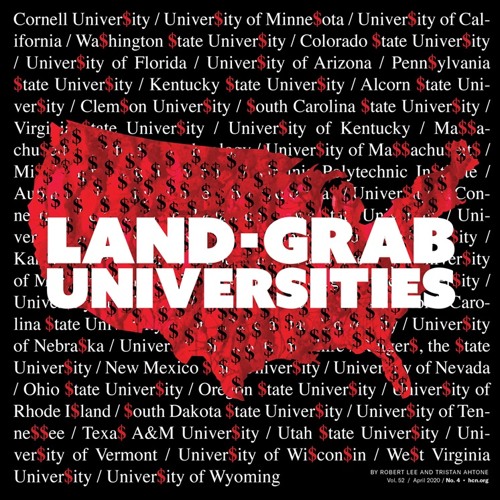




 Sonia Tycko for “The Legality of Prisoner of War Labour in England, 1648-1655,” Past and Present 246 (Feb 2020), 35-68.
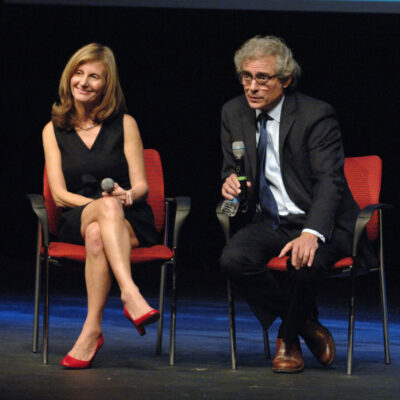




 Sam Erman of the University of Southern California for



 Bianca Premo of Florida International University and Yanna Yannakakis of Emory University for “

 Smita Ghosh, a graduate of Penn Law School and a doctoral candidate in history at the University of Pennsylvania, for her paper, “Policing the ‘Police State’: Detention, Supervision, and Deportation During the Cold War.”


