Early Career Fellowships & Kathryn T. Preyer Scholars 2025
Early Career Global Legal History Research Fellowship Recipients
Shachar Gannot, “Defending the Indefensible: Nazi Defense Attorneys in the Post-War Era,” Ph.D. History candidate Princeton (expected 2028).
Aden Knapp, “Judging Empires: International Court of Justice and Decolonization 1945-71,” Ph.D. History, Harvard, 2023, Postdoctoral Fellow Yale University (2024-26).
Stephanie Painter, “Women’s Defiance in Late Imperial China,” Ph.D. History University of Chicago, 2023, Assistant Professor of East Asian History, SUNY.
Ayse Polat, “Statelessness, Ottoman Empire 1850-1900,” Ph.D. History, University of Cambridge, 2023, Postdoctoral Fellow Cornell University (2024-26).
Alexander Williams, “Elite Corporate Lawyers’ Role in the Polical Economy of Capitalism since the late 19th century in India,” Ph.D. History candidate, Yale (expected 2027).
Cromwell Early Career Fellowship Recipients
Thalia Chrysanthis, Unexpected Soldiers: Civil War Militaries and Gender Multiplicity in the Ranks
Aaron Freedman, The Securities State: Washington and the Making of Modern Wall Street, 1979-1992
Hannah Hicks, In Her Defense: Women and the Criminal Courts in the Post-Civil War U.S. South
Madison Ogletree, A Peculiar Freedom: Law, Free People of Color, and the Making of the Old South, 1790-1860
Alex Reiss-Sorokin, Trust in Search: Credibility and Doubt in Legal Research Technologies
Hannah Reynolds, Gendering Settler Property: Women, Families, and the Political Economy of Nineteenth-Century U.S. Land Policy
Joseph Wrobleski, Wabanaki Legalities and the Making of Property on the Maritime Peninsula, 1620 – Present: Survivance, Sovereignty, and the Contest for Land
Kathryn T. Preyer Scholars
Tanner Allread, “‘This Series of Strong Laws’: Choctaw Governance and the Rise of Indigenous Constitutionalism, 1826-1830”
Will Holub-Moorman, “Policing Parenthood: Child Support Law and the Enforcement of Austerity in Late Twentieth-Century America.”
Congratulations to the 2023 Book and Article Prize Winners!
Please join the ASLH in offering our congratulations to this year’s prize winners, in thanking the prize committees for their work, and in appreciating the generosity of the people and organizations who have generously funded them.
Cromwell Article Prize
Emilie Connolly, “Fiduciary Colonialism: Annuities and Native Dispossession in Early America,” American Historical Review 127:1 (2022): 223-253.
Citation:
Emilie Connolly’s “Fiduciary Colonialism: Annuities and Native Dispossession in Early America” examines an oft-forgotten aspect of dispossession of Native lands: compensation. Connolly explores the consequences of payments for Native lands, focusing not on violent force, but “subtler coercions and negotiations afforded by economic relationships (226).” Central to these economic relationships between sovereign Native nations and the U.S. federal government were annuities: yearly payments made to Native peoples in specie or goods in exchange for their land. Yet such funds “evolved,” Connolly deftly shows, into longstanding economic and fiscal relationships between “sovereignties of sharply unequal power.” Annuities served to increase federal control over Native lands by holding back payments to pry land out of Native hands and compel migration. In an innovative and compelling argument, Connolly shows that such polices amounted to a “fiduciary colonialism: a mode of territorial acquisition and population management carried out through the expansion of administrative control over Native peoples’ wealth.” Importantly, therefore, fiduciary colonialism highlights the often forgotten two prong method of U.S. imperialism: indeed, Connolly demonstrates that the early United States operated not simply as a “settler colonial formation” (characterized by its deliberate attempts to erase and replace Native peoples and societies) but also as a “colonial formation” (characterized by the administration of Native people and federal trusteeship over their wealth, as well as grabbing their land). This article, the committee agreed, is a tour de force: lucid, well-sourced, and subtly argued. Her contribution to the scholarship on United States/Native relations is nothing short of remarkable. While scholars have most often focused on force and violence to explain dispossession, Connolly shows that, ultimately, annuities (and their manipulation, as money could both be promised and withheld) bolstered U.S. federal power. As such, controlling annuities became instead the preferred method of engineering legal/extralegal dispossessions, forcing removal treaties, and compelling expulsions.
Sutherland Prize
Jake Stattel “Legal culture in the Danelaw: a study of III Aethelred,” Anglo/Saxon England, 48 (2022):163-203
Citation: In 997 AD King Aethelred announced two law codes: one for his English kingdoms (the Woodstock code) and one for the area known as the Danelaw (the Wantage Code). While broadly similar, the two codes also contain important differences. These differences are the subject of Stattel’s erudite and impressive essay. Historians have usually understood these provisions as markers of the uneasy integration of Danish lands into the English kingdoms. Some see the differences as Athelred’s attempt to confirm English dominion over Danelaw territories; some see it as a necessary concession to the authority of Anglo-Scandinavian elites within the kingdom. Stattel provides a fresh approach. Reframing the question to explore what these codes reveal about legal culture rather than about the political reach of the Anglo-Saxons, Stattel sketches out some of the distinctive legal assumptions of society within the Danelaw regions. These differences, he shows us, were not minor matters of procedure but rather divergent ideas about best practice.
Focusing on collective liability, access to legal recourse, and methods of proof, Stattel makes visible the distinctiveness of Anglo-Scandinavian communities long after their submission to Anglo-Saxon monarchs. He uses an array of tools, textual and material, to trace a system in which the Danelaw was both a part of and apart from the dominant society. His sources range from language to archeology to scientific insights, from charters and chronicles to bones and isotopes. Stattel persuasively argues that the Danelaw is best understood within the context of Scandinavian traditions. In the Danelaw regions, smaller communities allowed for higher standards of mutual responsibility, more stringent requirements for invoking formal law, and a preference for fact-finding over oath-taking. These practices suggest the continued influence of the Anglo-Scandinavian elites upon the broader legal structures and in some cases, they offer early examples of what would become standard English processes. Stattel’s arguments are clearly presented and thoughtfully constructed. Moreover, he shows us that for law as for other aspects of society, balancing written and material evidence rather than favoring one over the other pays off. This essay goes far beyond a close reading of one early law code; it has important implications for how we understand law’s ability both to reinforce power and to coopt diversity.
Surrency Prize
Will Smiley, “Rebellion, Sovereignty, and Islamic Law in the Ottoman Age of Revolutions,” Law and History Review 40:2 (2022): 229-259
Citation: Will Smiley’s “Rebellion, Sovereignty, and Islamic Law in the Ottoman Age of Revolutions” features deep research in multi-lingual, multi-national archives, erudite analysis, and compelling story-telling. This article connects the histories of the Ottoman Empire, Islamic law, and the global Age of Revolutions. Smiley examines how the Ottoman Sublime Porte in Istanbul used the Islamic law tradition to craft a law of rebellion that was useful to fighting foreign enemies and suppressing domestic dissenters. Islamic law both facilitated military power and constrained the actions of political administrators who were beholden to clerics, a Muslim public, and their own religious beliefs. Ultimately, the Porte forged a law of rebellion that justified retribution against those who resisted the Sultan’s authority, while simultaneously denying these rebels’ sovereignty. Smiley shows how this legal duality, positioning rebels as at once subject to a political power’s jurisdiction and belligerent outsiders, echoed across the Atlantic. Similar legal moves shaped Britain’s treatment of Greece, the Lieber Code, and the United States’ response to the confederacy. Smiley’s exploration of how the rule of law shaped empire, war, and rebellion holds both historical and contemporary insight.
Honorable Mention: Alexandre Pelegrino, “From Slaves to Índios: Empire, Slavery, and Race (Maranhão, Brazil, c.1740–90),” Law and History Review 40:4 (2022): 789-815.
Jane Burbank Global Legal History Prize
Will Smiley, “Rebellion, Sovereignty, and Islamic Law in the Ottoman Age of Revolutions,” Law and History Review 40:2 (2022): 229-259
Citation:
Smiley’s elegant article assesses the global significance of the Ottoman government’s treatment of rebellious subjects as enemies at the turn of the nineteenth century. Although they lived within imperial territories and were claimed as subjects of the sultan, the Ottoman Porte began to define non-Muslim rebels as enemies under Islamic law. The move subjected rebels to extreme violence, including legal enslavement. Smiley assesses how this policy came about and places it in a global and comparative context. The result is a powerful argument about the imperial roots of an emerging international legal doctrine recognizing rebels as enemies but not bona fide belligerents.
Smiley recounts how Islamic jurisprudence informed the Ottoman Porte’s reactions to rebellions in Moldavid and Serbia. He labels the new classification of rebels as “dual sovereignty,” that is, placement outside the empire under Islamic law but inside it under international law. In Greece, the article shows, rebellious subjects were enslaved as enemies while the Ottomans also sought to block other empires from intervening inside Ottoman imperial territory. Other iterations of dual sovereignty, meanwhile, found adherents in Europe and the United States, also in connection with the legal status of rebels. During the US Civil War, the Lieber Code established the possibility of treating rebels as enemies without recognizing them as bona fide belligerents. Smiley pushes still further to reflect on the unexpected consequences of this legal approach. In the Ottoman empire, he suggests, the turn to Islamic law to justify enslavement of rebels placed unintended limits on state action.
As this summary shows, Smiley’s article contributes to the legal history of the Ottoman Empire, the history of Islamic law, and the history of international law. Committee members were impressed by the quality and range of the research, the subtleties of the analysis, and the clarity of the writing. The article models how to move artfully between local and global contexts.
Honorable Mention: Alexandre Pelegrino, “From Slaves to Índios: Empire, Slavery, and Race (Maranhão, Brazil, c.1740–90),” Law and History Review 40:4 (2022): 789-815.
Honorable Mention: Juandrea Bates, “Unaccompanied Minors and Fraudulent Fathers: Civil Law in the Unmaking of Immigrant Family in Buenos Aires, 1869–1920,” Hispanic American Historical Review 102:1 (2022): 95-126
Mary L. Dudziak Digital Legal History Prize
Justin Simard, The Citing Slavery Project
Citation: The Citing Slavery Project (https://www.citingslavery.org/), created by Justin Simard, Assistant Professor of Law at Michigan State University, and his team is a curated database of published civil case decisions from the nineteenth century involving slavery—either with enslaved people as parties or participants in the litigation or slave property as the subject of the suit. By documenting the past and continued influence of the American law of slavery via contemporary citations to slavery cases, it forces the legal profession to confront its role in American slavery. In 2021, the Bluebook added a rule in response to the project to encourage the use of a parenthetical such as (slavery case) or (enslaved party) in citations to slave cases. Seventy works of scholarship have already implemented this rule. The Citing Slavery Project achieved two major milestones during the award year. First, Professor Simard and his team completed the initial compilation of 9,000 slave cases from 42 states and territories. Second, they linked their database to Harvard’s open source Caselaw Access Project. The link is especially significant because it facilitates the project’s analytical arm (tracking primary and secondary citations to slave cases) and its publicity arm (allowing everyday users direct access to the text and original scans of the slavery opinions). The committee applauds Dr. Simard and his team for the scholarly importance and intellectual generosity of this enlightening digital legal history project.
Cromwell Dissertation Prize
Alexander M. Cors, “Newcomers and New Borders: Migration, Settlement, and Conflict over Land along the Mississippi River, 1750-1820,” Emory University, 2022
Citation: This dissertation represents a sparkling contribution to what Cors terms “the legal geography of settler colonialism in the Mississippi River Valley” during a pivotal time of contact between Indigenous peoples, Europeans, and Africans. Utilizing sources in three languages from Spain, France, and four states, Cors seamlessly weaves together narratives of bottom-up experiences of individuals making claims to land under Spanish law with the expansion of state power and control over the Mississippi River territory prior to and after the Louisiana Purchase. Instead of focusing on one or two large tribal nations, Cors takes the land as his analytical frame, beautifully telling the story of how parts of four tribes moved to lands west of the river and then used Spanish land grants to protect their claims against those later made by European-Americans. The tribal claimants were surprisingly adept at achieving their goals, at least for a time, helped by Spanish legal regimes that were much friendlier to first-comers than Anglo-American law later proved to be. By focusing on the river as geography and ecosystem, Cors is able to reveal dimensions of the slave economy that relied on the mobility the river enabled. Instead of cordoning off Louisiana as a civil law territory that had little influence on surrounding states and national legal development, Cors makes Louisiana’s physical position at the mouth of the river central to the movement and migration that undergirded the expansion of slavery in the South. Settlement patterns conferred social structure, he notes, and they also conveyed legal knowledge that proved essential to maintaining property ownership during periods of transition in governance. Indeed, Cors reveals that many non-European settlers along the river resisted the imposition of colonial state power and non-native legal systems, persuading the committee of his broader argument that local land claims drove territorial law and legal practice more than treaty negotiations and national sovereignties. What makes this new history possible are the Spanish-language sources that Cors deftly mines, both for the revealing family narratives he pieces together and for new cartographic data. Cors’s maps are things of beauty, wholly original to this project, that show how indigenous communities spread along the river for decades prior to the Louisiana Purchase. The committee marveled at the way Cors advanced a deeply complex argument with beautifully crafted prose. This novel and original thesis was a joy to read and will, the committee believes, make an important and influential book.
Peter Gonville Stein Book Award
Adriana Chira, Patchwork Freedoms: Law, Slavery, and Race Beyond Cuba’s Plantations (Cambridge University Press, 2022)
Citation: Adriana Chira’s Patchwork Freedoms is a compelling account of the ways in which the free and semi-free black residents of eastern Cuba used law and custom to eke out their freedom over the course of the nineteenth century. Chira demonstrates how “day in and day out, enslaved people chipped away at enslavers’ authority locally, by negotiating the terms of their manumission and land access. They pulled one another out of plantation slavery gradually, yet consistently.” The committee was especially impressed by how Patchwork Freedoms integrates legal and social history by seamlessly weaving together legal and nonlegal sources to tell a story that is complex, nuanced, and locally grounded.
Cromwell Book Prize
R. Isabela Morales, Happy Dreams of Liberty: An American Family in Slavery and Freedom (Oxford University Press, 2022)
Citation:
This book is a dazzling achievement, especially as a first book. Happy Dreams of Liberty is a family saga, a tale of a father who set free his enslaved children upon his death and then sought to endow them with his considerable fortune — an act that shocked his white relatives. Morales renders the story of the Townsend family with the deft touch of a novelist, drawing the reader into a narrative that is cinematic in its execution. By reading deeply and creatively into the archival record left by an extensive battle over the execution of Samuel Townsend’s will, Morales is able to construct vivid and intimate portraits of the lives of numerous members of the family who lived both in freedom and in slavery.
Law is an integral part of Morales’s story, both circumscribing the possibilities for the Townsend children and allowing them to claim their freedom and some degree of financial stability. Morales is highly attentive to the local, showing how the practical consequences of freedom expanded and contracted depending on the residence of the various members of the Townsend family. At the center of Morales’s story is a lawyer, S.D. Cabaniss, who used his specialized knowledge to defend the Townsend will against legal attacks but also wielded his elevated status as a lawyer to intimidate the will’s beneficiaries. Morales demonstrates how, in ways both big and small, Cabaniss held sway over the lives of the Townsends. We found the book to be a model of legal microhistory, both well-argued and a pleasure to read.
John Philip Reid Book Prize
Laura F. Edwards, Only the Clothes on Her Back: Clothing and the Hidden History of Power in the Nineteenth-Century United States (Oxford University Press, 2022)
Citation: Laura Edwards’ Only the Clothes on Her Back accomplishes the rare feat of making visible a world that has largely escaped the attention of historians. Drawing on extensive archival research, the book shows that in the period between the Revolution and the Civil War, marginalized people lacking formal, civil rights to property—including married women, free Blacks, and enslaved persons—were able to turn to courts to secure their ability to deploy textiles as an important form of currency, credit, and capital. Conceptually innovative and beautifully written, this is a pathbreaking study that challenges conventional understandings of rights, ownership, and power.
2021 Annual Meeting Prize, Honors, and Fellowship Winners
The ASLH is delighted to announce our 2021 prize, honors, and fellowship winners!
Land-Grab Universities (https://www.landgrabu.org/) a remarkable project led by Dr. Robert Lee, Lecturer in American History and Fellow of Selwyn College, Cambridge University who put together an interdisciplinary team that included a journalist (Tristan Ahtone), a data visualizer (George McGhee), a web designer (Cody Leff), a cartographer (Margaret Peace), and a photographer (Kalen Goodluck). The website’s powerful visualization of expropriated Indigenous land has garnered international attention and spurred historical investigations at many of the 52 universities, such as Cornell University, that were built on and with Indigenous land acquired as a result of The Morrill Act, which President Lincoln signed into law in 1862. The quality of the website, coupled with the project’s commitment to sharing its data and computational programs via a GitHub repository are the distinguishing features of this project, as is its mission to use historical investigation to spur educational change. The project seeks to increase the number of Indigenous students enrolled at the 52 universities that benefitted from this historical process of dispossession. Overall, Land-Grab Universities brilliantly combines original research, computational method, and sophisticated data visualization to make its scholarly and social impact.
Gloria McCahon Whiting for “Race, Slavery, and the Problem of Numbers in Early New England: A View from Probate Court,” William and Mary Quarterly, 77, no.3 (2020):405-440.
Gloria McCahon Whiting’s “Race, Slavery, and the Problem of Numbers in Early New England: A View from Probate Court” is a creative, brave, and rigorous exemplar of legal history scholarship. Through an insightful, imaginative analysis of tens of thousands of probate court transactions in Suffolk County, Massachusetts, from 1639 to 1769, Whiting shows how historians can use legal archives to analyze both the structural contours of coercive institutions and the qualitative experiences of the individuals who strove to make lives within them.
Whiting’s use of legal archives makes an important intervention in slavery studies, where recent debates have questioned the reliance on such materials for their potential to repeat the violence that the law once rendered against enslaved persons. Using these archives can affirm the vision of those in power, dehumanizing the enslaved by representing them only through aggregation and abstraction. Whiting, however, shows the utility of these materials. In her hands, aggregation does justice to historical subjects by accurately rendering the systems of power they endured. With careful counting, she upends conventional assumptions about the practice of slavery in colonial New England, demonstrating that enslaved persons of African descent quickly replaced indentured European labor and that Native Americans were never a significant source of bound labor in the region. She also uses the records to reveal qualitative insights into enslaved persons’ efforts to shape their own lives: to form families, make claims on owners and their heirs, hold property, engage in commerce, and seek freedom. Whiting excavates the persuasive talents of a bondsman name Titus who convinced the heirs of a slave owner to draft manumission papers. She writes about a girl in bondage named Rose who learned to read, studied religion, and convinced an owner that his claims to property in her were illegitimate. She traces kin relationships and documents property holdings of enslaved persons. She asks readers to imagine the world map that hung above the bed of an enslaved man named Philip and to consider what he might have imagined and remembered as he gazed at it. This article, modest and measured in tone, is an understated, yet vitally important and courageous piece of scholarship that uses law to understand the dynamics of power and the humanity of the powerless.
Christine Walker for Jamaica Ladies: Female Slaveholders and the Creation of Britain’s Atlantic Empire (Omohundro and University of North Carolina Press, 2020).
Published by the Omohundro Institute of Early American History and Culture and built upon painstaking and wide-ranging archival research across Britain, Jamaica, and the United States, Jamaica Ladies struck the committee as a tour de force. Walker focuses on free and freed women of European, Euro-African, and African descent who inhabited this island in the first century after it came under English rule and offers a complex, multifaceted portrait of their activities as colonizers and slaveholders with the broader aim of exploring “the gendered dimensions of power” in the Anglo-Atlantic world. She examines Jamaica’s first century under English rule, as slavery expanding rapidly across the British Atlantic colonies, and her most compelling insights derive from a seemingly forgotten pile of testamentary devices housed in the Jamaican archives. It may be that Walker has analyzed every will penned by property-holding women in Jamaica during her period of study. The granularity of the lived experiences that Walker carefully pieces together from these terse and fragmentary legal records, as well as from a rich assortment of mercantile and personal correspondence, enables her to make a compelling case that these women were “handmaidens of empire.”
Walker thus challenges the conventional renderings of the British Caribbean as “a hypermasculine space,” and implicates its titular subjects in the building of Britain’s largest and wealthiest slaveholding colony. The activities of these Jamaica Ladies are surveyed in the first three intricately wrought chapters of the book, situated respectively in Port Royal, urban Kingston, and the plantations of the rural parishes. Transported to these colonial spaces, the reader finds free and freed women playing critical roles as proprietors and managers of plantations and businesses as well as households, forging links in imperial commercial networks and structuring everyday life in the colony’s ports and backcountry. In so doing, Walker makes indelibly clear, these propertied women both contributed to and profited from the exploitative extraction, brutal discipline, and deadly violence that marked this slave society.
The complicated interplay between gender, race, sex, and power is even more brilliantly illuminated in a second set of chapters which explore the socio-legal practices of inheritance bequests, nonmarital relationships, and manumission. Following the paper trails left behind by her historical subjects with an acute grasp of the legalities of colonial life, Walker vividly demonstrates the gendered nature of slaveholding – the distinctive dynamics, as well as the intimacies and animosities that developed between female enslavers and the men, women, and children they acquired as property and sometimes incorporated into their own families and wider kinship networks. The accumulated details of these everyday interactions between owners and captives add up to far more than the sum of their parts, persuasively illustrating how women’s possession of other people enhanced their own sovereignty, enabling them to command more wealth and independence than their counterparts in other parts of the British Empire. And yet the relatively autonomous actions of these female slaveholders did not always or only operate to strengthen the institution of slavery in the Anglo-Atlantic world. They also exposed strains and contradictions in the gender and racial hierarchies that were supposed to govern colonial life, strategically “creating loopholes for a select few to escape bondage” that threatened to “collapse the boundaries between enslavement and liberty.” In this way, Walker’s careful analysis of the role of women property holders helps reduce the historiographical division between studies of the West Indies and the rest of British America. Indeed, Walker’s analysis offers a model for rethinking who used law to build the empire, how they did so, and to what ends.
In providing this provocative and persuasive account of the world these female slaveholders helped make, Walker makes a significant contribution to the field of American legal history. Though focused on a British colony that did not become part of the United States, her analysis of how women used wills and their management of property and households and the people in them sheds new light on the roles of law and gender in slaveholding society more generally. Skillfully tacking between legislative codes and surviving wills, inventories, deeds, and other documents that were not originally written for the benefit of historians, Walker exhibits a deep appreciation of what these paper records can and cannot tell us about the society within which they were created. The historical narrative she crafts from these materials is nothing short of revelatory, bringing to light the mixed motives, ideals, and interests that free and freed women brought to the work of building “a brave new world, one that hinged on relentless profit-seeking, coercive colonialism, and profound exploitation.” And because this is a past that is not even past, her book has much to teach us about the dilemmas of our own times.
Alyssa G. Penick, for “The Churches of Our Government: Parishes, Property, and Power in the Colonial and Early National Chesapeake,” PhD diss., (University of Michigan, 2020).
In a beautifully rendered and sweeping dissertation, “The Churches of Our Government: Parishes, Property, and Power in the Colonial and Early National Chesapeake,” Alyssa G. Penick tells a revisionist history of disestablishment—how “the legal concept of an establishment of religion evolved from dismantling the established church.” This ambitious dissertation covers a century spanning the late colonial period through the early republic while homing in on specific localities to reveal the myriad ways the Anglican church stood at the center of civic life. Employing an expansive understanding of religious influence, Penick demonstrates the role of statutory and common law in maintaining the church’s powers. Her insightful writing brings alive how the church engaged in everything from policing the public good, to meting out social welfare, to executing law. The manner of disestablishment determined the degree to which it would continue to do so. Disestablishment, Penick insists, was a fundamentally “material process.” Methodologically creative and deeply grounded in archival materials, the dissertation details the church’s substantial wealth, garnered not only through glebes but also through other types of real property, taxation, and enslaved persons. The key to maintaining this wealth, Penick contends, was a common law corporate status: “Vestrymen and church wardens came and went, but parishes existed in perpetuity as corporate entities.” Revolutionaries inverted the meaning of “establishment,” from enforcing orthodoxy, to a new sense of “using state power to protect religious freedom.” That new meaning, in turn, elicited different state-level responses, which Penick brilliantly teases out through a comparison of how Virginia and Maryland, neighbors with distinct patterns of church property-holding, translated the abstract idea of “disestablishment” into concrete legislation with real-world consequences. Disestablishment thus not only changed the structure of the church, it also rearranged the material landscape, loosening church control of white people’s moral conduct while tightening surveillance of the poor and free Black people and changing property relations and social welfare programs. By challenging common individual-rights narratives of religious freedom, this provocative and inventive dissertation gives us a new history of disestablishment but it also provides intellectual grist for our own times.
Priyasha Saksena for “Jousting Over Jurisdiction: Sovereignty and International Law in Late Nineteenth-Century South Asia” Law and History Review 38, no. 2 (May 2020), 409-457.
Priyasha Saksena’s erudite, thoughtful, and well-written article offers a provocative reevaluation of the role international law and especially debates over the nature of sovereignty in controversies over the legal status of princely states in post-1858 colonial India. Tracing competing arguments as they migrated from European treatises on international law to the Political Department of the Government of India as well as the nominally independent states of Baroda and Travancore, Saksena shows how British Indian policymakers adapted pluralist conceptions of divisible sovereign power to support expanding claims over nominally independent South Asian states, while advocates for the princely states responded with equally compelling legal and political arguments that defended their autonomy by privileging an understanding of sovereignty as singular and territorial. In so doing, this article challenges some longstanding and fundamental assumptions about the relationship between modern state sovereignty, discourses of “civilizational” difference, and colonial rule. It also makes a nuanced and powerful case for understanding leaders of princely states—and their legal advocates—not as “collaborators” with British rule but rather as engaged in active if sometimes subtle resistance to it. The article concludes by gesturing to how these conflicts in late nineteenth-century India traveled, serving as precedent for analogous, if distinct, colonial situations across the globe, especially Africa. Thus, in shedding light on the relatively understudied world of late nineteenth century princely states, Saksena presents readers with a compelling argument and method for bringing the exciting and growing fields of South Asian, imperial, and global and international legal histories into a single frame.
Sonia Tycko for “The Legality of Prisoner of War Labour in England, 1648-1655,” Past and Present 246 (Feb 2020), 35-68.
Bringing us back two centuries and across a hemisphere, Sonia Tycko’s meticulously researched and methodically argued article excavates the legal acrobatics that allowed for foreign, especially Dutch and Scottish, soldiers captured by English forces in the mid-seventeenth century to be forced to serve as labor on projects ranging from the drainage of the fens to Caribbean plantations. The Council of State and various private interests saw multiple opportunities in putting prisoners of war to work but were stymied by strictures in the laws of war and jus gentium on the rights of such prisoners, especially prohibitions on enslaving fellow Christians. A bizarrely effective solution was found in reimagining the legal status of such prisoners not as conscripts but rather as akin to convicts and vagrants, offering a precedent for in turn making them an offer they could not refuse to enter into contracts, effectively rendering them legally “free” rather than forced labor. In closely tracking this development, Tycko shows how a population largely consigned to an historiographical footnote in the general story of indentured labor was not only critical to understanding the malleable nature of legal status in the seventeenth-century but also profoundly troubling to our understandings of the critical legal concepts of contract and consent. The article also impressively traces how these arguments developed and were contested among various different actors and interests, offering a creative and original model for linking domestic, international, and Atlantic history—not to mention social, labor, colonial, military, and carceral histories—through the history of legal thought and practice.
Kalyani Ramnath for “Intertwined Itineraries: Debt, Decolonization, and International Law in Post-World War II South Asia,” Law and History Review, 38, no. 1 (February 2020), 1-24.
“Intertwined Itineraries” charts a whole world of law in motion. From the courts of Madras to the rice and rubber fields of Southeast Asia, and from there to the law libraries of the Netherlands and India, she traces the travels of a single dispute and its afterlives across several genres of legal writing. She assembles a disparate cast of characters – a Tamil-Speaking Chettiar widow in Madras, a Polish scholar-in-exile, a Dutch scholar of international law in Utrecht – and threads her narrative needle through the most unlikely of places. The result is nothing less than a complete retelling of the histories of decolonization and international law in the Indian Ocean world, and of the many lost streams, disputes, and lives that poured into it. “Intertwined Itineraries” is an ambitious, bold, and breathtakingly creative piece of scholarship.
Alejandro de la Fuente and Ariela J. GrossBecoming Free, Becoming Black: Race, Freedom, and Law in Cuba, Virginia, and Louisiana (Cambridge University Press, 2020).
Entering into a terrain of longstanding scholarly debate, Alejandro de la Fuente and Ariela Gross’s Becoming Free, Becoming Back (Cambridge University Press, 2020) traces the winding path from black slavery to black citizenship in Cuba, Louisiana, and Virginia. It avoids traditional claims of moral superiority for Latin American systems of bondage. Instead, it shows how in all three societies race became a cornerstone for constructing the normative logic of slavery. With remarkable nuance, their book underscores the ways Iberian legal customs of manumission did make a difference by allowing for the creation of a free black population. Beautifully written, thoroughly researched, and persuasively argued, it impressively deploys cultural history— emphasizing context and contingency—to undermine the seeming historical inevitability of citizenship becoming closely intertwined with whiteness. This is comparative history at its finest.
Nandini Chatterjee for Negotiating Mughal Law: A Family of Landlords Across Three Indian Empires (Cambridge University Press, 2020).
Negotiating Mughal Law is a wonderful combination of philology, imagination, archive sleuthing, and sharp intelligence. Based on a painstakingly collected set of documents in a few languages from a society that lacked a centralized legal archive, it is a micro-history of a family of landlords in central India over several centuries. Chatterjee provides a rich narrative of law as put into practice in the daily lives of a wide range of people. Her attention to methodology is a model of the care and self-criticism that underlies the very best historical research, and for this reason the book is of great value beyond its specific geographical and temporal context.
Honorable Mention:
Samuel Fury Childs Daly for A History of the Republic of Biafra: Law, Crime, and the Nigerian Civil War (Cambridge University Press, 2020).
Kalyani Ramnath, for “Intertwined Itineraries: Debt, Decolonization, and International Law in Post-World War II South Asia,” Law and History Review, 38, no. 1 (February 2020), 1-24.
“Intertwined Itineraries” traces a routine case for debt recovery across jurisdictions in South Asia during the upheaval of decolonization and post war independence. In so doing, Ramnath weaves together histories of decolonization, legal pluralism, migration, jurisdiction, and professional legal networks in the making of international law. Beautifully written and well researched, Ramnath shows the reader how numerous and less well known partitions shaped the Indian sub-continent in 20th century South Asian political history.
Honorary Fellows
Shaunnagh Dorsett, Distinguished Professor at the Faculty of Law, University of Technology Sydney, and Faculty Research Fellow at the Faculty of Law, Victoria University of Wellington
Víctor Tau Anzoátegui, former Titular Regular Professor of the History of Argentine Law in the Faculty of Law and Social Sciences of the University of Buenos Aires and Senior Researcher at the National Council for Scientific and Technical Research of Argentina
James Q. Whitman, Ford Foundation Professor of Comparative and Foreign Law at Yale Law School
Kathryn T. Preyer Scholars
Naama Maor for In Search of the “Real Culprits”: The Adult Delinquent in a Progressive Era Juvenile Court
In her elegantly written and deeply researched paper, Naama Maor analyzes previously unexplored cases against adult defendants in the trailblazing Denver Juvenile Court between 1907 and 1927. Maor finds that the court’s reliance on a new, capacious, and ambiguous category of offenses – contributing to the delinquency of a child – facilitated enforcement that both reflected and shaped gendered ideas about age, consent, and criminal liability for the acts of another. In pursuing cases against adults through children, judges, probation officers, and district attorneys invested great power in the hands of the same children the law deemed inculpable due to their age. The paper persuasively shows that in their rush to try these cases, state officials inadvertently gave rise to a potent opposition to the court’s jurisdiction, which challenged the assertion that adults could receive a fair trial in a juvenile court.
Teal Arcadi for Concrete Leviathan: Interstate Highway Litigation and the Clash of Experts and Citizens in Modern America
Teal Arcadi explores how the construction of the National System of Interstate and Defense Highways prompted protests and litigation that reformed administrative law and modern American governance from the 1960s onward. His paper explains that when interstate construction began in the late 1950s, it became synonymous with destruction of neighborhoods and parks bulldozed to make way for the “concrete monsters,” as some came to call the interstate highways. “Freeway revolts” erupted in the nation’s cities, with participants demanding altered construction practices that gave citizens and communities more say in the state building process underway. While cultural and urban historians have recounted these uprisings, their legal and governmental impact warrants further treatment, which Arcadi ably provides. Arcadi advances three important and compelling arguments. First, the freeway revolts have a broader governmental history that elucidates the long-simmering and cross-partisan tension between administrative authority and participatory democracy that boiled over after the New Deal. Second, the freeway revolts brought distinctive reforms to the practices of modern American state building, particularly in leading to the canonical Supreme Court case Citizens to Preserve Overton Park v. Volpe in 1971. Third, despite the reformist inclinations present in Overton Park, the case produced an uneven legal and physical landscape of state building. Ultimately, the paper identifies the emergence of a legal context that prioritized the protection of open spaces at the expense of poor and minority urban communities.
Cromwell Fellowships
Myisha S. Eatmon, Assistant Professor of History at the University of South Carolina for Litigating in Black and White: Black Legal Culture, White Violence, Jim Crow, and Their Legacies. Benjamin Lyons, who received his PhD from the Department of History at Columbia University, for The Law of Nations & the Conduct of Early American Diplomacy. Aden Knapp, PhD candidate in History at Harvard University, as well as a visiting scholar at the Lauterpracht Centre for International Law at the University of Cambridge and a visiting scholar at the University of Copenhagen’s iCourts project, for Judging the World: The United States and International Courts, 1898–1971. Jessica Fletcher, PhD candidate in history at Vanderbilt University, for Before the Amistad: Cuba, Haiti, and Caribbean Political Consciousness in Early Nineteenth-Century US Freedom Suits.
Small Grants Award Winners
For the second year, in 2021 the ASLH awarded small grants of $1,000 each to support projects by ten graduate students and early career students.
Jared Berkowitz, PhD candidate, Brandeis University Du Fei, PhD candidate, Cornell University Idriss Fofana, JD, Yale, PhD candidate, Columbia University Luke Haqq, JD, University of Minnesota Peter Labuza, Lecturer, San Jose State (PhD 2020, USC) Derek Litvak, PhD candidate, University of Maryland-College Park Melody Shum, PhD candidate, Northwestern University Caleb Smith, PhD candidate, Tulane University Wallace Teska, PhD candidate, Stanford University Grace Watkins, DPhil candidate, Oxford University
2021 Student Research Colloquium
Julia Bacchiega, Universidad de San Andrés Serena Covkin, University of Chicago Jelani Hayes, Yale Law School Dipanjan Mazumder, Vanderbilt University Rana Osman, University of London Chao Ren, University of Michigan Laura Savarese, Yale University (Herbert A. Johnson Fellow) Magdalene Zier, Stanford University
Wallace Johnson First Book Program Participants
Brooke Depenbusch, Colgate University, In the Shadow of the Welfare State: General Relief and the Politics of Precarity from the Age of Roosevelt to the Age of Reagan Maeve Glass, Columbia University Law School, America’s Constitution: A New History Timo McGregor, Postdoctoral Fellow Center for European Studies Yale University, Properties of Empire: Mobility and Vernacular Politics in the Dutch Atlantic World, 1648-1688 Myisha S. Eatmon, University of South Carolina, Litigating in Black and White: Black Legal Culture, White Violence, Jim Crow, and Their Legacies Raha Rafii, Post-Doctoral Research Fellow, Institute of Arabic and Islamic Studies, University of Exeter, Judges and Judging in the Islamic Near East: The Medieval Adab al-qadi Genre
J. Willard Hurst Summer Institute in Legal History Participants
Lauren Catterson (Hendrik Hartog/Princeton University Fellow), PhD candidate, University of Toronto Jon Connolly (Morton Horwitz Fellow), Assistant Professor, University of Illinois Chicago Hardeep Dhillon (Harry Scheiber Fellow), ABF-NSF Post-Doctoral Fellow in Law and Inequality Zachary Herz (Charles McCurdy/University of Virginia Law School Fellow), Assistant Professor, University of Colorado. Naama Maor (Mary Frances Berry Fellow), Postdoctoral Teaching Fellow, University of Chicago Ángela Pérez-Villa (Rebecca Scott Fellow), Assistant Professor, Western Michigan University Sarath Pillai (Hurst Alumni Fellow), PhD candidate, University of Chicago Jake Subryan Richards (David Seipp Fellow in English Legal History), Assistant Professor, London School of Economics Geneva Smith (Robert Gordon Fellow), PhD candidate, Princeton University Lila Teeters (William Nelson Fellow), PhD candidate, University of New Hampshire Lauren MacIvor Thompson (Reva Siegel Fellow), lecturer, Perimeter College Kent Weber (Barbara Welke Fellow), post-doctoral fellow, Dartmouth College
Recipients of the Society’s Projects and Proposals Committee Funds
The Wheatley Peters Project, proposed by Cornelia Dayton, is an excellent, well-conceived and ambitious project that has already garnered positive attention upon its initial preliminary launch. It aims not only to make important historical documents available to a wider public but also to showcase historians’ methods of using such research in their work. It will provide transcriptions, interpretations and interactive commentary on key archival material related to the lives of Phyllis Wheatley, her husband John Peters, and other Black Americans during the eighteenth century. ASLH funding will help establish the site as a model of digital engagement and may help attract additional resources to the project.
The Digital Legal Studies Forum, proposed by Katrina Jagodinsky, encourages excellence in digital history by bringing together established and junior scholars in a productive
and thoughtful way. As the proposal states, Forum organizers “aim to bring talented new voices into the field, promote novel forms of scholarly interchange, and to seed new forms and venues for public history.” The event, a project of the Center for Digital Research in the Humanities at the University of Nebraska Lincoln, will draw dozens of historians, archivists, and scholars from around the West and Midwest, putting them in productive conversation with their peers, while also engaging new work that uses digital legal projects to explore issues pertaining to slavery reparations and treaty reconciliation. ASLH funding will provide needed financial support to make the forum a success.
Craig Joyce Medal
Sarah Barringer Gordon, Past President, ASLH
Preyer Scholars
The ASLH is pleased to announce the 2021 Kathryn T. Preyer Scholars:
Naama Maor (Postdoctoral Teaching Fellow, University of Chicago).
Arcadi and Maor will present their papers on the Preyer panel at the 2021 ASLH conference in New Orleans.
Cromwell Book Prize Winner
The ASLH announces the winner of the 2020 Cromwell Book Prize: Sam Erman (University of Southern California) for his book Almost Citizens: Puerto Rico, the U.S. Constitution, and Empire, published in the Legal History Series of Cambridge University Press.
The citation reads in part: “For subtlety, nuance, and complexity of analysis by a junior scholar, this is the best book in a year in which many superb books were nominated. Erman makes important and ambitious claims about the evolving constitutional meaning of citizenship in the U.S. empire after the annexation of Puerto Rico in 1898. The book vividly recounts and perceptively analyzes the debates between and among Puerto Rican and U.S. judges, lawyers, administration officials, and legislators over the denial of full citizenship rights to Puerto Ricans. Erman shows how post-Civil War conceptions of full citizenship, rights, and statehood gave way to a regime of constitutionally permissible racist imperial governance.”
2020 Annual Meeting Prize, Honors, and Fellowship Winners
The ASLH is delighted to announce our 2020 prize, honors, and fellowship winners!
Sean Fraga of the University of Southern California for “They Came on Waves of Ink: Pacific Northwest Maritime Trade at the Dawn of American Settlement, 1851-1861,” https://seanfraga.com/wavesofink/.
“They Came on Waves of Ink” makes wonderfully creative and compelling use of digital technologies to bring a dusty legal source—a nineteenth-century federal ledger from the Puget Sound Customs District—to life. As Fraga’s site explains, “But if the ledger is like a window onto the past, then its meticulous lines of data are like blinds, closed and shut tight. There is no plot here, no story; the characters float loose on a non-narrative sea. Digital analysis is a way of curling open the blinds—to see what lies on the other side.” By transcribing, analyzing, and visualizing thousands of scribbled ledger lines, Fraga enriches our understanding of the circuits of commerce and administrative power in the nineteenth-century Pacific Northwest. His site should inspire legal historians to use digital tools to re-imagine their sources and to uncover elusive historical connections that lie on the other side.
The subject of “The Forgotten History of Metes and Bounds” would not seem promising—the long forgotten colonial method of town lot demarcation by metes and bounds. Though regarded by historians as a relic deserving only antiquarian interest, in Brady’s hands it commands our attention as a vital legal tool that enabled communities to use the law to craft a legal order for an uncharted terrain through the creation of property rights. It has long been a commonplace that recording boundaries and conferring title create something we call “property,” but Brady’s article expands our understanding of the social and economic role of property rights as they functioned in practice. Her mastery of seemingly arcane procedures and the legal rights they created reveals the many ways that the law of metes and bounds provided a supple and flexible means of securing the property rights that served the social and economic ordering necessary to foster communities bound together by law. The reliance on impermanent features of a local landscape–such as trees or heaps of stones–might seem to produce only confusion and discord; indeed, conventional economic theory treats it as impeding market transactions, thus slowing growth. To the contrary, Brady illustrates the capacity for legal history to destabilize commonly-held assumptions about the law’s effects on capital and markets. More specifically, she takes aim at the idea that standardization of property forms facilitates market transactions by lowering information costs. She shows that customization of property is not necessarily inefficient. Rather, it is a rational strategy to promote growth within local, closely-bound communities. Brady’s article illustrates the use of legal history to complicate the empirical claims of law and economics.
For subtlety, nuance, and complexity of analysis by a junior scholar, this is the best book in a year in which many superb books were nominated. Erman makes important and ambitious claims about the evolving constitutional meaning of citizenship in the U.S. empire after the annexation of Puerto Rico in 1898. The book vividly recounts and perceptively analyzes the debates between and among Puerto Rican and U.S. judges, lawyers, administration officials, and legislators over the denial of full citizenship rights to Puerto Ricans. Erman shows how post-Civil War conceptions of full citizenship, rights, and statehood gave way to a regime of constitutionally permissible racist imperial governance.
In an extraordinarily creative and imaginative dissertation, “Captured Consent: Bound Service and Freedom of Contract in Early Modern England and English America,” Sonia Tycko explores the repeated appearance of consent as part of the meaning of compulsory service in the early modern period. The appearance of language of consent in contracts by people who had no right to refuse was not a veneer disguising coercion or an understanding of labor as a communal resource. Instead, this “coerced consent” expressed practices and understandings associated with the origins of “freedom of contract.” As she innovatively argues, “consent was a tool for masters to discipline and appropriate the labor of the less powerful.” Her argument carefully explains how, as far back as the late sixteenth century, consent became a way to distinguish coerced labor from slavery with “an air of civility” while nonetheless still designed to reproduce inequalities rather than to create equality. By revealing this dynamic—sometimes seen as part of nineteenth or twentieth century labor history—in the early modern period, Tycko forces us to reconsider the very foundations of consent and contract and makes a signal contribution to the historiography on contract, labor, and freedom. Tycko also offers nuanced readings of an impressive array of primary sources and reveals the social realities against which a vocabulary about contract arose in particular labor relationships, from indentured servitude to military impressment to kidnapping. She mines documents that others might skim and brings to the surface the way in which the very words betray underlying power dynamics. The important transatlantic lens persuasively establishes her argument as part of larger seventeenth-century English assumptions, in Great Britain and the British colonies. This dissertation rewards the reader on every page—and, impressively, becomes even more interesting on rereading. Tycko’s dissertation serves as a model of the well-crafted and carefully executed dissertation in legal history.
Simon P. Newman’s ‘Freedom-Seeking Slaves in England and Scotland, 1700–1780’ explores the experience of enslaved Africans who were brought to Britain in the eighteenth century from North America. It demonstrates that in a society where the legal status of slaves was unsettled – even after landmark cases such as Somerset v. Stewart – the lives of Africans brought to England remained precarious. Using newspaper accounts, legal records and visual sources, it shows how familiar the British were with the buying and selling of slaves or the use of the press to offer rewards for the return of those who had run away. In so doing, this pathbreaking article sheds important new light on the experience of slave lives in England and Scotland, and how the very ambiguity of English law allowed owners to continue to treat as their enslaved servants as property.
Honorable Mention: Emily Kadens of Northwestern Pritzker School of Law for “Cheating Pays,” Columbia Law Review 119 (2019): 527-589.
We are delighted to announce that the prize for the best article published in Volume 37 (2019) of the Law and History Review goes to Kaius Tuori for his exceptionally important article, “Narratives and Normativity: Totalitarianism and Narrative Change in the European Legal Tradition after World War II,” published in the May issue. Tuori’s article provides us with a fascinating account of the formation of the “European Idea” in the aftermath of World War Two, and its reliance on a claim to a shared European legal culture founded in Roman law – a particular feature of German scholarship. The centrality of law and legal institutions to European union has been a major theme of modern European legal history: Indeed, it was a major theme in the formation of our sister society, the European Society for Comparative Legal History. But in that identification of law and legal history with the European idea too little attention has been paid to narrative origins. Tuori remedies that gaping hole, and in the process shows how the postwar transition of scholars such as Franz Wieacker from active proponent of Nazi legal science to esteemed Europeanist and Roman law traditionalist resulted in a hybrid narrative of European legal history that incorporated elements of the Nazi narrative of Europe in the return to Roman law. The complicated process was nudged along too by German legal scholars in both geographical exile and “inner” exile who produced Roman law studies that served as counter-narratives to Nazi legal reformers’ efforts to replace the civil law tradition with national German law in the law curriculum and the law books. Tuori’s essay is not only a fine piece of research, it is compelling and important intellectual history.
R. W. Kostal’s Laying Down the Law: The American Legal Revolutions in Occupied Germany and Japan (Harvard University Press, 2019) depicts the staggering tasks of remaking the legal landscape of defeated Axis powers after World War II. This project envisioned replacing fascist legal orders with liberal ones committed to individual rights and the rule of law. On this foundation, it was supposed, democracy could be built. Working with the self-interested jurists and bureaucrats of the defeated nations, Americans often operated, especially in the case of Japan, with only the vaguest notions of the legal systems they set out to reconstruct. Kostal contributes to the history of American foreign policy and to the comparative history of the rule of law by showing the accomplishments, hubris, and limitations of laying down the law. Perhaps the largest contribution of his well-researched and thoughtful book is to explore how and why liberal nations after World War II came to think they had the right to reshape in their own image the legal orders of conquered countries.
This is a fascinating study of an important but underanalyzed topic – the contested and dynamic process of the emergence of “modern” copyright law in China from the 1890s through the 1950s. Highly innovative in its analysis and magisterially executed, the book offers a brilliant interdisciplinary history of how authors, publishers, booksellers, and readers negotiated with one another. Uncovering market practices in the “new knowledge” economy, Wang maps the everyday life of copyright and piracy in relation to the emerging modern state and “new knowledge.” This exceedingly rigorous, subtle, and well-researched book has major implications for understanding the interplay among law, society, culture, and politics not only in modern China but also in many places with similarly complicated experiences with modernity.
“A Court of Sticks and Branches: Indian Jurisdiction in Colonial Mexico and Beyond” studies how jurisdiction was understood and produced by Mixtec actors in southern Mexico. Premo and Yannakakis’s case study of a land dispute between two rivaling villages show how communities adapted and translated imperial law and Iberian judicial practices into local understandings of jurisdiction, thereby inserting jurisdiction into the legal repertoires available to native peoples. The authors focus on a routine community dispute case that was never submitted to the jurisdiction of higher imperial authorities in Madrid or Rome, or even in the venerated General Indian Court of Mexico City. Rather, this dispute emerged in the outskirts of empire, and their study illuminates how people molded jurisdiction and litigiousness to their own cultural norms. Carefully researched and clearly written, readers see that jurisdiction at the edges of empire was much broader than indigenous people’s use of courts and recourse to the law. As the authors note, global legal orders may be studied through notarial documents and imperial codes, however “native subjects” built those orders—literally with “sticks and branches” on the muddy fields of a makeshift court in Teposcolula, Mexico
Honorary Fellows
Paul Brand, Emeritus Fellow of All Souls College, Oxford
Joan W. Scott, Professor Emerita at the Institute for Advanced Study
Robert W. Gordon, Professor of Law at Stanford Law School.
Ivón Padilla-Rodríguez a doctoral candidate in history at Columbia University, for her paper, “‘Los Hijos Son La Riqueza Del Probre:’ Postwar Mexican Child Migration and the Making of Domestic (Im)migrant Exclusion, 1940-1965.”
Ivón Padilla-Rodríguez gives us a spellbinding sociolegal history of twentieth century child migrants at the borders outside and within the United States. Most scholars have focused on US officials’ concentration on single males after World War II. Padilla-Rodríguez employs overlooked sources to shine a spotlight on the many forms of rights violations Latinx children and their parents have endured between 1940 and 1965. She demonstrates the complicity of welfare and government officials in confining non-citizen children in detention center “cages” and in deporting them on “penal hell” ships. She shows, too, how those officials criminalized non-citizen and U.S. citizen children for their labor mobility and academic truancy and deprived them of access to a quality education. In Padilla-Rodriguez’s gifted hands, contemporary policies of immigration detention emerge as part of a long, sad history, rather than as a fresh departure.
Smita Ghosh, a graduate of Penn Law School and a doctoral candidate in history at the University of Pennsylvania, for her paper, “Policing the ‘Police State’: Detention, Supervision, and Deportation During the Cold War.”
Smita Ghosh offers a fascinating account of the fight against the detention, supervision, and deportation of “red,” or communist, aliens. Her imaginative archival research shows how the American Committee for the Protection of the Foreign Born and its lawyers seized on the language of the Cold War to depict the McCarran Internal Security Act as a threat to the American “way of life” that would encourage “Gestapo-type” tactics and promote a “police state.” They also capitalized on the whiteness and assimilability of Eastern European aliens in the United States; their undeportable status because other countries refused to accept them; and the growing corpus of administrative law. The American Committee and its lawyers won the release of detained immigrants and limited the most draconian efforts to supervise non-deportable non-citizens. “Policing the ‘Police State’” provides a rare “success story” for “undesirable” aliens during the Cold War era and an extraordinarily illuminating prism on the expansion of state power.
Cromwell Fellowships
Giuliana Perrone is an Assistant Professor of History at the University of California, Santa Barbara. She is in the process of turning her dissertation into a book entitled, The Problem of Emancipation in the Age of Slavery: Law and Abolition after the U.S. Civil War. Perrone’s work argues that although slave emancipation occurred after the Civil War, slavery itself persisted, enacted through mechanisms of private law doctrine, including contract, property, and debt relations. The work further explores how Southern judges continued to apply pre-war private law doctrine which served to quickly close the possibility of real freedom for former slaves.
Marie-Amélie George is an Assistant Professor at Lake Forest Law School. She is in the process of revising her dissertation into a book entitled, Attaining Equality: How American Law Came to Protect Gays and Lesbians. The book examines how gay and lesbian rights became recognized in such a short period of time in the late twentieth century. Instead of examining high court opinions she argues that much of the work was done at the state and local levels, via shifts in family and criminal law, as these are the legal fields that regulate the daily life. Such everyday law consequently shaped conceptions of gays and lesbians as community members. The work makes this argument by exploring debates between criminologists, social workers, school boards deciding on curriculum, and everyday custody decisions made in family court. By the time the Supreme Court ruled in favor of marriage equality, the very conception of what it meant to be gay or lesbian had shifted from a harmful deviation to a benign difference.
Paul M. B. Gutierrez is an Assistant Professor of Political Science at the University of Florida, and currently a Chancellor’s Fellow in the School of Law at the University of California Berkeley. He is in the process of revising his dissertation into a book, entitled, Colonizing through Contract: The Settler Colonial Entanglements of Dartmouth College v. Woodward. Gutierrez’s research centers on the history of the corporation as an agent of colonization and state formation in early America. More specifically, his research addresses the post-Revolutionary reception of the corporate and colonial charters that for two hundred years had been the primary means by which the English Crown commissioned modes of government and enterprise for transoceanic commerce and settlement. His work further explores the place of the corporation in the legal history of American settler-colonialism, situating the Marshall Court’s jurisprudence and the theory of the corporation alongside decisions regarding contracts clause and land claim cases arising from the rapid development and speculation in lands occupied by Indian tribes.
Jilene Chua is a PhD candidate in History at John Hopkins University who is writing her dissertation on U.S. imperial rule in the Philippines and how law shaped this colonial relationship. Its working title is Chinese Encounters in the Philippines Under U.S. Legal Colonialism. The dissertation identifies how particularly tense relations between the Chinese community and the native Filipino population, erupted and waned at certain moments and how U.S. rule and law stoked such tensions through property rights, citizenship, and particular racialized and gendered concepts of the juridical being. More specifically, she examines a long series of legal cases brought by Chinese litigants in the Philippines, which ranged from co-wives vying for the property of their deceased Chinese husband to commercial cases where Chinese merchants challenged the legitimacy of laws that outlawed Mandarin-language record keeping. Whereas legal historians have produced excellent work on U.S. territories such as Puerto Rico, there has been little scholarship on the how law worked in Philippines under U.S. colonialism.
Michael McGovern is a PhD candidate at Princeton who is working on his dissertation entitled Just in Numbers? Statistics and Civil Rights in the Postwar United States. The dissertation explores debates over statistical proof in two core areas of late twentieth century constitutional jurisprudence – death penalty cases and employment discrimination cases. He examines how litigants and other legal actors mobilized statistics for instrumental purposes and the changing ways that statistics were both produced, understood, and deployed. In the process, he unpacks the rhetorical moves by advocates and statisticians as they sought to stake a particular position for particular purposes. The dissertation stands at the important intersection of legal history and the history of science.
Small Grants Award Winners
A special offering in 2020 for graduate students conducting digital research. Funded by gifts from ASLH members.
Alexander M. Cors of Emory University, whose project is entitled, “Colonialism on the Move: Land and Legal Disputes in the Mississippi Valley, 1760-1810.”
Amanda Faulkner of Columbia University, whose project is entitled, “Making Identity in the Early Modern Dutch World.”
Elsa Hardy of Harvard University, whose project is entitled, “A Visit to the Red House: Conjugal Visitation on Parchman Farm, 1918-2016.”
Miriam F. Lipton of Oregon State University, whose project is entitled, “Bacteriophages and Antibiotics: How the Soviets and Americans Dealt with a Public Health Crisis when Faced with New Tools.”
Chao Ren of the University of Michigan, whose project is entitled, “Oily Arguments: Institutional Disputes and Native Property Rights in Colonial Burma.”
Doris Morgan Rueda of the University of Nevada, Las Vegas, whose project is entitled, “Saving The Bad Kids, Caging Los Chicos Malos: Juvenile Justice and Racialized Surveillance in the U.S.-Mexico Borderlands, 1900-1970.”
2020 Student Research Colloquium
Nicole Breault (University of Connecticut)
Marjorie Carvalho de Souza (University of Naples)
Hannah Hicks (Vanderbilt University)
Aden Knaap (Harvard University)
Michael McGovern (Princeton University)
Katherine Sinclair (Rutgers University)
Heather Walser (Penn State University)
Grace Watkins (Oxford University)
2019 Annual Meeting Prize, Honors, and Fellowship Winners
The ASLH is delighted to announce our 2019 prize, honors, and fellowship winners!
Cromwell Dissertation Prize
Winner: Jonathan Lande, “Disciplining Freedom: U.S. Army Slave Rebels and Emancipation During the Civil War”
At least since William Cooper Nell penned The Colored Patriots of the American Revolution in 1855, historians have linked African-American military service with manhood and citizenship. Black regiments in the Civil War have received considerable attention. Black service has rightly been deemed central to the North’s victory and an important step for both African-Americans’ assertion of sacrifice for and citizenship in the post-Civil War world. In his pathbreaking dissertation “Disciplining Freedom: U.S. Army Slave Rebels and Emancipation in the Civil War,” Jonathan Lande boldly argues that the conventional account is incomplete. Centering on the records of the courts martial and contextualizing them with administrative and personal sources, Lande uncovers deep northern anxiety about arming the formerly enslaved. Despite free labor ideological commitments, northern officers carried with them the albatross of slavery and white supremacy into courts martial proceedings against black soldiers. The courts martial produced minimalistic records, seemingly straightforward, and therefore deceptively equitable in their treatment of all soldiers, regardless of color. Lande’s textured reading of the records reveals them as sites of conflict. Far from being “schools” about the value of equal justice for the freedmen, these courts martial proceedings were means to discipline the formerly enslaved. For their part, freedmen continued on in their old traditions of resistance against oppression. Their experience of freedom and understanding of civic membership, Lande argues, was, in important ways, born of this struggle.
Cromwell Article Prize
Maggie Blackhawk, “Petitioning and the Making of the Administrative State,” 127 Yale Law Journal 1538 (2018)
“Petitioning and the Making of the Administrative State,” by Maggie McKinley–now Blackhawk–of the Penn Law School in the Yale Law Journal, makes a robust and compelling case that finds the constitutional basis of the administrative state in core republican ideals grounded in the First Amendment’s protection of the right to petition Congress for relief. The article combines exhaustive archival and empirical research with a deft handling of administrative law and judicial process to offer provocative interventions into much of our received wisdom in those fields.
This article, which runs to a hundred pages, is an ambitious and impressive undertaking whose impact can be best appreciated as two skillfully combined articles. The first is an empirical study grounded in the “North America Petitions Project,” an original dataset compiled by a group of which Blackhawk was a co-principal investigator. The project assembled a database of some 500,000 petitions submitted to Congress from the 1790s through 1950, offering “an extended longitudinal view of the petition process.” Second, the article is also a robust intervention into several ongoing historical and legal debates. Above all, it rejects criticisms of the modern administrative state as a violation of constitutional separation of powers and a usurpation of authority – even as unconstitutional – and challenges Chadha’s holding the legislative veto to be unconstitutional. A citation such as this cannot do justice to the many virtues of this article, which ranges over more than two centuries of American legal history while engaging areas of several lively constitutional dispute. It is a worthy choice for such an important award.
Cromwell Book Prize
Winner: Kimberly M. Welch, Black Litigants in the Antebellum American South (University of North Carolina Press, 2018)
Black Litigants is a tour de force of meticulous and arduous archival work, and the slow piecing together of documents to construct a nuanced, sophisticated and rich narrative. The work produces new historical knowledge regarding how free and enslaved black litigants in the antebellum South used local courts to make civil claims regarding debt, property, and contracts. Adding to this archival feat is how Welch writes with a strong and confident voice exploring what these cases tell us about law, race, and the slaveholding South.
Using local court documents from two parishes in Louisiana and two counties in Mississippi, Welsh constructs a detailed narrative of how some black people used courts to sue white people in local courts. The work incorporates and is in dialogue with other excellent scholarship on enslaved people who brought freedom suits. Yet where freedom suits had such significant consequences, Welch locates and analyzes more mundane and everyday claims. In fact, one of Welch’s central arguments is the very fact that such cases were unexceptional and that black plaintiffs won suits against whites on a regular basis. Welch carefully analyzes why this might be the case simultaneously recognizing the agency of black litigants, how law propped up and structured white supremacy, and how law was not hegemonic. Rather Black Litigants illustrates that judges, lawyers, and white people more generally had multiple competing interests and that, at least at times, ideas of property won out over, or at least co-existed with, ideas of white supremacy and slaveholding.
Welch provides a rich social history of local southern courts while also conveying a subtle and nuanced understanding of what law even is. She theorizes that law is a highly stylized language of claim making, a discourse, a way of shaping and telling stories that courts, lawyers, and others could recognize. Indeed, Welch herself provides us with new and significant stories that enhance our understanding of how local on-the-ground law operates and the spaces in which black litigants could assert their personhood, even citizenship, and partake in the public legal sphere.
The O Say Can You See Project merited the Dudziak Prize because it does more than merely put content online that could be digested in print form. Rather, it uses the internet platform to enable others to access 509 D.C. Circuit Court, Maryland state, and U.S. Supreme Court petitions for freedom. The creators have also modeled more than 55,000 relationships between the participants in these cases. They also included engaging essays by legal historians about these sources and the broader historical context. And, in 2018, the creators unveiled an 11-minute animated film, Anna, which has been widely used in secondary schools to teach students about the history of slavery and freedom. Overall, we were impressed by how this project harnessed the power of new media to excite the imaginations of current and future legal historians.
The Scottish Court of Sessions Digital Archive merited the Dudziak Prize because it is an ambitious multi-institutional effort to digitize Scottish sessions papers from the 1750s to 1840s, which are held by the University of Virginia Law Library and the Library of Congress. The project, which went public in 2018, consists of high-quality scans of approximately 10,000 documents, all expertly tagged using open source and exportable programming. These documents are especially valuable sources because they contain rich narratives of underrepresented groups in the British Atlantic world during the era of the American Revolution. This new archive should help facilitate research on women, enslaved persons, and laborers. Overall, we were impressed by the scholarly significance of this digital archive for the field of British Atlantic studies.
Honorary Fellows
Sally Falk Moore, Victor S. Thomas Professor of Anthropology Emerita at Harvard University and Affiliated Professor of International Legal Studies at Harvard Law School
Rebecca Scott, Charles Gibson Distinguished University Professor of History and Professor of Law at the University of Michigan
David Sugarman, Emeritus Professor of Law at the Law School of Lancaster University and Senior Associate Research Fellow at the Institute of Advanced Legal Studies, School of Advanced Studies, University of London
Craig Joyce Medal Recipient
Rayman Solomon, University Professor of Law and Dean Emeritus, Rutgers-Camden
John Phillip Reid Book Prize
Winner: Martha S. Jones, Birthright Citizens: A History of Race and Rights in Antebellum America (Cambridge University Press, 2018)
Deeply researched, beautifully crafted, and elegantly written, Birthright Citizens: A History of Race and Rights in Antebellum America upends traditional narratives of the development of citizenship. Martha Jones shows how African Americans used legal and political strategies to claim rights, connect them to citizenship, and solidify their status as Americans. The book is an exemplary recovery of bottom-up constitutional advocacy pursued not only through litigation and social movements, but also through the aspirations and practices of ordinary people. As Jones reminds us, the law of the United States has been shaped as much by its people as its legal professionals and elected officials.
Peter Gonville Stein Book Award
Winner: Khaled Fahmy, In Quest of Justice: Islamic Law and Forensic Medicine in Modern Egypt (University of California Press, 2018)
Exploring the intersection of law and medicine, In Quest of Justice masterfully rewrites the legal history of nineteenth-century Egypt. The book persuasively argues that legal reform in the modern Middle East was tied to the centralization of state power rather than efforts to adopt Western legal norms. Fahmy’s focus on the siyasa courts and their neglected documents corrects a historiographical bias towards privileging the history of shari‘a courts. While important, shari‘a courts were just one of many legal orders that existed in the Middle East in this period. Fahmy demonstrates that the siyasa courts are vital for our understanding of the legal transformations of the nineteenth century. The book moves seamlessly through background information, historiography, case studies, and new findings that revise the field.
Honorable Mention: Rohit De, A People’s Constitution: The Everyday Life of Law in the Indian Republic (Princeton University Press, 2018)
Surrency Article Prize
Catherine L. Evans, “Heart of Ice: Indigenous Defendants and Colonial Law in the Canadian North-West,” LHR 36: 2 (May 2018): 199-234
Catherine L. Evans’ essay offers a compelling account of a deeply eerie incident in the late nineteenth-century Canadian Northwest Territory, the killing of an older woman believed to be a wendigo (malevolent spirit) by three Cree men who were acting in accordance with Cree law, their subsequent criminal trial, and the balance struck between Cree and colonial law by colonial officials in mitigation. The article offers an extremely subtle assessment of legal pluralism on a colonial frontier by arguing that the trial of the wendigo killers must be incorporated with the better-known corpus of trials held in the aftermath of Louis Riel’s contemporaneous territorial “rebellion,” which displayed a completely different face of the colonial state. This memorable essay avoids easy answers without dismissing prior scholarship, exhibits excellent research, and demands that the reader consider deeply both the brutalities and the cracks in colonial law.
Sutherland Article Prize
Winner: Patrick Weil and Nicholas Handler, “Revocation of Citizenship and Rule of Law: How Judicial Review Defeated Britain’s First Denaturalization Regime,” LHR 36: 2 (May 2018): 295-354
Denaturalization, a policy which deprives subjects of their citizenship, originated in the United States (1906). Adopted by Britain via the Nationality and Status of Aliens Acts of 1914 and 1918, it fell out of use after the Second World War but remained on the statute books. While the power to revoke citizenship was not used at all between 1973 and 2000, in the past decade the Home Office has demonstrated a new willingness to apply the law, revoking the citizenship of ‘at least 373 individuals’ in that period. Weil and Handler’s article explores the history of denaturalization, considering both its decline and recent resurgence. They argue that a provision of the BNSA Act of 1918 created a system of judicial review for decisions made within the Home Office that limited and eventually extinguished the powers of that office where denaturalization was concerned. Legislative changes in 2002 replaced the committee-based review, which had served to protect individual rights, with a ‘significantly more deferential’ and often secretive form of oversight. Original in terms of both its primary sources and argument, Weil and Handler’s article also offers an intriguing take on the broader issue of national belonging which has garnered so much attention in recent years in Anglo-American scholarship.
Honorable Mention: Elizabeth Papp Kamali, “Trial by Ordeal by Jury in Medieval England, or Saints and Sinners in Literature and Law,” in Emotion, Violence, Vengeance and Law in the Middle Ages: Essays in Honour of William Ian Miller (Leiden: Brill, 2018)
Cromwell Fellowships
Cromwell Fellowships were awarded to the following recipients:
Michelle Bezark, PhD Candidate, Northwestern University: “’A Bill for Better Babies’: The Sheppard-Towner Act and Building a Modern Welfare State” Hardeep Dhillon, PhD Candidate, History, Harvard University: “Indians on the Move: Law, Borders, and Freedoms at the Turn of the Twentieth Century” Signe Fourmy, PhD Candidate, History, University of Texas at Austin: “They Chose Death Over Slavery: Enslaved Women and Infanticide in the Antebellum South” Jose Argueta Funes, JD, Yale Law School, PhD Candidate, Princeton University: “Past as Authority: Law, Property, and Reform in Hawai’i, 1840-1920” Jamie Grischkan, JD, University of Michigan Law School; PhD Candidate, History, Boston University: “Banking, Law, and American Liberalism: The Rise and Regulation of Bank Holding Companies in the Twentieth Century” Lauren van Haaften-Schick, PhD Candidate, Art History, Cornell University: “The Artist’s Reserved Rights Transfer and Sale Agreement: Origins and Afterlives in Art and Law” Amanda Kleintop, PhD, History, Northwestern University: “The Balance of Freedom: Abolishing Property Rights in Slaves after the US Civil War” David Korostyshevsky, PhD Candidate, History, University of Minnesota: “’Incapable of Managing His Estate’: Habitual Drunkenness and Guardianship Law in Nineteenth-Century America” Naama Maor, PhD Candidate, History, University of Chicago: “Delinquent Parents: Power and Responsibility in Progressive-Era Juvenile Justice” Bharath Palle, S.J.D. Candidate, Harvard Law School: “Wesley Hohfeld and the Struggle for a Legal Science” Natalie Shibley, PhD, History and Africana Studies, University of Pennsylvania: “Race, Homosexuality, and Military Justice, 1941-1993” Lila Teeters, PhD Candidate, History, University of New Hampshire: “Native Citizens: The Contest over U.S. Indigenous Citizenship, 1880-1924” Lael Weinberger, JD/PhD Candidate, History, University of Chicago: “The Politics of International Law in the United States, 1912-1954”
Kathryn T. Preyer Scholars Ofra Bloch, J.S.D. Candidate, Yale, “The Untold History of Israel’s Affirmative Action for Arab Citizens, 1946-1968” Brianna Lane Nofil, Ph.D. Candidate, Columbia, “‘Chinese Jails’ and the Birth of Immigration Detention for Profit, 1900-1905”
Awards for 2013
At the 2013 Annual Meeting, the president announced the following prizes and awards:
Sir John Baker (University of Cambridge) received the Sutherland Prize for “Deeds Speak Louder than Words: Covenants and the Law of Proof, 1290-1321,” published in Susanne Kenks et al., eds., Laws, Lawyers, and Texts: Studies in Medieval Legal History in Honour of Paul Brand (2012).
Laura M. Weinrib (University of Chicago Law School) received the Surrency Prize for her article, “The Sex Side of Civil Liberties: United States v. Dennett and the Changing Face of Free Speech,” which appeared in Law and History Review, Volume 30, Number 2, pages 325-386.
Justin Driver (University of Texas-Austin School of Law) was awarded the Williasm Nelson Cromwell Foundation Article Prize for his article, “The Constitutional Conservatism of the Warren Court,” California Law Review 100 (2012): 1101-1167.
Hidetaka Hirota was awarded the William Nelson Cromwell Foundation Dissertation Prize for his dissertation, “Nativism, Citizenship, and the Deportation of Paupers in Massachusetts, 1837-1883” (Boston College, 2012).
Jonathan Levy (Princeton University) received the William Nelson Cromwell Foundation Book Prize for Freaks of Fortune: The Emerging World of Capitalism and Risk in America (Harvard University Press, 2012).
John Fabian Witt (Yale Law School) received the John Phillip Reid Book Award for Lincoln’s Code: The Laws of War in American History (Free Press, 2012).
In addition, Hidetaka Hirota and Laura M. Weinrib received the final two Paul L. Murphy Awards to support completion of their book manuscripts, and William Nelson Cromwell Foundation Research Fellowships were awarded to Matthew Axtell (Princeton University), Michael Caires (University of Virginia), Sara Damiano (Johns Hopkins University), Kellen Funk (Yale University), Jeremy Kessler (Yale University), Michael Schoeppner (University of Maine), Sarah Seo (Princeton University), and Jameson R. Sweet (University of Minnesota). Matthew Axtell (Princeton University) and Elizabeth Papp Kamali (University of Michigan) were named Kathryn T. Preyer Scholars.
Awards for 2012
At the 2012 annual meeting, the president announced the following awards: Rebecca Scott (University of Michigan) had been awarded the Surrency Prize; James Oldham (Georgetown University), the Sutherland Prize; Daniel J. Sharfstein (Vanderbilt University), the Cromwell Book Prize; Laura M. Weinrib (Princeton University), the Cromwell Dissertation Prize; David Freeman Engstrom (Stanford University), the Cromwell Article Prize; and Tomiko Brown-Nagin (Harvard University), the Reid Book Award.
Cromwell Fellowships were awarded to: James Allison (University of Virginia), Anne Fleming (University of Pennsylvania), Hidetaka Hirota (Boston College), Ryan Johnson (University of Minnesota), and Suzanne Kahn (Columbia University).
Sarah Levine-Gronningsater (University of Chicago) and Taisu Zhang (Yale University) were designated Preyer Scholars.
New for 2011: The Society announces a competition for two Paul L. Murphy Awards. See below for details.
Surrency Prize
The Surrency Prize, named in honor of Erwin C. Surrency, a founding member and first president of the Society and for many years the editor of its former publication, the American Journal of Legal History, is awarded annually for the best article published in the Society’s journal, the Law and History Review, in the previous year.
The 2011 Surrency Prize was awarded to Michelle McKinley of the University of Oregon for “Fractional Freedoms: Slavery, Legal Activism, and Ecclesiastical Courts in Colonial Lima, 1593-1689,” which appeared in Law and History Review, 28 (2010) 749–790.
The citation read:
“Michelle McKinley’s ‘Fractional Freedoms: Slavery, Legal Activism, and Ecclesiastical Courts in Colonial Lima, 1593-1689′ insightfully advances our understanding of how the role of the Catholic Church in the law and legal institutions of colonial Latin America affected the experience of slavery there in ways that made it differ significantly from North American slavery. Drawing from ecclesiastical court records demonstrating the ability of slaves in Spanish Peru to sue for marriage and divorce, protect their families’ integrity, enforce promises of manumission, and compel transfers of ownership to less abusive masters, McKinley gives us indelible examples of enslaved women acting as autonomous agents shaping, within the confines of their bondage, their lives and destinies. Engaging long-standing debates between scholars with a variety of perspectives on the role of law and legal agency in the institution of slavery, McKinley forcefully asserts that law matters, that legal traditions and religious institutions can ameliorate social relations grounded in unbridled power and material interests.
“‘Fractional Freedoms’ is also thoroughly sourced in archival records from Peru and in secondary literature, in multiple languages, from three continents. The Surrency Committee was impressed by McKinley’s mastery of this transnational array of material covering many legal subjects, as well as the eloquence with which she drew from it to reconstruct daily life, intimate relations, and societal norms in seventeenth-century Peru. ‘Fractional Freedoms’ is commended as a work of social, cultural, and legal history that is sure to inform the way scholars think and write about slavery in the Americas.”
The selection of the winner of the Surrency Prize for 2012 is under the charge of the Society’s Committee on the Surrency Prize. The members of the Committee for 2012 are:
Kenneth F. Ledford (2010), Chair, Case Western Reserve University <email>
David Abraham (2011), University of Miami <email>
Kristin A. Collins (2011), Boston University <email>
Elizabeth Kolsky (2011), Villanova University <email>
Matthew P. Harrington (2011), University of Montreal <email>
Sutherland Prize
The Sutherland Prize, named in honor of the late Donald W. Sutherland, a distinguished historian of the law of medieval England and a mentor of many students, is awarded annually, on the recommendation of the Sutherland Prize Committee, to the person or persons who wrote the best article on English legal history published in the previous year.
The Sutherland Prize for 2011 was awarded to N. G. Jones of Cambridge University for: “Wills, Trusts and Trusting from the Statute of Uses to Lord Nottingham,” Journal of Legal History, 31 (2010) 273–98. Second place was awarded to Matthew Stevens of the University of London for: “Failed Arbitrations before the Court of Common Pleas: Cases relating to London and Londoners, 1400–1468,” Journal of Legal History, 31 (2010) 21–44.
The citation for the prize-winner read:
“The article by N. G. Jones, ‘Wills, Trusts and Trusting from the Statute of Uses to Lord Nottingham’, is an example of painstaking work on a technical topic that lights up the history of the common law, even to the point of upsetting long-established assumptions about the law’s development. The article deals with the aftermath of the enactment of the Statute of Uses in 1535. The Statute had the effect of abolishing the power to leave real property by will by employing a feoffment to uses to be declared in a will. The strong negative reaction to this change led quickly to enactment of the Statute of Wills in 1540, allowing testators to devise land directly, without creating a trust. Trusts to perform the settlor’s last will then quickly fell out of use. This article, making extensive use of manuscript sources, including the difficult records of the Court of Chancery, shows that the widely accepted story is much too simple. In fact such trusts continued to be used quite often and for a variety of purposes. This created new problems and it also opened up new opportunities for the settlement of interests in land. It had important effects on the history of the trust. Once integrated into general histories of English law, Neil Jones’ impressive work will change the way historians understand this important era in the history of the common law.”
The selection of the winner of the Sutherland Prize for 2011 is under the charge of the Society’s Committee on the Sutherland Prize. The members of the Committee for 2012 are:
Richard Helmholz (2010), Chair, University of Chicago <email>
John Beattie (2009), University of Toronto <email>
Joshua C. Tate (2011), Southern Methodist University <email>
J. Willard Hurst Summer Institute in Legal History
The Society’s J. Willard Hurst Memorial Committee is charged with task of appropriately remembering the late J. Willard Hurst, who was for many years the dean of historians of American law. On the Committee’s recommendation, the Society, in conjunction with the Institute for Legal Studies at the University of Wisconsin Law School has sponsored five biennial J. Willard Hurst Summer Institutes in Legal History. The purpose of the Hurst Summer Institute is to advance the approach to legal scholarship fostered by J. Willard Hurst in his teaching, mentoring, and scholarship. The “Hurstian perspective” emphasizes the importance of understanding law in context; it is less concerned with the characteristics of law as developed by formal legal institutions than with the way in which positive law manifests itself as the “law in action.” The Hurst Summer Institute assists young scholars from law, history, and other disciplines in pursuing research in legal history.
The fifth biennial Hurst Institute took place at the University of Wisconsin Law School on June 12 – June 24, 2011. The chair was Barbara Young Welke (University of Minnesota); guest scholars included Society members Sarah Barringer Gordon (University of Pennsylvania), Lawrence M. Friedman (Stanford University), Robert W. Gordon (Yale University), Dylan Penningroth (Northwestern University), Lauren Benton (New York University), and Christopher Tomlins (University of California-Irvine School of Law). A full account of the Institute, including the program and the names and biographies of the fellows, may be found on the Insitute’s website.
The next conference is scheduled for the Summer of 2013. Information concerning applications will be available on this page in due course. The Society has recently concluded an agreement with the Wisconsin Law School that should ensure that there will be several more such conferences after the one in 2013.
Research Awards and Fellowships:
Cromwell Fellowships
In 2012, the William Nelson Cromwell Foundation will make available of a number of fellowship awards intended to support research and writing in American legal history. The number of awards to be made, and their amounts, is at the discretion of the Foundation. In the past four years, the trustees of the Foundation have made three to five awards, in amounts up to $5,000. Preference is given to scholars at the early stages of their careers. The Society’s Committee for Research Fellowships and Awards reviews the applications and makes recommendations to the Foundation.
In 2011, Cromwell fellowships were awarded to:
Cynthia Greenlee-Donnell, a Ph.D. candidate in History at Duke University, whose project is entitled: “Daughters of the Nadir: Black Girls and Childhood on Trial in South Carolina Courts, 1885-1905”;
Melissa Hayes, who recently completed her Ph.D. in History at Northern Illinois University and is currently an instructor at Shawnee Community College, whose project is entitled: “Sex in the Witness Stand: Legal Culture, Community, and Out-of- Wedlock Sexual Governance in the Nineteenth-Century Midwest”;
Jeffrey Kahn, a Ph.D. candidate in Socio-Cultural Anthropology at the University of Chicago, whose project is entitled: “Cracking Sovereignty: Haitian Migration and the Transformation of U.S. Immigration Law, 1974-1994”; and,
Kimberley Reilly, who recently completed her Ph.D. in History at the University of Chicago and is currently a postdoctoral fellow and lecturer in History at the University of Baltimore, whose project is entitled: “Bonds of Affection: Marriage in Law and Culture, 1870-1920.”
The Cromwell Foundation was established in 1930 to promote and encourage scholarship in legal history, particularly in the colonial and early national periods of the United States. The Foundation has supported the publication of legal records as well as historical monographs.
Application Process for 2012
Cornelia Hughes Dayton of the University of Connecticut <email> is the chair of the Society’s Committee for Research Fellowships and Awards, with members:
Bruce Mann (ex officio) (President), Harvard University <email>
Linda K. Kerber, University of Iowa <email>
Felicia Kornbluh, University of Vermont <email>
William E. Nelson, New York University <email>
Kunal Parker, University of Miami <email>
Chris Tomlins, University of California, Irvine <email>
There is no application form. Applicants should submit a three to five page description of a proposed project, a budget, a timeline, and two letters of recommendation from academic referees.
Applications must be submitted electronically, including the letters of reference, and received no later than July 13, 2012. Successful applicants will be notified after the annual meeting of the Cromwell Foundation, which normally takes place in the second week of November. An announcement of the awards will also be made at the annual meeting of the American Society of Legal History in St. Louis, MO, November 8-11, 2012.
To apply, please send all materials to the chair of the Committee: Professor Cornelia Hughes Dayton <email>.
Paul L. Murphy Awards
Paul L. Murphy (1923–1997) spent much of his career at the University of Minnesota where he rose to the rank of Regent’s Professor of History and American Studies. At the time of his death, he was in the second year of his term as president of the ASLH. During his tenure at Minnesota he became one of the nation’s leading constitutional historians and a mentor to generations of undergraduate and graduate students.* Under the auspices of the Society, many of those students contributed to a fund to honor Murphy’s memory by supporting research in United States constitutional history. Within that broad field, and reflecting Murphy’s interests and accomplishments, those who wished to honor his memory were particularly interested in supporting research in civil liberties.
*A tribute to him, with much information about his life and works, may be found in Kermit L. Hall, Robert Kaczorowski, John Johnson and Sandra VanBurkleo, “Paul L. Murphy 1923–1997”, Law and History Review, 16 (Spring 1998) ix-xi.
At its meeting in Atlanta in November of 2011, the board of the Society voted to devote that money to offering two one-time awards of $5,000 to support the completion of books on civil liberties of any sort in any period of American history. The responsibility for making the awards was delegated to the Committee on the Paul L. Murphy Awards. The members of the Committee are:
Mary L. Dudziak (2011), Chair, Emory University <email>
Robert Kaczorowski (2011), Fordham University <email>
Serena Mayeri (2011), University of Pennsylvania <email>
David M. Rabban (2011), University of Texas <email>
The Committee has determined that one award will be offered in 2012 and one in 2013. Nominees at all levels of seniority will be considered; the award is not, however, for the completion of a dissertation.
To be considered for this award, authors or nominators should send a book proposal with chapter descriptions, a discussion of the book’s contributions, and a time-line for completion; a sample chapter; and a c.v. to committee chair Professor Mary L. Dudziak <email>. Submissions via e-mail are preferred, and attachments can be in Word or PDF. Please put “Murphy Prize” in the subject line. If you must submit by hard copy, please send four copies of these materials to arrive by the deadline to this address: Professor Mary L. Dudziak, Emory School of Law, 1301 Clifton Rd NE Atlanta Georgia 30322. The deadline for receipt of proposals for this year’s award has been extended to August 5, 2012.
Cromwell Prizes
Cromwell Book Prize
The William Nelson Cromwell Foundation awards annually a $5000 book prize for excellence in scholarship in the field of American Legal History by a junior scholar. The prize is designed to recognize and promote new work in the field by graduate students, law students, post-doctoral fellows and faculty not yet tenured. The work may be in any area of American legal history, including constitutional and comparative studies, but scholarship in the colonial and early national periods will receive some preference. The prize is limited to “first books,” i.e., works by a junior scholar that constitute his or her first major undertaking. Books that are not first books are eligible for the Reid Prize described below. Doctoral dissertations and articles have their own separate competition.
For a brief description of the Foundation, see above Cromwell Fellowships .
The Foundation awards the prize on the recommendation of the Cromwell Prize Advisory Committee of the American Society for Legal History. The Committee will consider books published in the previous calendar year. The Society announces the award after the annual meeting of the Cromwell Foundation, which normally takes place early in November.
In 2011 the Cromwell Book Prize was awarded to Mark Brilliant (University of California, Berkeley) for The Color of America Has Changed: How Racial Diversity Shaped Civil rights Reform in California, 1941-1978, published by the Oxford University Press in 2010. The committee’s citation read as follows:
“In The Color of America Has Changed, Mark Brilliant opens up a new vista on what Nathan Glazer called the ‘great enterprise’ of determining what the ‘equal protection of the laws’ should concretely mean in a multi-racial and multi-ethnic society. Without slighting ‘the exceptionally invidious history of antiblack racism’ in the American South and urban North, Brilliant directs us to civil rights in California, the country’s racial frontier, from the 1940s through the 1970s. At first, race liberals assumed that the same ‘binary logic’ that governed struggles between blacks and whites would prove serviceable when the category of non-whites was expanded to include persons of Chinese, Japanese, and Mexican descent. Yet as they attempted to build coalitions, bring lawsuits, and pass laws to address discrimination in property law, education, housing, labor, public accommodations, and family law, they discovered that minorities experienced bias in different ways and preferred different and sometimes conflicting remedies. Brilliant brings this complexity to life with impressive research in the manuscripts of civil rights organizations, personal papers, court files, and other public records. He sustains his argument and the reader’s interest with a disciplined and artfully constructed narrative. The result is a new past with which to comprehend America’s ‘increasingly complex, nonbinary, multiracial civil rights law, policy, and politics’.”
Cromwell Dissertation Prize
The William Nelson Cromwell Foundation has generously funded a prize of $2500 for dissertations accepted in the previous calendar year. The Foundation awards the prize on the recommendation of the Cromwell Prize Advisory Committee of the American Society for Legal History. The Society announces the award after the annual meeting of the Cromwell Foundation, which normally takes place early in November.
For a brief description of the Foundation, see above Cromwell Fellowships.
The Foundation awarded the Cromwell Dissertation Prize for 2011 to Cynthia Nicoletti for “The Great Question of the War: The Legal Status of Secession in the Aftermath of the American Civil War, 1865-1869”—a dissertation submitted for the Ph.D. degree in history at the University of Virginia in 2010. The Advisory Committee’s citation read as follows:
“This deeply researched and well-argued dissertation challenges the assumption that the North’s victory in the Civil War led inexorably to the demise of the states’ argument that secession was a constitutional right. Although historians often argue that Confederate defeat resolved the question of secession’s constitutionality, Nicoletti recreates the vigorous post-war debate about the validity of permitting the outcome of the war to substitute for a legal judgment on the constitutionality of secession. She reveals how the federal government’s decision not to try Confederate President Jefferson Davis for treason forced Americans to confront the unsettling realization that they had allowed a violent conflict to provide the ultimate determination of their society’s most divisive legal issue. The Supreme Court’s technical decision in Texas v. White notwithstanding, many Americans concluded that “Trial by Battle” rather than rational argument in a court of law had determined secession’s legitimacy. While skillfully recreating the lives of the lawyers, politicians, and jurists who grappled with these issues, Nicoletti also demonstrates how the theoretical justifications for military Reconstruction complicated efforts to reach a judicial determination of the legality of secession. We were impressed with Nicoletti’s achievement. She engaged one of the most frequently debated questions in American history (the legality of secession) and found innovative ways to provide new and important insights.”
The Committee also honorably mentioned “Contingent Constitutions: Empire and Law in the Americas,” by Christina Duffy Burnett, a dissertation submitted for the Ph.D. degree in history at Princeton University in 2010, and “‘Almost Revolutionary:’ The Constitution’s Strange Career in the Workplace, 1935-1980,” by Sophia Z. Lee, a dissertation submitted for the Ph.D. degree in history at Yale University.
Cromwell Article Prize
In the past, the Cromwell Dissertation prize has also been open to articles of “comparable scope” as a dissertation. With the decline, however, of the “monster” article that used to grace the pages of law reviews, there are relatively few articles that meet that criterion. The Cromwell Advisory Committee has read a number of articles that have been submitted for the Dissertation/Article prize, some of very high quality indeed, but they did not stand much of a chance of winning when compared to the doctoral dissertations that were also submitted. The Committee brought this to the attention of the Cromwell Foundation, and the Foundation generously agreed to fund a separate prize of $2,500 for articles in the general field of American legal history (broadly conceived), with some preferance for those in the area of early America or the colonial period. A substantial preference will be given to first articles, written by scholars who are not yet tenured. An Article published in the Law and History Review is eligible for the Surrency Prize and will not be considered for the Cromwell Article Prize.
In 2011, the Cromwell Foundation awarded the article prize to Krishanti Vignarajah for her article “The Political Roots of Judicial Legitimacy: Explaining the Enduring Validity of the Insular Cases,” Univerisity of Chicago Law Review, 77 (2010) 781–845. The Advisory Committee’s citation read:
“This article shows how the political branches sought to handle the politically explosive issues of what constitutional constraints might apply to Americas’s governance of its newly acquired empire, by reframing those issues as legal ones suitable for decision by the U.S. Supreme Court. The Insular Cases, she shows, were a paradigmatic instance of political branches deliberately handing off sensitive and contentious issues to the judiciary for resolution. The article is expertly researched and argued with precision and analytic panache.”
The Advisory Committee also honorably mentioned Brad Snyder for “Taking Great Cases: Lessons from the Rosenberg Case”, Vanderbilt Law Review, 63 (2010) 885–956. The Committee’s citation read:
“This article revisits the long and tortuous path taken by the – ultimately unsuccessful – appeals of Julius and Ethel Rosenberg to the Supreme Court . One of the major puzzles of this episode has been the behavior of Justice Douglas, who initially declined to support the appeal but later granted a stay of execution. Snyder carefully considers the evidence afresh, uncovers new evidence on Justice Douglas and his relations with other justices, and of the poisonous personal feuds between them that affected their decisions in the case; and reaches judicious and carefully considered conclusions. Though the case is a familiar one that has attracted a great deal of commentary and scholarship, Snyder’s very illuminating contribution brings a fresh eye and non-ideological judgment to the evidence.”
Nomination Process for 2012
Three prizes will be awarded in 2012 – one for a book, one for an article, and one for a dissertation.
Cromwell Book Prize for 2012. The nomination process for the Cromwell Book Prize Book Prize for 2012 is listed below, along with that for the John Phillip Reid Book Award.
Cromwell Dissertation Prize for 2012. The William Nelson Cromwell Foundation has generously funded a dissertation prize of $2,500. The winning dissertation may focus on any area of American legal history, including constitutional and comparative studies, but topics dealing with the colonial and early national periods will receive some preference. Anyone who received a Ph.D. in 2011 will be eligible for this year’s prize. The Foundation awards the prize on the recommendation of the Cromwell Prize Advisory Committee of the American Society for Legal History.
To be considered for this year’s prize, please send one hard-copy to the chair of the Cromwell Prize Advisory Committee and to each of the members of the subcommittee for the dissertation prize by May 31, 2012. Addresses follow:
John D. Gordan, III, Chair, Cromwell Prize Advisory Committee
1133 Park Avenue
New York, NY, 10128
Christian G. Fritz, Chair, Cromwell Dissertation Prize Advisory Subcommittee
Professor of Law
University of New Mexico
School of Law
1117 Stanford NE
MSC 11 6070
Albuquerque, NM 87131-0001
Dr. Maeva Marcus, Director
Institute for Constitutional History
The New York Historical Society and
The George Washington University Law School
2000 H Street NW
Washington DC 20052
Claire Priest, Professor of Law
Yale Law School
P.O. Box 208215
New Haven, CT 06520
Michael Ross, Associate Professor
Department of History
University of Maryland
2115 Francis Scott Key
College Park, MD 20742
Cromwell Article Prize for 2012.
The William Nelson Cromwell Foundation has generously funded a prize of $2,500 for an excellent article in American legal history published by an early career scholar in 2011. Articles published in 2011 in the field of American legal history, broadly conceived, will be considered. There is a preference for articles in the colonial and early national periods. Articles published in the Law and History Review are eligible for the Surrency Prize and will not be considered for the Cromwell Article Prize.
The Cromwell Foundation makes the final award, in consultation with a subcommittee of the Society’s Cromwell Advisory Committee. This subcommittee invites nominations for the article prize; authors are invited to nominate themselves. Others may nominate works that meet the criteria and that they have read and enjoyed. Please send a brief letter of nomination no longer than a page, along with an electronic or hard copy of the article, by May 31, 2012, to the subcommittee’s chair, Alfred Brophy, University of North Carolina School of Law, Campus Box #3380, Chapel Hill, NC 27599-3380 or via email.
Kathryn T. Preyer Scholars
Named after the late Kathryn T. Preyer, a distinguished historian of the law of early America known for her generosity to young legal historians, the program of Kathryn T. Preyer Scholars is designed to help legal historians at the beginning of their careers. At the annual meeting of the Society two younger legal historians designated Kathryn T. Preyer Scholars will present what would normally be their first papers to the Society. (Whether there is a Kathryn T. Preyer Memorial Panel at the meeting, as there was this year, or whether the Preyer Scholars present their papers as part of other panel depends on the subject-matter of the winning papers and on what is on the rest of the program.) The generosity of Professor Preyer’s friends and family has enabled the Society to offer a small honorarium to the Preyer Scholars and to reimburse, in some measure or entirely, their costs of attending the meeting. The competition for Preyer Scholars is organized by the Society’s Kathryn T. Preyer Memorial Committee.
In 2011, the Preyer Memorial Committee chose three Preyer Scholars:
Kevin Arlyck (New York University) for his paper “Plaintiffs v. Privateers: Litigation and Foreign Affairs in the Federal Courts, 1816-1825”;
Anne Fleming (University of Pennsylvania) for her paper “The Borrower’s Tale: A History of Poor Debtors in Lochner Era New York City”; and
Michael Schoeppner (University of Florida) for his paper “Atlantic Emancipations and Originalism: An Atlantic Genealogy of Dred Scott.”
The Preyer Scholars presented their papers at a special panel, chaired by Mary Bilder (Boston College) with William Wiecek (Syracuse University) and Charles McCurdy (University of Virginia) serving as commentators.
Application Process for 2012
The members of the Preyer Memorial Committee for 2012 are:
Gautham Rao, Chair, Rutgers University, Newark, and New Jersey Institute of Technology <email>
Sally Hadden, Western Michigan University <email>
Christopher W. Schmidt, Chicago-Kent College of Law <email>
Michael A. Schoeppner, California Institute of Technology <email>
Karen Tani, University of California, Berkeley <email>
Submissions are welcome on any topic in legal, institutional and/or constitutional history. Early career scholars, including those pursuing graduate or law degrees, those who have completed their terminal degree within the previous year, and those independent scholars at a comparable state, are eligible to apply. Papers already submitted to the ASLH Program Committee–whether or not accepted for an existing panel–and papers never previously submitted are equally eligible.
Papers must not exceed 40 pages and must contain supporting documentation. In past competitions, the Committee has given preference to draft articles and essays, though the Committee will still consider shorter conference papers.
Submissions should include a complete curriculum vitae, contact information, and a complete draft of the paper to be presented. The draft may be longer than could be presented in the time available at the meeting (twenty minutes) and should contain supporting documentation, but one of the criteria for selection will be the suitability of the paper for reduction to a twenty-minute oral presentation. The deadline for submission is June 30, 2012. The Preyer Scholars will be named by August 1.
Kathryn T. Preyer Scholars will receive a $250 cash award and reimbursement of expenses up to $750 for travel, hotels, and meals. Each will present the paper that s/he submitted to the competition at the Society’s annual meeting in St. Louis, MO on November 8-11, 2012. The Society’s journal, Law and History Review, has published several past winners of the Preyer competition, though is under no obligation to do so.
Please send submissions as Microsoft Word attachments to the chair of the Preyer Committee, Gautham Rao <email>. He will forward them to the other committee members.
John Phillip Reid Book Award
Named for John Phillip Reid, the prolific legal historian and founding member of the Society, and made possible by the generous contributions of his friends and colleagues, the John Phillip Reid Book Award is an annual award for the best monograph by a mid-career or senior scholar, published in English in any of the fields defined broadly as Anglo-American legal history. The award is given on the recommendation of the Society’s John Philip Reid Prize Committee.
In 2011 the Reid Prize was awarded to Christopher Tomlins for Freedom Bound: Law, Labor, and Civic Identity in Colonizing English America, 1580-1865, published by Cambridge University Press in 2010. For the first time in the history of the prize the committee also gave an honorable mention to Paul D. Halliday for Habeas corpus: From England to Empire, published by Harvard University Press, also in 2010. The committee’s citation for the award-winner read:
“Christopher Tomlins’s Freedom Bound is an ambitious effort to place law at the heart of American history generally, by demonstrating its centrality to the creation of the particular regimes of freedom and subordination that governed the colonies and states until the Civil War. Tomlins rejects the surprisingly durable notion that law has been an impartial releaser of energy (as if it did not have a lot to say about whose energy would get more or less favorable treatment). And he equally rejects the idea that law has been mere window dressing for developments really driven by the logic of capitalism. Rather, Tomlins argues that law makes society, makes labor, and makes civic identity as much as it is made by those things. And it never does this work impartially but, instead, by setting out the terms of “colonization.” In Tomlins’s hands, the colonizing process that launches American history is both a creation of law and a durable metaphor for what law is and does, not just in the so-called colonial period but all the way to the Civil War and beyond. Thus the long sweep of American history from the earliest migrations to the Civil War becomes a history of colonization. The land is colonized, the indigenous peoples are colonized, and human beings who are needed for the labor of colonization are themselves colonized—all by means of law and its capacity to shape and limit the imagination, to legitimate and naturalize that which inescapably rests on power and violence. But, as the law obscures its own violence and its determination to subordinate some to enhance the freedom of others, that history of law as colonization never becomes a reductive story of one fixed class oppressing another. Rather, law is always plural, contingent, contested—much more so in the uncertain atmosphere of the early colonies than in the ever more rigidly slave-based society of the next two centuries (so much for the unfolding of freedom and the beneficent release of energy)—but still law as power, law as colonization, is always a matter of human contest over the highest stakes: more freedom for some and more unfreedom for others. Tomlins’s big book and big arguments are often deeply persuasive, but the most important testament to his work will come when we are still debating his many claims, big and small, another generation down the road.”
Nomination Process for 2012 (Reid Award and Cromwell Book Prize)
The chair of the Society’s Committee on the John Phillip Reid Book Award and the chair of the Subcommittee on the Cromwell Book Prize of the Cromwell Advisory Committee have issued a joint announcement on the nomination process for 2012: The Reid Award and the Cromwell Book Prize are mutually exclusive. The Reid Book Award is for a book by a mid-career or senior scholar, and the Cromwell Book Prize is for a “first book” by a junior scholar. For advice where the distinction is doubtful, please consult Philip Girard, chair of the Reid Award Committee, and Daniel Ernst, chair of the Subcommittee on the Cromwell Book Prize.
John Phillip Reid Book Award
Named for John Phillip Reid, the prolific legal historian and founding member of the Society, and made possible by the generous contributions of his friends and colleagues, the John Phillip Reid Book Award is an annual award for the best monograph by a mid-career or senior scholar, published in English in any of the fields defined broadly as Anglo-American legal history. The award is given on the recommendation of the Society’s John Phillip Reid Prize Committee.
For the 2012 prize, the Reid Award Committee will accept nominations from authors, presses, or anyone else, of any book that bears a copyright date in 2011. Nominations for the Reid Award should be submitted by May 25, 2012, by sending a curriculum vitae of the author and one copy of the book to each member of the committee.
Cromwell Book Prize
The William Nelson Cromwell Foundation awards annually a $5000 book prize for excellence in scholarship in the field of American Legal History by a junior scholar. The prize is designed to recognize and promote new work in the field by graduate students, law students, post-doctoral fellows and faculty not yet tenured. The work may be in any area of American legal history, including constitutional and comparative studies, but scholarship in the colonial and early national periods will receive some preference. The prize is limited to “first books,” i.e., works by a junior scholar that constitute his or her first major undertaking.
The William Nelson Cromwell Foundation awards the prize on the recommendation of the Cromwell Prize Advisory Committee of the American Society for Legal History. The Committee will consider books published in 2011. The Society will announce the award after the annual meeting of the Cromwell Foundation, which normally takes place early in November.
To nominate a book, please send copies of it and the curriculum vitae of its author to John D, Gordan, III, Chair of the Cromwell Prize Advisory Committee, and to each member of the Cromwell Book Prize Advisory Subcommittee with a postmark no later than May 31, 2012
John Phillip Reid Book Award Committee
Philip Girard, Chair, James Lewtas Visiting Professor, Osgoode Hall Law School, York University, 4700 Keele Street Toronto, ON Canada M3J 1P3 <email>
Catharine Macmillan, Reader in Legal History, Department of Law, Queen Mary, University of London, Mile End Road, London E1 4NS, United Kingdom
Sophia Z. Lee, Assistant Professor, University of Pennsylvania Law School, 3400 Chestnut St. Philadelphia, PA 19104
Steven Wilf, Joel Barlow Professor of Law and Associate Dean for Research and Faculty Development, Law School, University of Connecticut, 65 Elizabeth Street, Hartford, Connecticut 06105
Laura Weinrib, Assistant Professor, University of Chicago Law School, 1111 E. 60th St., Room 410 Chicago, IL 60637
Cromwell Book Prize Advisory Subcommittee
John D. Gordan, III, Chair, Cromwell Prize Advisory Committee, 1133 Park Avenue, New York, NY 10128
Daniel R. Ernst, Chair, Cromwell Book Prize Advisory Subcommittee, Visiting Professor of Law (2011-12), 411B Vanderbilt Hall, New York University School of Law, 40 Washington Sq. South, New York, NY 10012 <email>
Laura F. Edwards, Professor of History, History Department, Box 90719, Duke University, Durham, NC 27708
Robert W. Gordon, Stanford Law School, 559 Nathan Abbott Way, Stanford CA 94305
Laura Kalman, Department of History, University of California, Santa Barbara, Santa Barbara, CA 93106-9410
Awards for 2010
Surrency Prize
The Surrency Prize, named in honor of Erwin C. Surrency, a founding member and first president of the Society and for many years the editor of its former publication, the American Journal of Legal History, is awarded annually for the best article published in the Society’s journal, the Law and History Review, in the previous year.
The 2010 Surrency Prize was awarded to Daniel Ernst for “The Politics of Administrative Law: New York’s Anti-Bureaucracy Clause and the O’Brian-Wagner Campaign of 1938,” which appeared in the Law and History Review 27:2. The citation read:
“President Franklin D. Roosevelt’s response to the Great Depression– the New Deal– ushered in a new era in American law. As happens when any profound social transformation is put in motion, individuals and groups within American society quickly saw themselves as either potential winners or losers in the emerging new world. Those who considered themselves powerful enough to take actions to support the transformation– or stop it– mobilized. In vivid prose, and with great clarity and intelligence, Daniel R. Ernst’s “The Politics of Administrative Law: New York’s Anti-Bureaucracy Clause and the O’Brian-Wagner Campaign of 1938” describes and analyzes how this process unfolded in the Empire State during the late 1930’s. Ernst identifies “two institutions, the political party and the legal profession” as having played leading roles in shaping the “peculiar way which administrative agencies were incorporated into the American polity.” He complicates the traditional narrative about reactions to the creation of modern administrative law, a narrative that casts the raging battles as a straight forward “clash of interests or ideas”. In Ernst’s able hands we see instead that the “emergence of the administrative state” caused sharp divisions within political parties and the legal profession, cleaving both institutions into factions that were often led into alliances that, on the surface, appear anomalous. Thus, the New Dealer par excellence, Felix Frankfurter, worked assiduously (and successfully) with John Foster Dulles, a vociferous opponent of the New Deal, to defeat the Anti-Bureaucracy Clause, a measure designed the curb the power of administrative agencies. And John Lord O’Brian, who ran against the great New Dealer Robert Wagner, could vigorously support the very powerful Tennessee Valley Authority while railing against the National Labor Relations Board as the prime culprit in the erosion of “due process in the midst of a growing administrative state.” Although O’Brien lost, his critique of the NLRB resonated with voters, suggesting that political actors focused on a relatively technical question of administrative law could involve members of the public in important constitutional matters and that citizens would respond with their votes. Presenting a nuanced definition of “interests” and a thorough description of the “ideas” in play, Ernst helps us to see how these early battles resulted in the “judicialization of administrative procedure” that we know today. Extensively and creatively researched, “The Politics of Administrative Law” tells us much that we need to know about a fascinating moment in American history.”
The selection of the winner of the Surrency Prize for 2011 is under the charge of the Society’s Committee on the Surrency Prize. The members of the Committee are as follows:
Stephen Siegel, Chair, DePaul University <email>
Annette Gordon-Reed, Harvard University <email>
Lewis Grossman, American University <email>
Kenneth F. Ledford, Case Western Reserve University <email>
Jed Shugerman, Harvard University <email>.
Sutherland Prize
The Sutherland Prize, named in honor of the late Donald W. Sutherland, a distinguished historian of the law of medieval England and a mentor of many students, is awarded annually, on the recommendation of the Sutherland Prize Committee, to the person or persons who wrote the best article on English legal history published in the previous year.
The Sutherland Prize for 2010 was awarded to Emily Kadens for her article, “The Puzzle of Judicial Education: The Case of Chief Justice William de Grey,” which appeared in the Brooklyn Law Review 75:1. The citation read:
“In this article Professor Kadens presents a cogent analysis of how an excellent but little-known judge, William de Grey, equipped himself to perform his office. De Grey was appointed Chief Justice of the Court of Common Pleas in January 1771, a position he held for ten years. Having had little experience in Common Pleas during his years in practice, de Grey promptly began to buy reference books. Using de Grey’s accounts, held by the Norfolk Record Office, Professor Kadens reconstructs de Grey’s book purchases and shows how he used his expanding library to shape the first stage of his judicial education. She then explains in careful detail how de Grey creted a two-volume encyclopedic bench book by interleaving pages of his own notes with the pages of the 1772 edition of Francis Buller’s Introduction to the Law Relative to Trials at Nisi Prius. The Norfolk archives have only one volume of de Grey’s bench book, but Professor Kadens constructs a persuasive description of the full two-volume compilation and of de Grey’s extensive annotations. The marginalia, she states, “show that de Grey sought to have at his fingertips the various types of information that would help him decide questions of law, give explanations to juries, and engage with counsel.””
The selection of the winner of the Sutherland Prize for 2011 is under the charge of the Society’s Committee on the Sutherland Prize. The members of the Committee are as follows:
Richard Helmholz, Chair, University of Chicago <email>
John Beattie, University of Toronto <email>
Jonathan Rose, Arizona State University <email>
J. Willard Hurst Summer Institute in Legal History
The Society’s J. Willard Hurst Memorial Committee is charged with task of appropriately remembering the late J. Willard Hurst, who was for many years the dean of historians of American law. On the Committee’s recommendation, the Society, in conjunction with the Institute for Legal Studies at the University of Wisconsin Law School has sponsored five biennial J. Willard Hurst Summer Institutes in Legal History. The purpose of the Hurst Summer Institute is to advance the approach to legal scholarship fostered by J. Willard Hurst in his teaching, mentoring, and scholarship. The “Hurstian perspective” emphasizes the importance of understanding law in context; it is less concerned with the characteristics of law as developed by formal legal institutions than with the way in which positive law manifests itself as the “law in action.” The Hurst Summer Institute assists young scholars from law, history, and other disciplines in pursuing research in legal history.
The fifth biennial Hurst Institute took place at the University of Wisconsin Law School on June 15 – June 27, 2009.
The next conference is scheduled for Summer 2011. The selected participants will be announced shortly. Elizabeth Hillman, University of California, Hastings, is chair of the selection committee. Other members include Lawrence M. Friedman, Stanford University; Jonathan Lurie, Rutgers University; Reuel Schiller; University of California, Hastings; Mitra Sharafi, University of Wisconsin, Madison; and Karl Shoemaker, University of Wisconsin, Madison.
Research Awards and Fellowships: Cromwell Fellowships
In 2011, the William Nelson Cromwell Foundation will make available of a number of fellowship awards intended to support research and writing in American legal history. The number of awards to be made, and their amounts, is at the discretion of the Foundation. In the past four years, the trustees of the Foundation have made three to five awards, in amounts up to $5,000. Preference is given to scholars at the early stages of their careers. The Society’s Committee for Research Fellowships and Awards reviews the applications and makes recommendations to the Foundation.
In 2010, Cromwell fellowships were awarded to:
Nate Holdren, a PhD Candidate in History at the University of Minnesota for a work currently entitled: “‘The Compensation Law Put Us Out of Work’: Workplace Injury Law, Medical Examinations, and Disability in the Early Twentieth Century United States.”
Howard Pashman, a JD/PhD Candidate in History at Northwestern University for a work currently entitled: “Enforcing the Revolution: Law and Politics in New York, 1776-1783.”
Gautham Rao, who has a PhD in History from the University of Chicago (2008) and is an Assistant Professor at the New Jersey Institute of Technology/Rutgers-Newark for a work currently entitled: “At the Water’s Edge: Politics and Governance in Revolutionary America.”
Karen M. Tani, who has a J.D. from the University of Pennsylvania (2007) and is a PhD Candidate in History at the University of Pennsylvania and a Samuel I. Golieb Fellow in Legal History at the New York University School of Law for a work currently entitled: “Welfare Rights Before the Movement: Public Assistance Administration and the Rule of law, 1938-1961.”
The Cromwell Foundation was established in 1930 to promote and encourage scholarship in legal history, particularly in the colonial and early national periods of the United States. The Foundation has supported the publication of legal records as well as historical monographs.
Application Process for 2011
Michael Grossberg of Indiana University <email> is the chair of the Society’s Committee for Research Fellowships and Awards, with members: Constance Backhouse (ex officio) (President) University of Ottawa <email>; Cornelia Dayton (2010), University of Connecticut <email>; Linda Kerber (2009), University of Iowa <email>; William E. Nelson (2010), New York University <email>; Chris Tomlins (2009), University of California, Irvine <email>. There is no application form.
Applicants should submit a three to five page description of a proposed project, a budget, a timeline, and two letters of recommendation from academic referees.
Applications must be submitted electronically, including the letters of reference, and received no later than July 15, 2011. Successful applicants will be notified after the annual meeting of the Cromwell Foundation, which normally takes place in the second week of November. An announcement of the awards will also be made at the annual meeting of the American Society of Legal History in Atlanta, GA, November 10-13, 2011.
To apply please send all materials to the chair of the Committee: Professor Michael Grossberg <email>
Cromwell Prizes
Cromwell Book Prize
The William Nelson Cromwell Foundation awards annually a $5000 book prize for excellence in scholarship in the field of American Legal History by a junior scholar. The prize is designed to recognize and promote new work in the field by graduate students, law students, post-doctoral fellows and faculty not yet tenured. The work may be in any area of American legal history, including constitutional and comparative studies, but scholarship in the colonial and early national periods will receive some preference. The prize is limited to “first books,” i.e., works by a junior scholar that constitute his or her first major undertaking. Books that are not first books are eligible for the Reid Prize described below. Doctoral dissertations and articles have their own separate competition.
The Foundation awards the prize on the recommendation of the Cromwell Prize Advisory Committee of the American Society for Legal History. The Committee will consider books published in the previous calendar year. The Society will announce the award after the annual meeting of the Cromwell Foundation, which normally takes place early in November.
In 2010 the Cromwell Book Prize was awarded to Margot Canaday, for The Straight State: Sexuality and Citizenship in Twentieth-Century America , published by the Princeton University Press in 2009. The committee’s citation read as follows:
“Canaday’s book will surely become a standard source for anyone who wants to understand the regulation of sexual orientation during the twentieth century. Her description of the symbiotic relationship between the rise of the bureaucratic state and the growth of the law on sexual status, as revealed through an exhaustive examination of military, immigration, and welfare policy, is compelling, original and illuminating.”
For a brief description of the Foundation, see above Cromwell Fellowships .
Cromwell Dissertation Prize
The William Nelson Cromwell Foundation has generously funded a prize of $2500 for dissertations accepted in the previous calendar year. The Foundation awards the prize on the recommendation of the Cromwell Prize Advisory Committee of the American Society for Legal History. The Society announces the award after the annual meeting of the Cromwell Foundation, which normally takes place early in November.
The Cromwell Dissertation Prize for 2010 was awarded to Anna Leah Fidelis T. Castañeda for “Creating Exceptional Empire: American Liberal Constitutionalism and the Construction of the Constitutional Order of the Philippine Islands, 1898-1935″—a dissertation submitted for the SJD degree at Harvard University in 2009. The Committee’s citation read as follows:
“This dissertation is a groundbreaking study of the foundational period of the modern Philippine state. Drawing on an extraordinary range of American and Philippine sources, Castañeda shows how the introduction of liberal and progressive constitutional institutions to a colonial context – separated powers, expanded administrative discretion, even democratic principles of governance – actually facilitated authoritarian rule, reinforcing local patterns of class domination while also smoothing the path for powerful foreign economic interests to control development. Imagined and executed on a large scale, this study makes an original and extraordinary contribution both to Filipino legal history and to the study of the legal machinery of colonialism and empire more generally.”
For a brief description of the Foundation, see above Cromwell Fellowships.
Cromwell Article Prize
In the past, the Cromwell Dissertation prize has also been open to articles of “comparable scope” as a dissertation. With the decline, however, of the “monster” article that used to grace the pages of law reviews, there are relatively few articles that meet that criterion. The Cromwell Advisory Committee has read a number of articles that have been submitted for the Dissertation/Article prize, some of very high quality indeed, but they did not stand much of a chance of winning when compared to the doctoral dissertations that were also submitted. The Committee brought this to the attention of the Cromwell Foundation, and the Foundation generously agreed to fund a separate prize of $2,500 for articles in the year 2011. The article should have been published in the year 2010, once more in the general field of American legal history (broadly conceived), with some preferance for those in the area of early America or the colonial period. A substantial preference will be given to first articles, written by scholars who are not yet tenured. An Article published in the Law and History Review is eligible for the Surrency Prize and will not be considered for the Cromwell Article Prize.
Nomination Process for 2011
The Reid Award and the Cromwell Book Prize are mutually exclusive. The Reid Award is for a book by a mid-career or senior scholar, and the Cromwell Book Prize is for a “first book” by a junior scholar. If you are uncertain which category fits a book that you wish to nominate, please consult the chairs of the Reid and Cromwell committees.
The chair of this year’s Cromwell Prize Advisory Committee is John D. Gordan, III (Morgan, Lewis & Bockius LLP) 1133 Park Avenue, New York, NY 10128 .
Three prizes will be awarded – one for a book, one for an article, and one for a dissertation. The Committee will accept nominations from authors, dissertation advisors, publishers, or anyone else. Nominations for this year’s prizes should include a resume of the author and be accompanied by a hard copy version of the work (no electronic submissions, please) sent to each member of the relevant subcommittee and to John Gordan, postmarked no later than May 31, 2011:
Professor Daniel R. Ernst (Book Subcommittee)
Georgetown Law Center
600 New Jersey Avenue N.W.
Washington, D.C. 20001
Professor Christian McMillen (Book Subcommittee)
Department of History
Randall Hall
PO Box 400180
University of Virginia
Charlottesville, VA 22904
Professor Tony Freyer (Book Subcommittee)
University of Alabama School of Law
101 Paul Bryant Drive, East
Box 870382
Tuscaloosa, AL 35487-0382
Professor Laura Kalman (Book Subcommittee)
Department of History
University of California, Santa Barbara
Santa Barbara, CA 93106-9410
Professor Carlton Larson (Article Subcommittee)
UC Davis Law School
400 Mrak Hall Drive
Davis, CA 95616-5201
Professor Renee Lettow Lerner (Article Subcommittee)
George Washington University Law School
2000 H. St. N.W.
Washington, DC 20052
Professor Robert W. Gordon (Article Subcommittee)
Yale Law School
127 Wall Street
New Haven, CT 06520
Professor Mary Sarah Bilder (Article Subcommittee)
Boston College Law School
885 Centre Street
Newton, MA 02459-1163
Professor Claire Priest (Dissertation Subcommittee)
Yale Law School
127 Wall St.
New Haven, CT 06520
Professor Risa L. Goluboff (Dissertation Subcommittee)
University of Virginia School of Law
580 Massie Road
Charlottesville, VA 22903
Dr. Maeva Marcus (Dissertation Subcommittee)
Director
Institute for Constitutional History
The New-York Historical society and
The George Washington University Law School
2000 H Street N.W.
Washington, DC 20052
Professor Michael Ross (Dissertation Subcommittee)
Department of History
2115 Francis Scott Key Hall
University of Maryland
College Park, MD 20742
Kathryn T. Preyer Scholars
Named after the late Kathryn T. Preyer, a distinguished historian of the law of early America known for her generosity to young legal historians, the program of Kathryn T. Preyer Scholars is designed to help legal historians at the beginning of their careers. At the annual meeting of the Society two younger legal historians designated Kathryn T. Preyer Scholars will present what would normally be their first papers to the Society. (Whether there is a Kathryn T. Preyer Memorial Panel at the meeting, as there was this year, or whether the Preyer Scholars present their papers as part of other panel depends on the subject-matter of the winning papers and on what is on the rest of the program.) The generosity of Professor Preyer’s friends and family has enabled the Society to offer a small honorarium to the Preyer Scholars and to reimburse, in some measure or entirely, their costs of attending the meeting. The competition for Preyer Scholars is organized by the Society’s Kathryn T. Preyer Memorial Committee.
In 2010, the Preyer Memorial Committee chose two Preyer Scholars:
Katherine Turk (University of Chicago) for her paper “‘Our Militancy is in Our Openness’: The Forgotten History of Gay Employment Activism and the Limits of Title VII” and
Melissa Hayes (Northern Illinois University) for her paper “Sex in the Witness Stand: Intimate Storytelling and Legal Culture in Illinois during the Second Half of the Nineteenth Century”
The Preyer Scholars presented their papers at a special panel, chaired by Aviam Soifer (University of Hawaii) with Robert W. Gordon (Yale University) and Sarah Barringer Gordon (University of Pennsylvania) serving as commentators.
Application Process for 2011
The members of the Preyer Memorial Committee for 2011 are:
Christine Desan, Chair, Harvard University <email>
Lyndsay Campbell, University of Calgary <email>
Sally Hadden, Western Michigan University <email>
Christopher W. Schmidt, Chicago-Kent College of Law <email>
Gautham Rao, Rutgers University, Newark, and New Jersey Institute of Technology <email>
Submissions are welcome on any legal, institutional and/or constitutional
aspect of American history and the history of the Atlantic World. Early
career scholars, including those pursuing graduate or law degrees, those
who have completed their terminal degree within the previous year, and those
independent scholars at a comparable state, are eligible to apply. Papers
already submitted to the ASLH Program Committee–whether or not accepted for
an existing panel–and papers never previously submitted are equally
eligible.
Submissions should include a curriculum vitae of the author, contact
information, and a complete draft of the paper to be presented. The draft
may be longer than could be presented in the time available at the meeting
(twenty minutes) and should contain supporting documentation, but one of the
criteria for selection will be the suitability of the paper for reduction to
a twenty-minute oral presentation. The deadline for submission is June 15,
2011. The Preyer Scholars will be named by August 1.
Kathryn T. Preyer Scholars will receive a $250 cash award and reimbursement
of expenses up to $750 for travel, hotels, and meals. Each will present the
paper that s/he submitted to the competition at the Society’s annual meeting
in Atlanta, GA, on November 10-13, 2011.
Please send electronic submissions to the chair of the Preyer Committee,
Christine Desan <email>, with a copy to cigoe@law.harvard.edu. She
will forward them to the other committee members.
John Phillip Reid Book Award
Named for John Phillip Reid, the prolific legal historian and founding member of the Society, and made possible by the generous contributions of his friends and colleagues, the John Phillip Reid Book Award is an annual award for the best monograph by a mid-career or senior scholar, published in English in any of the fields defined broadly as Anglo-American legal history. The award is given on the recommendation of the Society’s John Philip Reid Prize Committee.
In 2010 the Reid Prize was awarded to Catherine L. Fisk, for Working Knowledge: Employee Innovation and the Rise of Corporate Intellectual Property, 1800-1930, published by the University of North Carolina Press in 2009. The committee’s citation read:
“Catherine Fisk’s Working Knowledge is a book of many different virtues. It takes on a novel question—when, how, and why did corporations come pervasively to own and control the intellectual property created by their employees?—and it brings to bear prodigious primary research, not just in case law but in corporate archives as well. By combining these two types of sources, among others, Fisk delivers a compelling story of doctrinal development—especially in the areas of patent, copyright, and trade secrets—but also grounds that story in a textured history of the internal practices and cultures of DuPont, Eastman Kodak, and other companies known for innovation in the early 20th century. Moreover, Fisk brings together a range of literatures that do not always make contact with each other: the literatures of legal history, of business history, of labor history, and of cultural history, among others. Adroitly deploying all of this research, she delivers a highly readable narrative that exposes the mutability of historical perspectives on identity and creativity. She offers us both a big, satisfying narrative arc and a collection of smaller arguments and speculations. The big story takes us from an early republic in which creativity and intellectual property rights were presumed to lie in the independent man that was idealized by free labor ideology (even when that independent man was an employee for the moment) to a 20th-century America where the ideals of secure corporate employment and consumer satisfaction encouraged identification of employees’ innovations—and thus the copyrights and patents that went with them–with the corporation itself. Fisk’s many subordinate narratives and arguments enrich the story further, leading the reader finally to lament the absence of Catherine Fisk’s name from the book’s copyright notice, where only that of the publisher appears. ”
Nomination Process for 2011
The Reid Award and the Cromwell Book Prize are mutually exclusive. The Reid Award is for a book by a mid-career or senior scholar, and the Cromwell Book Prize is for a first book by a junior scholar. For the 2010 prize, the Reid Award Committee will accept nominations from authors, presses, or anyone else, of any book that bears a copyright date in 2010. Nominations for the Reid Award should be submitted by May 27, 2011, by sending a curriculum vitae of the author and one copy of the book to each member of the committee:
Professor Gerald Leonard
Chair, ASLH Committee on the John Phillip Reid Book Award
Boston University School of Law
765 Commonwealth Ave.
Boston, MA 02215
<email>
Professor Susanna Blumenthal
University of Minnesota Law School
229 19th Ave. S.
Minneapolis, MN 55455
<email>
Professor Philip Girard
Schulich School of Law
Dalhousie University
Halifax, Nova Scotia
CANADA B3H 4H9
<email>
Catharine MacMillan
Department of Law
Queen Mary College, University of London
Mile End Road
LondonE1 4NS
UNITED KINGDOM
<email>
Professor Reva Siegel
Yale Law School
P.O. Box 208215
New Haven, CT 06520
<email>
Awards for 2009
New for 2009: The Society announces the first competition for the Cromwell Article Prize. See below for details.
Surrency Prize
The Surrency Prize, named in honor of Erwin C. Surrency, a founding member and first president of the Society and for many years the editor of its former publication, the American Journal of Legal History, is awarded annually for the best article published in the Society’s journal, the Law and History Review, in the previous year.
This 2009 Surrency Prize was awarded to Gautham Rao for his article “The Federal Posse Comitatus Doctrine: Slavery, Compulsion, and Statecraft in Mid-Nineteenth-Century America,” which appeared in the Law and History Review 26:1. The citation read:
“Historians have long acknowledged slavery’s pivotal role in shaping the contours of early American society. Recent scholarship, however, is just beginning to reveal the true depth and breadth of that influence, detailing very specifically the myriad ways in which the institution influenced conceptions of republicanism, democracy, citizenship, race and union. Now comes Gautham Rao’s “The Federal Posse Comitatus Doctrine: Slavery, Compulsion, and Statecraft in Mid-Nineteenth-Century America” to add another dimension to the story. Gautham’s article stood out to committee members for the breadth of its research, the creativity of its argument, and the fluidity of its presentation. Rao explores the ways in which federal coercion under the posse comitatus doctrine in the 18th and 19th centuries continually forced white Americans to ponder the relationship between citizens and their government in a new nation still testing the boundaries between federal and state power. Very critically, this exploration took place in a world marked by chattel slavery. The institution gave white citizens a handy point of reference to help define what it meant to be free and what it meant to be enslaved. This was no mere abstraction. The history of the “posse comitatus doctrine”, Rao argues, “suggests a foundational relationship between slavery and the federal government’s techniques of coercing free individuals.” Rao deftly recounts the ways in which white southerners used the doctrine to protect their property interest in human beings, using the deputizing power of the Fugitive Slave Act to force often unwilling northerners to return people who had escaped from slavery. They then fought effectively against its application when the tables turned and the victorious north sought to use federal power to establish equality under the law for the freed men and women of the south. Rao’s piece provides fertile grounds for discussion of its argument, but also suggests further avenues of inquiry about the ways in which the historical uses of the posse comitatus doctrine still influence us today.”
The selection of the winner of the Surrency Prize for 2010 is under the charge of the Society’s Committee on the Surrency Prize. The chair of the committee is Annette Gordon-Reed of the New York Law School <email>, with members: Lewis Grossman of American University <email>, Edward A. Purcell, Jr. of the New York Law School <email>, Jed Shugerman of Harvard University <email>, and Stephen Siegel of DePaul University <email>.
Sutherland Prize
The Sutherland Prize, named in honor of the late Donald W. Sutherland, a distinguished historian of the law of medieval England and a mentor of many students, is awarded annually, on the recommendation of the Sutherland Prize Committee, to the person or persons who wrote the best article on English legal history published in the previous year.
The Sutherland Prize for 2009 was awarded to Paul D. Halliday and G. Edward White for their joint article, “The Suspension Clause: English Text, Imperial Contexts, and American Implications,” which appeared in the Virginia Law Review 94:3. The citation read:
“The Suspension Clause article persuasively lays out and documents the ‘franchise’ argument – that the Great Writ (as habeas corpus has often been called) must be understood historically as having been a feature of the royal prerogative, allowing the king, or the king’s courts, to demand an explanation for the detention or imprisonment of the king’s subjects throughout the king’s dominions. The article makes it clear that ‘subjecthood’ encompassed all those who could lay claim to the king’s protection, whether alien or citizen. Professors Halliday and White emphasize the important fact that the famous habeas corpus statute of 1679’was never understood, in the period before the American framing, as superseding the common law habeas jurisprudence’. The seminal writing of Matthew Hale then supplies the foundation for the explanation by Professors Halliday and White of the far-reaching geographical scope of the writ. The format for the explanation is to ‘take a tour across the king’s dominions, beginning within the English realm then traveling well beyond it, with Hale as our guide’. This is followed by the revealing and important description of habeas corpus in colonial India. After circling the globe, Professors Halliday and White turn to the Suspension Clause, having provided clear perspective on how the British Americans would have understood habeas corpus, and how it ‘had been reframed’ so that it ‘was no longer associated with the prerogative’ but instead was ‘thought of as a power exercised by individual judges as well as courts’. The article is based upon exhaustive documentary research and is a splendid example of the enhanced historical understanding that can be gained through the patient archival work of the legal historian.”
The committee also specially commended John Witte, Jr., for his article “Prophets, Priests, and Kings: John Milton and the Reformation of Rights and Liberties in England” that appeared in volume 57 of the Emory Law Journal, and Michael Ashley Stein for his article “Victorian Tort Liability for Workplace Injuries” that appeared in the 2008 volume of the University of Illinois Law Review.
The selection of the winner of the Sutherland Prize for 2010 is under the charge of the Society’s Committee on the Sutherland Prize. The chair of the committee is James C. Oldham of Georgetown University <email>, with members: John Beattie of the University of Toronto <email> and Jonathan Rose of Arizona State University <email>.
J. Willard Hurst Summer Institute in Legal History
The Society’s J. Willard Hurst Memorial Committee is charged with task of appropriately remembering the late J. Willard Hurst, who was for many years the dean of historians of American law. On the Committee’s recommendation, the Society, in conjunction with the Institute for Legal Studies at the University of Wisconsin Law School has sponsored five biennial J. Willard Hurst Summer Institutes in Legal History. The purpose of the Hurst Summer Institute is to advance the approach to legal scholarship fostered by J. Willard Hurst in his teaching, mentoring, and scholarship. The “Hurstian perspective” emphasizes the importance of understanding law in context; it is less concerned with the characteristics of law as developed by formal legal institutions than with the way in which positive law manifests itself as the “law in action.” The Hurst Summer Institute assists young scholars from law, history, and other disciplines in pursuing research in legal history.
The fifth biennial Hurst Institute took place at the University of Wisconsin Law School on June 15 – June 27, 2009.
ASLH Committee choose the Hurst Institute Fellows and faculty. This year the selection committee for the Fellows included Karl Shoemaker (chair), Jonathan Lurie, Beth Hillman, Andrew Cohen, and Mitra Sharafi. We received 58 applications and selected 12 fellows and 2 alternates from a highly-qualified group. (One selection committee member noted that we could have staffed multiple sessions with this group of applicants). All 12 accepted and attended the Institute. The Institute lasted two weeks and consisted of both reading/discussion sessions and resentations by the Fellows of their own work (usually dissertations). The 2009 program was chaired by Barbara Welke, Associate Professor of History and Professor of Law, University of Minnesota. Guest scholars included Risa Goluboff, Professor of Law and History, Cadell& Chapman Research Professor, University of Virginia School of Law; Christine Desan, Professor of Law, Harvard Law School; Matthew Sommer, Associate Professor of Chinese History, Stanford University; Lawrence M. Friedman, Marion Rice Kirkwood Professor of Law at Stanford Law School; and Robert W. Gordon, Chancellor Kent Professor of Law and Legal History at Yale Law School and Visiting Professor, Stanford University.
All reports are that this was an extraordinary two weeks. The Fellows’ evaluations revealed that Barbara again did a brilliant job in leading the discussions, exploring the readings, and providing constructive criticism to the Fellows on their own projects. Faculty reported that the Fellows were individually and collectively engaged and engaging. The Fellows’ evaluations were that the program was important to their intellectual development and their understanding of the field.
The next conference is scheduled for the Summer 2011. Information concerning applications will be available on this page in due course. The Society has recently concluded an agreement with the Wisconsin Law School that should ensure that there will be several more such conferences after the one in 2011.
Research Awards and Fellowships: Cromwell Fellowships
In 2010, the William Nelson Cromwell Foundation will make available of a number of fellowship awards intended to support research and writing in American legal history. The number of awards to be made, and their amounts, is at the discretion of the Foundation. In the past four years, the trustees of the Foundation have made three to five awards, in amounts up to $5,000. Preference is given to scholars at the early stages of their careers. The Society’s Committee for Research Fellowships and Awards reviews the applications and makes recommendations to the Foundation.
In 2009, Cromwell fellowships were awarded to:
Kevin Arlyck, who holds a law degree from New York University and is a Ph.D. candidate there as well, is completing a dissertation on the role of lawyers and federal courts in American foreign policy during the first decades after independence.
Mark Hanna who holds a Ph.D. from Harvard University and is an assistant professor at The College of William & Mary, is working on the law of piracy in colonial America.
Kelly Kennington who holds a Ph.D. from Duke University and is a post-doctoral fellow at the University of Wisconsin Law School, is working on a study of slavery and freedom in antebellum America by examining lawsuits for freedom filed in the border city of St. Louis, the site of the Dred Scott case.
Felicity Turner, who is a Ph.D. candidate at Duke University, is in the midst of a dissertation on infanticide in the nineteenth century United States as a way to probe the changing legal status of women and their relationship to the state.
Kyle Volk, who holds a Ph.D. from the University of Chicago and is an assistant professor at the University of Montana (Missoula), is working on majority rule and minority rights in the decades before the American Civil War.
The Cromwell Foundation was established in 1930 to promote and encourage scholarship in legal history, particularly in the colonial and early national periods of the United States. The Foundation has supported the publication of legal records as well as historical monographs.
Application Process for 2010
Michael Grossberg of Indiana University <email> is the chair of the Society’s Committee for Research Fellowships and Awards, with members: Constance Backhouse of the University of Ottawa <email>, Robert W. Gordon of Yale University <email>, Linda Kerber of the University of Iowa <email>, Amy Dru Stanley of the University of Chicago <email>, and Christopher L. Tomlins of the American Bar Foundation <email>. There is no application form. Applicants should submit a three to five page description of a proposed project, a budget, a timeline, and two letters of recommendation from academic referees.
Applications must be received no later than July 15, 2010. Successful applicants will be notified after the annual meeting of the Foundation, which normally takes place in the second week of November. An announcement of the awards will also be made at the annual meeting of the American Society of Legal History in Philadelphia, PA, November 18-21, 2010.
To apply please send all materials to:
Professor Michael Grossberg <email>
History Department
Indiana University
Bloomington, IN 47405-7103
Cromwell Prizes
Cromwell Book Prize
The William Nelson Cromwell Foundation awards annually a $5000 book prize for excellence in scholarship in the field of American Legal History by a junior scholar. The prize is designed to recognize and promote new work in the field by graduate students, law students, post-doctoral fellows and faculty not yet tenured. The work may be in any area of American legal history, including constitutional and comparative studies, but scholarship in the colonial and early national periods will receive some preference. The prize has been awarded in the past to “first books.” This year it is limited to such books. Books that are not first books are eligible for the Reid Prize described below. Doctoral dissertations and articles have their own separate competition.
The Foundation awards the prize on the recommendation of the Cromwell Prize Advisory Committee of the American Society for Legal History. The Committee will consider books published in the previous calendar year. The Society will announce the award after the annual meeting of the Cromwell Foundation, which normally takes place early in November.
In 2009 the Cromwell Book Prize was awarded to Rebecca M. McLennan, for The Crisis of Imprisonment: Protest, Politics, and the Making of the American Penal State, 1776-1941, published by the Cambridge University Press in 2008. Professor McLenann’s book also won the Reid Prize. The committee’s citation read as follows:
“McLennan sheds new light on the history of prisons and punishments from the early republic through the Progressive era by focusing on convict labor. She brings into sharp focus the complex and changing relationship between punishment, work, politics, and economics. The tensions between the conflicting goals of discipline, penitence, and profit provoked clashes between prison administrators, penal reformers, and inmates. McLennan successfully strikes a balance many historians seek but few achieve between granting agency to those who lack access to conventional forms of power and identifying the very real limits of that agency. Even after Progressive era reforms abolished prisoners’ involuntary servitude and replaced it with an incentivized system of behavioral rewards and punishments, the penal system still sought to profit from the unfree while preparing them for freedom. McLennan’s ‘crisis of imprisonment’ persists.”
For a brief description of the Foundation, see above Cromwell Fellowships.
Cromwell Dissertation/Article Prize
The William Nelson Cromwell Foundation has generously funded a prize of $2500 for dissertations accepted in the previous calendar year or for articles of comparable aspiration published in the previous calendar year in the general field of American legal history (broadly conceived), with some preference for those in the area of early America or the colonial period. The Foundation awards the prize on the recommendation of the Cromwell Prize Advisory Committee of the American Society for Legal History. The Society announces the award after the annual meeting of the Cromwell Foundation, which normally takes place early in November.
The Cromwell Dissertation Prize for 2009 was awarded to Jed Shugerman for his dissertation “The People’s Courts: The Rise of Judicial Elections and Judicial Power in America”—a dissertation submitted for a Ph.D. at Yale University in 2008. The Committee’s citation read as follows:
“Shugerman’s dissertation breathes new life into a neglected topic: judicial elections. Extraordinarily well researched, the dissertation explores why this uniquely American institution both shaped and reflected myriad changes in 19th century political, economic, and legal life. Shugerman’s historical periodization supports the new and persuasive claim that electing state judges emerged as a check on executives and legislatures abusing discretion, especially during the era of Jacksonian Democracy. Judicial elections thus strengthened judicial review and engendered a sharp increase in the number of statutes invalidated on constitutional grounds. Shugerman ascribes the dynamics of change more to pro- and antislavery politics and contests over strict liability than to the self-centered role of elite lawyers. Ultimately, his impressive work invites new research on the relationship among modes of judicial selection, constitutional checks and balances, and substantive legal rules.”
For a brief description of the Foundation, see above Cromwell Fellowships
Cromwell Article Prize for 2010
For the last three years the Cromwell Dissertation prize has also been open to articles of “comparable scope” as a dissertation. With the decline, however, of the “monster” article that used to grace the pages of law reviews, there are relatively few articles that meet that criterion. The Cromwell Advisory Committee has read a number of articles that have been submitted for the Dissertation/Article prize, some of very high quality indeed, but they did not stand much of a chance of winning when compared to the doctoral dissertations that were also submitted. The Committee brought this to the attention of the Cromwell Foundation, and the Foundation generously agreed to fund a separate prize of $2,500 for articles in the year 2010. The article should have been published in the year 2009, once more in the general field of American legal history (broadly conceived), with some preferance for those in the area of early America or the colonial period. A substantial preference will be given to first articles, written by scholars who are not yet tenured. An Article published in the Law and History Review is eligible for the Surrency Prize and will not be considered for the Cromwell Article Prize.
Cromwell Dissertation Prize for 2010
As in the past the William Nelson Cromwell Foundation will award a prize of $2500 for dissertations accepted in the previous calendar year in the general field of American legal history (broadly conceived), with some preference for those in the area of early America or the colonial period. This year’s prize is limited to dissertations. There is a separate prize for articles described above.
Nomination Process for 2010
The chair of this year’s Cromwell Prize Advisory Committee is Gerard N. Magliocca of Indiana University School of Law– Indianapolis <email>.
Three prizes will be awarded – one for a book, one for an article, and one for a dissertation. The Committee will accept nominations from authors, dissertation advisors, publishers, or anyone else. Nominations for this year’s prizes should include a resume of the author and be accompanied by a hard copy version of the work (no electronic submissions, please) sent to each member of the relevant subcommittee and postmarked no later than May 31, 2010:
Professor Gerard N. Magliocca (Book Subcommittee)
Indiana University School of Law – Indianapolis
530 W. New York St.
Indianapolis, IN 46202
Professor Christian McMillen (Book Subcommittee)
Department of History
Randall Hall
PO Box 400180
University of Virginia
Charlottesville, VA 22904
Victoria Saker Woeste (Book Subcommittee)
American Bar Foundation
750 North Lake Shore Dr.
Chicago, IL 60611
Professor Tony Freyer (Article Subcommittee)
University of Alabama School of Law
101 Paul Bryant Drive, East
Box 870382
Tuscaloosa, AL 35487-0382
Professor Carlton Larson (Article Subcommittee)
UC Davis Law School
400 Mrak Hall Drive
Davis, CA 95616
Professor Renee Lettow Lerner (Article Subcommittee)
George Washington University Law School
2000 H. St. N.W.
Washington, DC 20052
Professor Risa Goluboff (Dissertation Subcommittee)
University of Virginia Law School
580 Massie Road
Charlottesville, VA 22903
Professor Robert W. Gordon (Dissertation Subcommittee)
Yale Law School
127 Wall St.
New Haven, CT 06520>
Professor Claire Priest (Dissertation Subcommittee)
Yale Law School
127 Wall St.
New Haven, CT 06520
Kathryn T. Preyer Scholars
Named after the late Kathryn T. Preyer, a distinguished historian of the law of early America known for her generosity to young legal historians, the program of Kathryn T. Preyer Scholars is designed to help legal historians at the beginning of their careers. At the annual meeting of the Society two younger legal historians designated Kathryn T. Preyer Scholars will present what would normally be their first papers to the Society. (Whether there is a Kathryn T. Preyer Memorial Panel at the meeting, as there was this year, or whether the Preyer Scholars present their papers as part of other panel depends on the subject-matter of the winning papers and on what is on the rest of the program.) The generosity of Professor Preyer’s friends and family has enabled the Society to offer a small honorarium to the Preyer Scholars and to reimburse, in some measure or entirely, their costs of attending the meeting. The competition for Preyer Scholars is organized by the Society’s Kathryn T. Preyer Memorial Committee.
In 2009, the Preyer Memorial Committee chose two Preyer Scholars:
Cary Franklin (J.D. Yale University; now Irving S. Ribicoff Scholar at Yale Law School) for her paper “Sex Roles and the Foundations of Constitutional Sex Discrimination Law” and
Elizabeth Katz (J.D., University of Virginia; now clerk, United States District Court, District of Maryland) for her paper “’Wife Beating’ and ‘Uninvited Kisses’ in the Supreme Court and Society in the Early Twentieth Century.”
The Preyer Scholars presented their papers at a special panel, chaired by David Konig with Susan Appleton, (Washington University) and Sandra VanBurkleo (Wayne State University) serving as commentators.
Application Process for 2010
Aviam Soifer of the University of Hawaii <email> chairs the Preyer Committee for 2010, with members: Lyndsay Campbell of the University of Calgary <email>, Christine Desan of Harvard University <email>, Laura Kalman of the University of California, Santa Barbara <email>, and Gautham Rao of Rutgers University (Newark) and the New Jersey Institute of Technology <email>.
Submissions are welcome on any legal, institutional and/or constitutional aspect of American history and the history of the Atlantic World. Graduate students, law students, and other early-career scholars who have presented no more than two papers at a national conference are eligible to apply. Papers already submitted to the ASLH Program Committee–whether or not accepted for an existing panel–and papers never previously submitted are equally eligible.
Submissions should include a curriculum vitae of the author, contact information, and a complete draft of the paper to be presented. The draft may be longer than could be presented in the time available at the meeting (twenty minutes) and should contain supporting documentation, but one of the criteria for selection will be the suitability of the paper for reduction to a twenty-minute oral presentation. The deadline for submission is June 15, 2010. The Preyer Scholars will be named by August 1.
Kathryn T. Preyer Scholars will receive a $250 cash award and reimbursement of expenses up to $750 for travel, hotels, and meals. Each will present the paper that s/he submitted to the competition at the Society’s annual meeting in Philadelphia on November 18-21, 2010.
Please send electronic submissions to the chair of the Preyer Committee, Aviam Soifer <email>. He will forward them to the other committee members.
John Phillip Reid Book Award
Named for John Phillip Reid, the prolific legal historian and founding member of the Society, and made possible by the generous contributions of his friends and colleagues, the John Phillip Reid Book Award is an annual award for the best monograph that is not the author’s first book, published in English in any of the fields defined broadly as Anglo-American legal history. The award is given on the recommendation of the Society’s John Philip Reid Prize Committee.
In 2009 the Reid Prize was awarded to Rebecca M. McLennan, for The Crisis of Imprisonment: Protest, Politics, and the Making of the American Penal State, 1776-1941, published by the Cambridge University Press in 2008. As noted above, this book also won the Cromwell Book Prize. The committee’s citation read:
“Rebecca McLennan’s revelatory first book, The Crisis of Imprisonment, refocuses the history of American penal theory and practice as a history of penal labor—America’s other mode of involuntary servitude. Drawing on a broad range of sources, Professor McLennan describes the emergence of productive labor as the centerpiece of penal theory and practice in the American 19th-century. Prison labor would both rehabilitate convicts and defray costs. McLennan explains that almost all states came to operate their prisons for the benefit of capitalists in search of a cheap, stable labor force–even to the point of employing systematic torture to discipline the imprisoned workers. While resisting facile comparisons with chattel slavery, McLennan brings her readers inside a world nearly as disturbing, revealing the horrifying practices sometimes generated by ostensibly innocuous ideologies of punishment and labor. But brutal coercion of labor in the name of profit never went without resistance from prisoners on the inside and organized labor on the outside. Businesses that lacked access to prison labor soon joined the opposition, and states began to divorce their prisons from private capitalists at the close of the 19th century. A new, Progressive approach to penology then brought genuine improvements in the lot of the American prisoner, while preserving—at least in theory—the centrality of prisoner labor. But frequent turns of the political wheel undermined any consistent penology, and the states failed to generate enough demand to maintain full prison employment. The Progressive dream of genuinely productive labor, prisoner democracy, and rehabilitation degenerated into a penology of mere ‘sublimation and incentive’—sublimation of prisoner energies in entertainment and exercise, combined with offers of shortened sentences in return for obedience. This ‘managerial penology’, the residue of Progressive reforms, leaves us, in McLennan’s compelling account, in a permanent ‘crisis of imprisonment’. ”
Nomination Process for 2010
In 2010, the Reid Prize and the Cromwell Book Prize will be mutually exclusive. The Reid Prize is for books that are not the author’s “first book,” and the Cromwell Book Prize is for books that are. For the 2010 prize, the Committee will accept nominations from authors, presses, or anyone else, of any book that bears a copyright date in 2009. Nominations for the prize should include a curriculum vitae of the author and should be submitted by May 28, 2010 to:
Professor Gerald Leonard
Chair, ASLH Committee on the John Phillip Reid Book Award
Boston University School of Law
765 Commonwealth Ave.
Boston, MA 02215
<email>
Copies of each nominated book should be mailed to the chair (above) and to each member of the committee:
Professor Michael Les Benedict
Ohio State University
106 Dulles
230 West 17th Avenue
Columbus, OH 43210
<email>
Professor Susanna Blumenthal
University of Minnesota Law School
229 19th Ave. S.
Minneapolis, MN 55455
<email>
Professor Philip Girard
Schulich School of Law
Dalhousie University
Halifax, Nova Scotia
CANADA B3H 4H9
<email>
Professor Reva Siegel
Yale Law School
P.O. Box 208215
New Haven, CT 06520
<email>
Awards for 2008
Surrency Prize
The Surrency Prize, named in honor of Erwin C. Surrency, a founding member and first president of the Society and for many years the editor of its former publication, the American Journal of Legal History, is awarded annually for the best article published in the Society’s journal, the Law and History Review, in the previous year.
This 2008 Surrency Prize was awarded to Hekki Pihlajamaki for his essay, “The Painful Question: The Fate of Judicial Torture in Early Modern Sweden,” a piece that appeared in the Law and History Review 25:3. The citation read:
“This year’s Surrency Prize Committee quickly came to consensus around Pihlajamaki’s elegant and original article for three reasons. First, it connects debates over torture to developments in criminal procedure and politics. Second, it situates torture among other forms of coercive pressure in the pretrial process and among other forms of punishment. Third, above all, it compares the Swedish case to England and Continental Europe broadly and ambitiously. While the article tells us much about Sweden, it also uses Sweden as a comparison case to reflect on Continental and English historiography on the compelling issue of judicial torture. Sixteenth-century Swedish courts carefully distinguished judicial torture, which meant torture explicitly ordered and supervised by the courts, from hard prison, which consisted of ‘handcuffing and hanging the suspect up on the wall to make him or her confess’ (565). Judicial torture was administered by upper-lever courts staffed by professionals, as opposed to the lower lay courts; it was a judicial ‘fact’ finding method to extract ‘the truth’ (576-77). For this and other reasons, Pihlajamaki argues, judicial torture was never legal in Sweden. Yet some forms of physical coercion were clearly employed against persons suspected of certain crimes or, more likely, of belonging to the political opposition, but this sort of persuasion took place mostly at the highest levels of monarchcal authority. The prohibition of torture towards the end of the seventeenth century, Pihlajamaki notes, required both the creation of ‘other methods of ensuring criminal responsibility’ (586) and the emergence of a state strong enough to regulate and prohibit the practice. As he deftly summarizes, ‘It makes a difference whether torture was large-scale, systematic, and based on legal literature and a common notion of legality, as it was in Germany, France, and the other major ius commune regions of Europe, or whether torture was illegal, unsystematic, and exceptional, as was the case of Sweden and England’ (569). It is no less a part of this author’s accomplishment that he reminds us that torture is ‘a changing, historical category’ (561).”
The selection of the winner of the Surrency Prize for 2009 is under the charge of the Society’s Committee on the Surrency Prize. The membership of that Committee will be announced shortly.
Sutherland Prize
The Sutherland Prize, named in honor of the late Donald W. Sutherland, a distinguished historian of the law of medieval England and a mentor of many students, is awarded annually, on the recommendation of the Sutherland Prize Committee, to the person or persons who wrote the best article on English legal history published in the previous year.
The Sutherland Prize for 2008 was awarded to Professor John Beattie for his article, “Sir John Fielding and Public Justice: The Bow Street Magistrate’s Court, 1754-1780,” which appeared in volume 25 of Law and History Review. The citation read:
“For a number of years, Professor Beattie has been exploring and explaining the makeshift methods for controlling the disorderly street life of London fiom the Restoration onward. His 2001 book, Policing and Punishment in London 1660-1750(Oxford University Press) describes in meticulous detail the efforts of the magistrates, constables, thief-takers, and others to cope with the criminal energies of the expanding metropolis. Against this background, Professor Beattie’s prize-winning article takes us through the inner workings of the Bow Street Magistrates’ Court for the years 1754-1780, under the blind yet watchful eyes of the sitting magistrate, Sir John Fielding. Professor Beattie’s research, with clarity and careful documentation, traces the emergence of the Bow Street Court as a pioneering source of public justice. Unsurprisingly, Fielding’s innovations offended the status quo and resulted in some degree of public criticism and retraction. Professor Beattie demonstrates nonetheless the lasting beneficial effects of Fielding’s accomplishments, in particular his opening of the pre-trial process to public participation.”
The selection of the winner of the Sutherland Prize for 2009 is under the charge of the Society’s Committee on the Sutherland Prize. The chair is James C. Oldham of Georgetown University Law Center, <oldham@law.georgetown.edu> The other members of the Committee will be announced shortly.
J. Willard Hurst Summer Institute in Legal History
The Society’s J. Willard Hurst Memorial Committee is charged with task of appropriately remembering the late J. Willard Hurst, who was for many years the dean of historians of American law. On the Committee’s recommendation, the Society, in conjunction with the Institute for Legal Studies at the University of Wisconsin Law School has sponsored four biennial J. Willard Hurst Summer Institutes in Legal History. The purpose of the Hurst Summer Institute is to advance the approach to legal scholarship fostered by J. Willard Hurst in his teaching, mentoring, and scholarship. The “Hurstian perspective” emphasizes the importance of understanding law in context; it is less concerned with the characteristics of law as developed by formal legal institutions than with the way in which positive law manifests itself as the “law in action.” The Hurst Summer Institute assists young scholars from law, history, and other disciplines in pursuing research in legal history.
The fifth Hurst Summer Institute will be held this summer in Madison, Wisconsin, June 14-27. Details about the program and the selection of the fellows can be found on the Institute’s website. The deadline for applications is January 15, 2009.
Research Awards and Fellowships
Paul L. Murphy Award
The Murphy Award, named after the distinguished historian of the American constitution who died tragically while he was serving as President of the ASLH, was intended to assist the research and publication of scholars new to the field of U.S. constitutional history or the history of American civil rights / civil liberties. The Murphy Award was not made in 2008, both for lack of applicants and for lack of funding. At its meeting in November of 2008, the Board voted to discontinue the award, though it may be possible to continue honoring Paul Murphy in a more informal way.
Cromwell Fellowships
In 2009, the William Nelson Cromwell Foundation will make available a number of awards intended to support research and writing in American legal history. (The Foundation was established in 1930 to promote and encourage scholarship in legal history, particularly in the colonial and early national periods of the United States.) The number of awards to be made in any year, and their amounts, is at the discretion of the Foundation. In the past four years, the trustees of the Foundation have made three to five awards annually, in amounts up to $5,000. Preference will be given to scholars at the early stages of their careers.
The William Nelson Cromwell Foundation makes available of a number of fellowship awards intended to support research and writing in American legal history. The number of awards to be made, and their amounts, is at the discretion of the Foundation. In the past four years, the trustees of the Foundation have made three to five awards, in amounts up to $5,000. Preference is given to scholars at the early stages of their careers. The Society’s Committee for Research Fellowships and Awards reviews the applications and makes recommendations to the Foundation
In 2008, Cromwell fellowships were awarded to:
Sophia Lee, who holds a law degree from Yale and is a Ph.D. candidate there as well. She is writing about the continuing interactions of labor politics and civil rights law.
Leah Weinryb Grohsgal, who is working on a Ph.D. at Emory University. She is engaged in a reexamination of the Jehovah’s Witnesses cases of the 1930s and 1940s.
Laura Weinrib holds a law degree from Harvard and is a Ph.D. candidate at Princeton. She is completing a dissertation on the emergence of modern understandings of civil liberties in the interwar years.
Application Process for 2009
Michael Grossberg of Indiana University <grossber@indiana.edu> is the chair of the Society’s Committee for Research Fellowships and Awards. There is no application form. Applicants should submit a three to five page description of a proposed project, a budget, a timeline, and two letters of recommendation from academic referees.
Applications must be received no later than July 31, 2009. Successful applicants will be notified after the annual meeting of the Foundation, which normally takes place in the first week of November. An announcement of the awards will also be made at the annual meeting of the American Society of Legal History in Dallas, Texas, November 12-14, 2009.
To apply, please send all materials to:
Professor Michael Grossberg
History Department
Indiana University
Bloomington, IN 47405-7103
Cromwell Prizes
Cromwell Book Prize
The William Nelson Cromwell Foundation awards annually a $5000 book prize for excellence in scholarship in the field of American Legal History by a junior scholar. The prize is designed to recognize and promote new work in the field by graduate students, law students, post-doctoral fellows and faculty not yet tenured. The work may be in any area of American legal history, including constitutional and comparative studies, but scholarship in the colonial and early national periods will receive some preference. The prize has been awarded in the past to “first books.” Doctoral dissertations and articles of comparable aspiration have their own separate competition.
The Foundation awards the prize on the recommendation of the Cromwell Prize Advisory Committee of the American Society for Legal History. The Committee will consider books and articles published in the previous calendar year. The Society will announce the award after the annual meeting of the Cromwell Foundation, which normally takes place in the first week of November.
In 2008 the Cromwell Book Prize was awarded to Christian W. McMillen for Making Indian Law: The Hualapai Land Case and the Birth of Ethnohistory, published in 2007 by the Yale University Press. Professor McMillen’s book also won the Reid Prize. The committee’s citation read as follows:
“McMillen has written a wonderfully detailed account of United States v. Santa Fe Pacific RR Co (1941), the Hualapai land case that Felix Cohen, the key lawyer in the Indian New Deal, called ‘the most complicated case I have ever handled’. McMillen shows how mid-twentieth century land litigation encouraged the articulation of Indian historical accounts and helped create the discipline of ethnohistory. He shows how the demands of litigation channeled and constrained these historical projects and came into conflict with the disciplinary commitments of anthropology. And he shows how Indian activists and their lawyers negotiated these obstacles on the road to victory in the Supreme Court. McMillen’s narrative ranges from local developments in the high desert of Arizona to international contexts that shaped what all the actors did as the case unfolded. He shows how the dispute arose, how litigators drew on legal and anthropological ideas circulating throughout the countries of the former British Empire (including Canada, Australia, and New Zealand), and how the Hualapai case inspired a transformation in legal thought about indigenous land titles throughout the world. Making Indian Law is the very kind of book-deeply researched, consistently thoughtful, and broadly significant-that the Cromwell Prize was designed to reward.”
Cromwell Dissertation/Article Prize
The William Nelson Cromwell Foundation has generously agreed to fund a prize of $2500 for dissertations accepted in the previous calendar year or for articles of comparable aspiration published in the previous calendar year in the general field of American legal history (broadly conceived), with some preference for those in the area of early America or the colonial period. The Foundation awards the prize on the recommendation of the Cromwell Prize Advisory Committee of the American Society for Legal History. The Society will announce the award after the annual meeting of the Cromwell Foundation, which normally takes place in the first week of November.
The Cromwell Dissertation Prize for 2008 was awarded to Diana Irene Williams for her dissertation “They Call It Marriage”: the Louisiana Interracial Family and the Making of American Legitimacy——a dissertation submitted for the Ph.D. at Harvard University in 2007. The Committee’s citation read as follows:
“This fine dissertation traces changes in the regulation of marriage, cohabitation, and inheritance from before the Louisiana Purchase through Reconstruction. Drawing on a rich array of political, ecclesiastical, and literary sources, Williams shows how black women and white men, whose relationships were both outside the law and subjected to constant scrutiny, went to great lengths to attain, preserve, and escape marriage to each other. She situates these struggles on the contested ground of whether American society was to be organized along lines of status or contract. She highlights the gendered role of marriage law in governing property titles, social status, and citizenship. And she shows how efforts to create strict racial categories within family law ran into one difficulty after another in the South’s most diverse state. Williams has made a substantial contribution to the literature on race and family law, and the changing relationship between them, in nineteenth-century America. We are impressed by her achievement.”
Nomination Process for 2009
The chair of this year’s Cromwell Prize Advisory Committee is Richard Ross of the University of Illinois (Urbana-Champaign) <rjross@illinois.edu>. Anyone may nominate works for the prizes. The Committee will accept nominations from authors, dissertation advisors, presses, or anyone else. Nominations for this year’s prizes should include a curriculum vitae of the author and be accompanied by a hard copy version of the work (no electronic submissions, please) sent to each member of the committee and postmarked no later than May 31, 2009:
Professor Richard Ross, Chair
Professor of Law and History
University of Illinois College of Law
504 E. Pennsylvania Avenue
Champaign, IL 61820
Professor Holly Brewer
History Department, Campus Box 8108
North Carolina State University
Raleigh, NC 27695-8108
Professor Tony Freyer
University of Alabama School of Law
101 Paul Bryant Drive, East
Box 870382
Tuscaloosa, AL 35487-0382
Professor Risa Goluboff
237 Thompson St., Apt. 8C
New York, NY 10012
Professor Philip Hamburger
Maurice and Hilda Friedman Professor of Law
Columbia Law School
435 West 116th Street
New York, New York 10027-7297
Professor Gerard Magliocca
Indiana University School of Law–Indianapolis
Lawrence W. Inlow Hall
530 West New York Street
Indianapolis, IN 46202-3225
Professor Christian McMillen
Department of History
Randall Hall
PO Box 400180
University of Virginia
Charlottesville, VA 22904
Kathryn T. Preyer Scholars
Named after the late Kathryn T. Preyer, a distinguished historian of the law of early America known for her generosity to young legal historians, the program of Kathryn T. Preyer Scholars is designed to help legal historians at the beginning of their careers. At the annual meeting of the Society two younger legal historians designated Kathryn T. Preyer Scholars will present what would normally be their first papers to the Society. (Whether there is a Kathryn T. Preyer Memorial Panel at the meeting, as there was this year, or whether the Preyer Scholars present their papers as part of other panel depends on the subject-matter of the winning papers and on what is on the rest of the program.) The generosity of Professor Preyer’s friends and family has enabled the Society to offer a small honorarium to the Preyer Scholars and to reimburse, in some measure or entirely, their costs of attending the meeting. The competition for Preyer Scholars is organized by the Society’s Kathryn T. Preyer Memorial Committee.
In 2008, the Preyer Memorial Committee chose two Preyer Scholars: Cynthia Nicoletti (University of Virginia), for her paper “The American Civil War as a Trial by Battle,” and Joshua Stein (UCLA), for his paper “A Right to Violence: The Meaning of ‘Public’ in Nineteenth-Century American Law Treatises and the Jurisprudence of Violence.” The Preyer Scholars presented their papers at a special panel at the annual meeting, chaired by Laura Kalman, with Michael Grossberg (University of Indiana) and Ariela Gross (University of Southern California) serving as commentators.
Application Process for 2009
David T. Konig of Washington University in St. Louis <dtkonig@artsci.wustl.edu.> chairs the Preyer Committee for 2009. Information about this year’s competition may be found with the call for papers for the Dallas meeting.
John Phillip Reid Book Award
Named for John Phillip Reid, the prolific legal historian and founding member of the Society, and made possible by the generous contributions of his friends and colleagues, the John Phillip Reid Book Award is an annual award for the best book published in English in the previous year in any of the fields broadly defined as Anglo-American legal history. The award is given on the recommendation of the Society’s John Philip Reid Prize Committee.
In 2008 the Reid Prize was awarded to Christian W. McMillen of the University of Virginia for Making Indian Law: The Hualapai Land Case and the Birth of Ethnohistory. As noted above, this book also won the Cromwell Book Prize. For a first book to win the Reid Prize is quite remarkable. The committee’s citation read:
“Christian W. McMillen’s Making Indian Law: The Hualapai Land Case and the Birth of Ethnohistory is a deeply researched and elegantly written study of the Hualapai case and its background.
“In 1941, after decades of strugglmg to hold on to the remainder of their aboriginal home, the Hualapai Indians finally took their case to the Supreme Court—and won. The Hualapai case was the culminating event in a legal and intellectual revolution that transformed Indian law and ushered in a new way of writing Indian history that provided legal grounds for native land claims. But Making Indian Law is about more than a legal decision. It is the story of Hualapai activists, and eventually sympathetic lawyers, who challenged both the Santa Fe Railroad and the U.S. government to a courtroom showdown over the meaning of Indian property rights—and the Indian past. At the heart of the Hualapai campaign to save the reservation was documenting the history of Hualapai land use. Making Indian Law showcases the central role that the Hualapai and their lawyers played formulating new understandings of native people, their property, and their past. It not only shows how contestants reshape historical nanatives in the courtroom, but how history itself is constructed and reconstructed to reflect new understandings and new needs, without losing its essential truth.
“To this day, the impact of the Hualapai decision is felt wherever and whenever indigenous land claims are litigated throughout the world. The Hualapai case transformed federal law addressing Native American issues. Making Indian Lawsimilarly transforms our historical understanding of that transformation.”
Nomination Process for 2009
For the 2009 prize, the Committee will accept nominations from authors, presses, or anyone else, of any book that bears a copyright date in 2008. Nominations for this year’s prize should include a curriculum vitae of the author. Nominations should be submitted by May 29, 2009 to:
Professor Gerald Leonard
Chair, ASLH Committee on the Reid Prize
Boston University School of Law
765 Commonwealth Ave.
Boston, MA 02215 gleonard@bu.edu
Copies of the book should be mailed to the chair (above) and to each member of the committee:
Professor Michael Les Benedict
Ohio State University
106 Dulles
230 West 17th Avenue
Columbus, OH 43210 benedict.3@osu.edu
Professor Susanna Blumenthal
University of Minnesota Law School
229 19th Ave. S.
Minneapolis, MN 55455 blume047@umn.edu
Professor Richard Helmholz
University of Chicago, School of Law
1111 East 60th Street
Chicago, IL 60637 dick_helmholz@law.uchicago.edu
Professor Reva Siegel
Yale Law School
P.O. Box 208215
New Haven, CT 06520 reva.siegel@yale.edu
Awards for 2007
Surrency Prize
The Surrency Prize, named in honor of Erwin C. Surrency, a founding member and first president of the Society and for many years the editor of its former publication, the American Journal of Legal History, is awarded annually for the best article published in the Society’s journal, the Law and History Review, in the previous year.
The 2007 Surrency Prize was split between Alison Morantz for “There’s No Place Like Home: Homestead Exemption and Judicial Constructions of Family in Nineteenth-Century America,” in LHR 24:2 and John Wertheimer for “Gloria’s Story: Adulterous Concubinage and the Law in Twentieth-Century Guatemala” also in LHR 24:2. The citations read as follows:
“Alison Morantz uses a careful and original analysis of homestead exemptions in state law to weave a new national story about the relationship between land ownership and family. The article argues persuasively that seemingly straightforward homestead statutes, originally designed to protect the family home, raised questions about the mechanisms for state intervention and opened a process that helped to redefine the family. Exposing the links between the contours of private law and modern state structures, Morantz’s story suggests that the nexus of gendered legal norms and state regulation – often associated by historians with the emergence of the welfare state in the twentieth century – arose earlier and in overlooked legal arenas. Her piece forces a reconsideration of some of the most fundamental assumptions about the intersections of private and public in nineteenth-century law.”
“John Wertheimer’s is a captivating account of the legal construction of property and family in Central America. The article masterfully juxtaposes the story of two people’s social and legal relations over several decades and an analysis of broad trends in Guatemalan law that influenced and constrained these subjects’ choices. The approach reveals the emergence of unintended consequences from the combination of haphazardly composed individual legal strategies and well-intentioned shifts in legal policy. Wertheimer argues that progressive reforms in family and property law can inadvertently facilitate retrogressive social arrangements – in this case, adulterous concubinage. In blending micro-history with a careful attention to wide political and social contexts, Wertheimer provides a methodological map for exploring the workings and construction of everyday legal consciousness.”
The selection of the winner of the Surrency Prize for 2008 is under the charge of the Society’s Committee on the Surrency Prize:
The Sutherland Prize, named in honor of the late Donald W. Sutherland, a distinguished historian of the law of medieval England and a mentor of many students, is awarded annually, on the recommendation of the Sutherland Prize Committee, to the person or persons who wrote the best article on English legal history published in the previous year.
The Sutherland Prize for 2007 was awarded to Sara Butler of Loyola University, New Orleans “Degrees of Culpability: Suicide Verdicts, Mercy, and the Jury in Medieval England,” in the Journal of Medieval and Early Modern Studies in the Spring of 2006in LHR 23:2. The citation read:
“Butler’s article is an exhaustive and imaginative study of the verdicts passed by coroners’ inquests in cases of suicide recorded by the courts of late medieval England. It is remarkable for several outstanding features. First, the research is wide-ranging and precise: she has studied every coroner’s roll that has survived from the period up to 1500 and also all the eyre and assize rolls fiom this period for the counties of Essex and York. Together they yield a database of over 700 cases in all where the jurors pronounced a verdict of felonia de se. Second, it is empirical history at its best because the author has reflected carefully but creatively upon the few words that describe the circumstances of each case and is thereby able to elucidate the complex attitudes of medieval people towards common experiences of everyday life such as child-rearing, insanity, the death of loved ones and old age. Indeed Butler’s analysis delights the reader with her ability to explain the apparently paradoxical: for example, why did the apparently accidental death of a baby boy by stabbing himself with a pair of shears generate a verdict of suicide in a fourteenth-century coroner’s court, given the severe consequences for his parents of a sharneful burial in unconsecrated ground and failure to set his soul to rest? Answer: because the jurors wanted to send a public message to the community that parental negligence was unacceptable. It is this imaginative ability that generates the article’s significant and sometimes revisionist conclusions, which are its third outstanding feature. Butler argues that medieval jurors could be compassionate in exceptional circumstances, but insists they were more concerned about mortal sin; she suggests in general that they exhibited complex attitudes towards life-events which were very different from those a modern reader would expect; and most importantly, she demonstrates that the decisions of late-medieval law courts represented the values of local communities, as much as the doctrines of the law. We commend her work to you warmly.”
The selection of the winner of the Sutherland Prize for 2008 is under the charge of the Society’s Committee on the Sutherland Prize:
J. Willard Hurst Summer Institute in Legal History
The Society’s J. Willard Hurst Memorial Committee is charged with task of appropriately remembering the late J. Willard Hurst, who was for many years the dean of historians of American law. On the Committee’s recommendation, the Society, in conjunction with the Institute for Legal Studies at the University of Wisconsin Law School has sponsored four biennial J. Willard Hurst Summer Institutes in Legal History. The purpose of the Hurst Summer Institute is to advance the approach to legal scholarship fostered by J. Willard Hurst in his teaching, mentoring, and scholarship. The “Hurstian perspective” emphasizes the importance of understanding law in context; it is less concerned with the characteristics of law as developed by formal legal institutions than with the way in which positive law manifests itself as the “law in action.” The Hurst Summer Institute assists young scholars from law, history, and other disciplines in pursuing research in legal history.
The fourth Hurst Summer Institute was held this summer in Madison, Wisconsin, from June 10 through June 22. The selection committee received 32 applications and selected 12 Fellows. All 12 accepted and attended the Institute. The Institute lasted two weeks and consisted of both reading/discussion sessions and presentations of their own work (usually dissertations) by the fellows. This year Barbara Welke led the seminars. Lawrence Friedman, Bob Gordon, Holly Brewer, Margot Canaday, and Dirk Hartog served as guest faculty.
All reports are that this was an extraordinary two weeks. The fellows’ evaluations, conversations with visiting faculty, and the our committee’s own observations revealed that Barbara did a brilliant job in leading the discussions, exploring the readings, and providing constructive criticism to the Fellows on their own projects. Faculty reported that the Fellows were individually and collectively engaged and engaging. The Fellows’ evaluations were that the program was important to their intellectual development and their understanding of the field.
Another Hurst Summer Institute is planned for the summer of 2009. The members of the Committee for 2008 are:
The Murphy Award, an annual research grant of $1,500, is intended to assist the research and publication of scholars new to the field of U.S. constitutional history or the history of American civil rights / civil liberties. To be eligible for the Murphy Award, an applicant must possess the following qualifications
(1) be engaged in significant research and writing on U.S. constitutional history or the history of civil rights/civil liberties in the United States, with preference accorded to applicants employing multi-disciplinary research approaches;
(2) hold, or be a candidate for, the Ph.D. in History or a related discipline; and
(3) not yet have published a book-length work in U.S. constitutional history or the history of American civil rights/civil liberties, and, if employed by an institution of higher learning, not yet be tenured.
The Society’s Committee for Research Fellowships and Awards makes the Murphy Award. In 2007 the Award was made to Jennifer Uhlmann, for a project entitled, “The Communist Civil Rights Movement: Radical Legal Activism in the United States, 1919-1956.”
Cromwell Fellowships
The William Nelson Cromwell Foundation* made available of a number of fellowships for 2008, intended to support research and writing in American legal history. The number of awards to be made, and their value, is at the discretion of the Foundation. In the past three years, three to five awards have been made annually by the trustees of the Foundation, in amounts up to $5,000. Preference is given to scholars at the early stages of their careers. The Society’s Committee for Research Fellowships and Awards reviews the applications and makes recommendations to the Foundation
In 2007, Cromwell fellowships were awarded to:
Lindsay Campbell, who holds law degrees from the University of British Columbia and is a Ph.D. candidate in the JSP Program at Berkeley for her work on the meaning and scope of rights to free expression and a free press in Massachusetts and Nova Scotia in the early nineteenth century.
Christopher Schmidt, who has recently been awarded a J.D. from the Harvard Law School and a Ph.D. in the History of American Civilization from the Harvard Faculty of Arts and Sciences, for his work reinterpreting the origins of Brown v. Board of Education to show the emergence of racial liberalism as a ruling ideology.
Hilary Soderland, a Ph.D. in Archaeology from Cambridge University, and, I believe, a first-year law student at Berkeley, for her work on how the first century of archaeology law has shaped the study of Native American cultures.
Joshua Stein, a Ph.D. candidate in the UCLA Department of History, for his work studying assault and battery prosecutions in New York City from 1760-1840, in order to understand local systems of justice and changing attitudes towards violence.
The Cromwell Foundation was established in 1930 to promote and encourage scholarship in legal history, particularly in the colonial and early national periods of the United States. The Foundation has supported the publication of legal records as well as historical monographs.
Cromwell Prizes
Cromwell Book Prize
The William Nelson Cromwell Foundation* awards annually a $5000 prize for excellence in scholarship in the field of American Legal History by a junior scholar. The prize is designed to recognize and promote new work in the field by graduate students, law students, post-doctoral fellows and faculty not yet tenured. The work may be in any area of American legal history, including constitutional and comparative studies, but scholarship in the colonial and early national periods will receive some preference. The prize has been awarded in the past to “first books,” and this year it has been decided to limit the prize to books. Doctoral dissertations (and student-written articles) have their own separate competition.
The Foundation awards the prize on the recommendation of the Cromwell Prize Advisory Committee of the American Society for Legal History. The Committee will consider books and articles published in the previous calendar year. The Society will announce the award after the annual meeting of the Cromwell Foundation, which normally takes place in the first week of November. For details about this year’s award process see below.
The prize for 2007 was awarded to Professor Roy Kreitner of Tel Aviv University, for Calculating Promises The Emergence Of Modern American Contract Doctrinepublished by Stanford University Press. The Committee’s citation read:
“Kreitner incisively analyzes the theories of leading contract scholars–James Barr Ames, W. R. Anson, J. H. Beale, Arthur Corbin, 0liver Wendell Holmes, Christopher Columbus Langdell, J. F. Pollock, and Samuel Williston–to argue for revising prevailing views that contract doctrines have evolved incrementally over centuries. During the closing decades of the nineteenth century, courts came under considerable pressure to fashion doctrines limiting the long-established system granting juries wide discretion. Kreitner finds that these eight scholars revolutionized theories about the rules governing contract agreement and enforcement within a wider cultural transformation in which individuals confronted the risks and opportunities of a new American industrial society. These scholars fashioned theories that within a century would be identified with the law and economics movement. Chapters ‘revisiting’ gifts and promises, perceptions about insurance contracts and gambling conceived of as ‘speculations of contract’, and the varied texts of ‘incomplete contract’ reveal, in Kreitner’s probing narrative, how established contract ‘metaphysics’ gave way to the assumption that contracting parties were rational calculating persons. Thus, by the end of the century, ‘The assumption of calculation is encapsulated in the theory of consideration, which at once strips the past of meaning (past consideration is no consideration) and at the same time assumes equivalence while denying the law’s capacity for examining consideration’s adequacy.’ Even so, Kreitner’s book asks legal academics, practicing lawyers, and judges to deeply rethink their assumptions about the origins of American contract theory.
Cromwell Dissertation Prize
As mentioned above in connection with the Cromwell Book Prize, that prize (even without the name “book” in it) has had a tendency to go to “first books.” Although dissertations and student-written articles (e.g., in law reviews) were eligible for the prize, two successive committees felt that such works did not stand much of chance of winning the prize when faced with the competition of a substantial monograph. The William Nelson Cromwell Foundation* agreed, and in 2007 generously offered to fund another prize of $2500 for dissertations accepted or student articles written in the previous year in the general field of American legal history (broadly conceived), with some preference for those in the area of early America or the colonial period. Details about this year’s awards process are given below.
The Cromwell Dissertaion Prize for 2007 was awarded to Christopher Beauchamp for his dissertation The Telephone Patents: Intellectual Property, Business and the Law in the United States and Britain, 1876-1900–a dissertation submitted for a Ph.D. at Cambridge University in 2006. The Committee’s citation read:
“The dissertation uses complex corporate and legal records to examine the role of patents and patent litigation in the early struggles for control over the telephone businesses on both sides of the Atlantic, and it thereby explores the role of law in modern industrial development. Written with both an expansive understanding of the inquiry and a keen eye for detail, the dissertation opens up important questions in law, economics, and the relation between them. It will be an important book, admirable for its breadth of vision and its rich use evidence, and the Committee is pleased that the first dissertation to be awarded the Cromwell Prize is of such remarkable quality.”
Nomination Process for 2008
Anyone may nominate works for the prizes. The Committee will accept nominations from authors, dissertation advisors, presses, or anyone else. Nominations for this year’s prizes should include a curriculum vitae of the author and be accompanied by a hard copy version of the work (no electronic submissions, please) sent to each member of the committee and postmarked no later than May 31, 2008:
Professor Charles W. McCurdy, Chair
Professor of History and Law
Randall Hall, P.O. Box 400180
University of Virginia
Charlottesville, Virginia 22904
Professor Holly Brewer
History Department, North Carolina State University
350 Withers Hall, Campus Box 8108
Raleigh, NC 27695-8108
Professor Tony Freyer
University Research Professor of History and Law
306 Law Center
University of Alabama
Tuscaloosa, AL 35487-0382
Professor Risa Goluboff
University of Virginia Law School
580 Massie Road
Charlottesville, VA 22903
Professor Philip Hamburger
Maurice and Hilda Friedman Professor of Law
Columbia Law School
435 West 116th St.
New York, New York 10027-7297
Professor Gerard Magliocca
Indiana University School of Law–Indianapolis
Lawrence W. Inlow Hall
530 West New York St
Indianapolis, IN 46202-3225
Professor Richard Ross
Professor of Law and History
University of Illinois College of Law
504 E. Pennsylvania Avenue
Champaign, IL 61820
Kathryn T. Preyer Scholars
Named after the late Kathryn T. Preyer, a distinguished historian of the law of early America known for her generosity to young legal historians, the program of Kathryn T. Preyer Scholars is designed to help legal historians at the beginning of their careers. At the annual meeting of the Society two younger legal historians designated Kathryn T. Preyer Scholars will present what would normally be their first papers to the Society. (Whether there is a Kathryn T. Preyer Memorial Panel at the meeting, as there was this year, or whether the Preyer Scholars present their papers as part of other panel depends on the subject-matter of the winning papers and on what is on the rest of the program.) The generosity of Professor Preyer’s friends and family has enabled the Society to offer a small honorarium to the Preyer Scholars and to reimburse, in some measure or entirely, their costs of attending the meeting.
The competition for Preyer Scholars is organized by the Society’s Kathryn T. Preyer Memorial Committee. Details about this year’s award process will be available on this page shortly.
This year’s Preyer Memorial Committee received seventeen entries and reported that had a very difficu1t time choosing among them. After extended discussion, they chose two 2007 Preyer Scholars: Gautham Rao, a Ph.D. student at the University of Chicago, for “The Federal Posse Comitatus Doctrine: Slavery, Compulsion, and Statecraft in Mid-Nineteenth Century America,” (forthcoming, LHR) and Laura Weinrib, a Ph.D. student at Princeton University and a graduate of the Harvard Law School graduate, for “The Sex Side of Civil Liberties, United States v. Dennett and the Changing Face of Free Speech.” Maeva Marcus chaired the Preyer Panel at the annual meeting, and Linda Kerber and Bob Gordon served as commentators.
Application Process for 2008
The competition for this year’s Preyer Scholars will be organized by the Society’s Kathryn T. Preyer Memorial Committee:
The two winners of the competition will be named Kathryn T. Preyer Scholars. Each will present the paper that he or she submitted to the competition at the Society’s annual meeting in Ottawa in November, 2008. Kathryn T. Preyer Scholars will receive a $250 cash award and reimbursement of expenses of up to $750 for travel, hotels and meals.
Submissions are welcome on any legal, institutional and/or constitutional aspect of American history. Graduate students, law students, and other early-career scholars who have presented no more than two papers at a national conference are eligible to apply. Papers already submitted to the ASLH Program Committee, whether or not accepted for an existing panel, and papers never submitted are all equally eligible for the competition.
Submissions should include a curriculum vitae of the author, contact information, and a complete draft of the paper to be presented. The draft may be longer than could be presented in the time available at the meeting (twenty minutes) and should contain supporting documentation, but one of the criteria for selection will be the suitability of the paper for reduction to a twenty-minute oral presentation. The deadline for submission this year is February 1, 2008.
Please send submissions to Laura Kalman <kalman@history.ucsb.edu>, and she will forward them to the other members of the Committee.
John Phillip Reid Book Award
Named for John Phillip Reid, the prolific legal historian and founding member of the Society, and made possible by the generous contributions of his friends and colleagues, the John Phillip Reid Book Award is an annual award for the best book published in English in the previous year in any of the fields broadly defined as Anglo-American legal history.
The award is given on the recommendation of the Society’s John Philip Reid Prize Committee. Details about this year’s award process will be available on this site shortly.
This year’s Reid Prize to Professor William Wiecek of the Syracuse University School of Law for The Birth of the Modern Constitution: The United States Supreme Court, 1941-1953, volume 12 of the Oliver Wendell Holrnes Devise History of the Supreme Court of the United States. The committee’s citation read:
“The Birth of the Modern Constitution is characterized by the comprehensiveness, attention to sources, and concern for detail that we have come to associate with the Holmes Devise series. In addition, it reflects a wide and deep reading of the huge volume of scholarly literature that has been written about the Court during the fourteen years it studies and offers judicious judgments on the issues raised by that scholarship. Above all, Wiecek’s volume is highly readable, displays a singular ability to distill and explain complex legal issues in an easily understood fashion, and has a clear interpretative focus. Wiecek makes a clear and convincing argument that the Court was in a period of profound transition between 1941 and 1953, and his volume provides one of the best contexts for understanding the jurisprudential challenges and shifts the Court encountered between the late-nineteenth and mid-twentieth century.. Future teachers of constitutional law will be much in William Wiecek’s debt.”
Nomination Process for 2008
For the 2008 prize, the Committee will accept nominations from authors, presses, or anyone else, of any book that bears a copyright date in 2007. Nominations for this year’s prize should include a curriculum vitae of the author. Nominations should be submitted by May 30, 2008 to:
Dr. Craig E. Klafter
Treasurer-Elect of the American Society for Legal History,
336 36th Street, #372
Bellingham, WA 98225
604 822-5607 craig.klafter@ubc.ca
In addition, a copy of the book should be mailed to each member of the committee:
Professor William Nelson
Chair, ASLH Committee on the Reid Prize
New York University School of Law
860 Channel Road
Woodmere, NY 11598 nelsonw@juris.law.nyu.edu
Professor Michael Les Benedict
Ohio State University
106 Dulles
230 West 17th Avenue
Columbus, OH 43210 benedict.3@osu.edu
Professor Christian G. Fritz
University of New Mexico, School of Law
1117 Stanford Drive, N.E.
MSC11 6070
Albuquerque, NM 87131-0001 fritz@law.unm.edu
Professor Richard Helmholz
University of Chicago, School of Law
1111 East 60th Street
Chicago, IL 60637 dick_helmholz@law.uchicago.edu
Awards for 2006
Surrency Prize
The Surrency Prize, named in honor of Erwin C. Surrency, a founding member and first president of the Society and for many years the editor of its former publication, the American Journal of Legal History, is awarded annually for the best article published in the Society’s journal, the Law and History Review, in the previous year.
The Surrency Prize for 2006 was awarded to Andrea McKenzie of the University of Victoria (British Columbia, Canada) for “‘This Death Some Strong and Stout Hearted Man Doth Choose’: The Practice of Peine Forte et Dure in Seventeenth- and Eighteenth-Century England” in LHR 23:2.
The citation read as follows: “Most historical accounts of punishment focus on those doing the punishing: the state and its agents. In this insightful and original article, Andrea McKenzie examines the meaning of the choices made by those enduring punishment. This account of the use of peine forte et dure in seventeenth- and eighteenth-century England argues that courts interpreted the refusal of criminal defendants to answer charges against them as an attack on their own authority and legitimacy. Often, in fact, some defendants intended exactly that. In capital felony cases, judges subjected the uncooperative accused to the peine forte, the most gruesome method of physical torture at their disposal. Famously employed against an accused wizard in late seventeenth-century Salem, Massachusetts, the peine forte usually killed slowly and horribly. Those subjected to it either bore their fate stoically or quickly changed their minds and agreed to plead. McKenzies account emphasizes the nature of legal and judicial authority and, just as important, the motives of those who willingly chose the peine forte, knowing it probably meant death. For some, the chance to invert the inherent power structure of the criminal process was the opportunity to assert the ultimate moral authority in society. Moreover, the display of manly courage and resolve in the face of torture could be read as a rejection of the deferential, passive role thrust upon [such offenders] by the courts. McKenzie employs an expressive literary style, in keeping with the pathos of her sources, while unsentimentally exposing the power of the judicial process in the lives of ordinary people. This piece contributes fresh insights to the history of capital punishment, the meaning of pain and suffering, the interweaving of legal authority and religious faith, and the representation of masculinity in the early modern period. Its skilful blending of cultural and legal history provides a model for many other areas of inquiry.”
The Committee also awarded an honorable mention to Sally H. Clarke for “Unmanageable Risks: MacPherson v. Buick and the Emergence of a Mass Consumer Market” in LHR 23:1.
Sutherland Prize
The Sutherland Prize, named in honor of the late Donald W. Sutherland, a distinguished historian of the law of medieval England and a mentor of many students, is awarded annually, on the recommendation of the Sutherland Prize Committee, to the person or persons who wrote the best article on English legal history published in the previous year.
The Sutherland Prize for 2006 was awarded to Andrea McKenzie of the University of Victoria (British Columbia, Canada) for “‘This Death Some Strong and Stout Hearted Man Doth Choose’: The Practice of Peine Forte et Dure in Seventeenth- and Eighteenth-Century England” in LHR 23:2. (This was the first time in the history of these awards that the Surrency Prize and the Sutherland Prize were awarded to the same person for the same article.) The citation read as follows: “McKenzie’s winning article is distinguished by both its chronological range and its analytical reach. The practice of the peine, the pressing to death with heavy weights of those accused criminals who impeded the normal course of justice by refusing to plead to their indictments, stands as an anomaly both in the English legal tradition and in English legal historiography. At odds alike with the English law’s much-celebrated opposition to judicial torture and to its vaunted reliance on jury trials to determine guilt and innocence, the peine has hitherto puzzled legal historians, who have conventionally attributed defendants’ willingness to subject themselves to this horrific ordeal to the desire to transmit estates to heirs by avoiding criminal conviction. McKenzie’s article not only exposes the limits of this received interpretation but also provides a convincing series of alternative explanations. Her interpretation illuminates the history of the peine by situating legal practice within the context of the counter-theatre of the law as well as a spectrum of popular attitudes and discourses that range from religious conceptions of the martyr to plebeian conceptions of masculinity. The result is a compelling analysis that weaves together first-rate legal, social and cultural history to provide a compelling resolution to the conundrum of why early modern men and women chose to subject themselves to death by pressing rather than appealing to the celebrated mercies of the English jury system.”
J. Willard Hurst Summer Institute in Legal History
The Society’s J. Willard Hurst Memorial Committee is charged with task of appropriately remembering the late J. Willard Hurst, who was for many years the dean of historians of American law. On the Committee’s recommendation, the Society, in conjunction with the Institute for Legal Studies at the University of Wisconsin Law School has sponsored three biennial J. Willard Hurst Summer Institutes in Legal History. The purpose of the Hurst Summer Institute is to advance the approach to legal scholarship fostered by J. Willard Hurst in his teaching, mentoring, and scholarship. The “Hurstian perspective” emphasizes the importance of understanding law in context; it is less concerned with the characteristics of law as developed by formal legal institutions than with the way in which positive law manifests itself as the “law in action.” The Hurst Summer Institute assists young scholars from law, history, and other disciplines in pursuing research in legal history.
The fourth Hurst Summer Institute will be held this summer in Madison, Wisconsin, with tentative dates from June 10 through June 22. Applications are being accepted through January 15, 2007. Barbara Welke, Associate Professor in History and Law at the University of Minnesota and an active member of the Society, will lead the Institute. Guest scholars will include Lawrence Friedman, Dirk Hartog, Holly Brewer, and Margot Canaday. The two week program is structured but informal, and features discussions of core readings in legal history and analysis of the work of the participants in the Institute. The Hurst Memorial Committee of the Society is charged with the responsiblity of selecting up to twelve fellows to participate in the Institute. Further information and an application form is available at: http://www.law.wisc.edu/ils/hurst_summer_institute/2007application.htm.
Cromwell Fellowships
The William Nelson Cromwell Foundation announces the availability of a number of fellowships for 2007, intended to support research and writing in American legal history. The number of awards to be made, and their value, is at the discretion of the Foundation. In the past two years, three to five awards have been made annually by the trustees of the Foundation, in amounts up to $5,000. Preference will be given to scholars at the early stages of their careers. The Society’s Cromwell Fellowships Advisory Committee reviews the applications and makes recommendations to the Foundation. Details about the application process will be available on this site shortly.
In 2006, Cromwell fellowships were awarded to:
Christopher Beauchamp, Ph.D., University of Cambridge (UK), to begin postdoctoral research in turning his dissertation on patent litigation in the late nineteenth century into a book.
Kenneth W. Mack, J.D. Harvard Law School, Ph. D. Princeton University, a member of the Harvard Law School faculty, for archival research in connection with completing his book on African-American lawyers and their legal practice during the first half of the twentieth century.
Kunal Parker, J.D. Harvard Law School, Ph.D. candidate at Princeton University, a member of the faculty of the Cleveland-Marshall School of law and a Golieb Fellow, New York University Law School, for support for his dissertation research on changing understandings of history and of custom in nineteenth century legal thought.
Nicholas Parrillo, a J.D./Ph.D candidate at the Yale Law School and a Golieb Fellow, New York University Law School, to continue his doctoral dissertation research on the legal history of governmental salaries and pay.
Daniel J. Sharfstein, J.D., Yale Law School and Golieb Fellow, New York University Law School, for archival research in connection with his book-length study of families whose racial identities shifted from African American to white from the eighteenth to the twentieth centuries.
* The Cromwell Foundation was established in 1930 to promote and encourage scholarship in legal history, particularly in the colonial and early national periods of the United States. The Foundation has supported the publication of legal records as well as historical monographs.
Cromwell Prize
The William Nelson Cromwell Foundation awards annually a $5000 prize for excellence in scholarship in the field of American Legal History by a junior scholar. The prize is designed to recognize and promote new work in the field by graduate students, law students, post-doctoral fellows and faculty not yet tenured. The work may be in any area of American legal history, including constitutional and comparative studies, but scholarship in the colonial and early national periods will receive some preference. The prize has been awarded in the past to “first books,” but substantial articles (such as sometimes appear in law reviews) are also eligible. This year doctoral dissertations (and student-written articles) have their own separate competition.
The Foundation awards the prize on the recommendation of the Cromwell Prize Advisory Committee of the American Society for Legal History. The Committee will consider books and articles published in the previous calendar year. The Society will announce the award after the annual meeting of the Cromwell Foundation, which normally takes place in the first week of November. Details about this year’s award process will be available on this site shortly.
The prize for 2006 was awarded to Professor Holly Brewer of North Carolina State University for her book, By Birth or Consent: Children, Law, and the Anglo-American Revolution in Authority (Published for the Omohundro Institute of Early American History and Culture by University of North Carolina Press). The Committee’s citation read: “Brewer’s study places children and childhood at the center of a fundamental shift in the meaning of consent in seventeenth and eighteenth century Anglo-America. In taking seriously evidence from sixteenth century England that other scholars have ignored, seen as anomalous, or mistaken and then scrupulously following the changing evidence relating to children’s consent in a whole range of relationships vis-à-vis church, God, nation and relations with others, including baptism, allegiance, military service, jury service, testimony, transfers of property, labor contracts, and marriage through the seventeenth and eighteenth centuries, Brewer captures the shift from status (birth) to reason as the foundation of consent. In doing so, she breathes a new and deeper meaning into the fundamental social, cultural, and political transformation captured by well-worn phrases such as “from status to contract” and “the age of reason” and highlights the religious roots of this transformation that begins with the Reformation and sees its full flowering in the political ferment of the American Revolution. This is a book about the legal creation of modern childhood as much as a book about how the child became a metaphor in eighteenth century political theory for those without the capacity to reason. Brewer thus captures how in a moment in which the consent of the people became the foundation for political authority, children in fact lost both personal and political power. And in turn, she highlights the power of children as an example that could be and was applied to exclude others, including women and African Americans, on the grounds that they too lacked the capacity to reason required in a government based on reasoned consent. Brewer weaves her powerful argument with grace and erudition, taking her reader from the Reformation through the American Revolution, crafting an Anglo-American legal history and drawing with equal facility on religious texts, political theory, legal treatises, and legal cases.”
Kathryn T. Preyer Scholars
Named after the late Kathryn T. Preyer, a distinguished historian of the law of early America known for her generosity to young legal historians, the program of Kathryn T. Preyer Scholars is designed to help legal historians at the beginning of their careers. At the annual meeting of the Society two younger legal historians designated Kathryn T. Preyer Scholars will present what would normally be their first papers to the Society. (Whether there is a Kathryn T. Preyer Memorial Panel at the meeting, as there was this year, or whether the Preyer Scholars present their papers as part of other panel depends on the subject-matter of the winning papers and on what is on the rest of the program.) The generosity of Professor Preyer’s friends and family has enabled the Society to offer a small honorarium to the Preyer Scholars and to reimburse, in some measure or entirely, their costs of attending the meeting.
The competition for Preyer Scholars is organized by the Society’s Kathryn T. Preyer Memorial Committee. Details about this year’s award process will be available on this site shortly.
The first two Preyer Scholars were chosen this year. They are Sophia Z. Lee, a J.D./Ph.D. student at Yale University, for her paper, “Hotspots in a Cold War: The NAACP’s Postwar Labor Constitutionalism, 1948-1964” and Karen M. Tani, a J.D./Ph.D. student at the University for Pennsylvania, for her paper, “Fleming v. Nestor: Anticommunism, The Welfare State and the Making of ‘New Property.'” The first Preyer Panel featured the work of both. The panel was well-attended. The Society’s president was in the chair. Comments were provided by Dan Ernst and Laura Kalman.
John Phillip Reid Book Award
Named for John Phillip Reid, the prolific legal historian and founding member of the Society, and made possible by the generous contributions of his friends and colleagues, the John Phillip Reid Book Award is an annual award for the best book published in English in any of the fields broadly defined as Anglo-American legal history.
The award is given on the recommendation of the Society’s John Philip Reid Prize Committee. Details about this year’s award process will be available on this site shortly.
This year’s Reid Prize was awarded to Daniel J. Hulsebosch, for Constituting Empire: New York and the Transformation of Constitutionalism in the Atlantic World, 1664-1830 (University of North Carolina Press). The Committee’s citation read: “Daniel Hulsebosch’s book offers a sweeping reinterpretation of early American constitutional history that takes the reader from the imperial constitution of Lord Coke to the constitutional imperialism of Chancellor Kent. The heart of the analysis reassesses the meaning of the American Revolution as a constitutional event. Bringing original sources to light, using canonical sources in new ways, and building on the work of John Reid that has forced historians to take the legal grievances of the eighteenth century seriously, Hulsebosch demonstrates that the state and federal constitutions were shaped by North America’s imperial past. He shows how the raw material of the English constitution got remade by colonists and imperial agents on the ground, as well as by the British American lawyers who are now called Founding Fathers. He also illuminates the process by which legal practices were abstracted into formal ideas and how this formalization was a means to an end: first to unite a transatlantic empire, then to forge a more perfect Union. Constituting Empire does not pretend to have the last word on the American founding. But it may well have pioneered a new line of scholarship exploring the social politics of constitutionalism.”
The Committee also announced that Stuart Banner was the runner-up for the prize forHow the Indians Lost their Land: Law and Power on the Frontier (Harvard University Press).
Paul L. Murphy Award
The Paul L. Murphy Award was not made in 2006. Further definition of the award is in the hands of the Society’s Paul L. Murphy Award Committee. Details about this year’s award process will be available on this site shortly.
Awards for 2005
New for 2005: The Society announces the first of competition for Kathryn T. Preyer Scholars and for the John Philip Reid Book Award. See below for details.
Surrency Prize
The Surrency Prize, named in honor of Erwin C. Surrency, a founding member and first president of the Society and for many years the editor of its former publication, the American Journal of Legal History, is awarded annually for the best article published in the Society’s journal, the Law and History Review, in the previous year.
The 2005 Surrency Prize was awarded to Professor Amalia Kessler of the Stanford University School of Law for her article, “Enforcing Virtue: Social Norms and Self-Interest in an 18th century Merchant Court,” which appeared in volume 22 of the Law and History Review (2004).
The citation read: ” Amalia Kessler uses a case study of the work of the Paris merchant court to explore theories about economic development and behaviour and the influence of religious norms on commercial law. Her argument, securely anchored in extensive archival work, challenges the traditional narrative which lauds merchant courts as ‘key to the emergence of modern commercial law because they provided a forum in which merchants could [avoid] the learned law so as to foster norms of capitalist self-interest.’ In Kessler’s reading of the evidence, mercantile jurisprudence relied on the ideal of the virtuous merchant which ‘drew no line between his standing as a merchant, citizen, and good Christian.’ In adding a religious dimension to the administration of early modern commercial law, Kessler’s work is relevant to the history of law in many jurisdictions and at widely varying points in time.”
Sutherland Prize
The Sutherland Prize, named in honor of the late Donald W. Sutherland, a distinguished historian of the law of medieval England and a mentor of many students, is awarded annually , on the recommendation of the Sutherland Prize Committee, to the person or persons who wrote the best article on English legal history published in the previous year.
The Sutherland Prize for 2005 was awarded to Professor Danya C. Wright of the University of Florida, Levin College of Law for her article ‘Well-Behaved Women Don’t Make History’: Rethinking English Family Law,” which appeared in volume 19 of the Wisconsin Women’s Law Journal (2004). The Committee’s citation read: “Professor Wright’s offers not only a compelling analysis of the historical experience of law by women in nineteenth-century England , but an ambitious, philosophically complex assessment of the limits of family law as a guarantor of women’s rights. The article’s arguments rest upon an impressive base of primary research in The National Archives (formerly the Public Record Office): Wright has used quantitative data on the operation of the Divorce Court in the 1850s and 1860s to examine legal outcomes with regard to issues such as separation and divorce, child custody and alimony. Her findings highlight the significance to legal outcomes of factors such as stage of marriage-which exerted a crucial impact upon rates of judicial separation relative to divorce and the success of custody orders. In themselves, these data add significant new dimensions to our understanding of the operation of the reformed court systems of the Victorian era. But the importance of Wright’s article is far more broad than this, for her article provides a sustained and trenchant critique of the “liberalization narrative” of family law, the dominant tradition of interpretation that celebrates the nineteenth-century evolution of legal practices that recognize and protect women’s special interests in the family, as opposed to the public sphere. By scrutinizing data from the first decade of the Divorce Court ‘s operation, Wright is able to mount a convincing attack on the liberalization narrative. Her data and analysis suggest that the legal reforms that gave rise to family law were ultimately destructive of women’s legal and economic interests: by protecting women’s special interests, the new family law tradition perpetuated their relegation to an inferior domestic sphere. This is a thought-provoking article that will doubtless provoke continued debate within legal history for years to come. It deserves a wide readership and amply merits the award.”
J. Willard Hurst Summer Institute in Legal History
The Society’s J. Willard Hurst Memorial Committee is charged with task of appropriately remembering the late J. Willard Hurst, who was for many years the dean of historians of American law. On the Committee’s recommendation, the Society, in conjunction with the Institute for Legal Studies at the University of Wisconsin Law School has sponsored three biennial J. Willard Hurst Summer Institutes in Legal History. The purpose of the Hurst Summer Institute is to advance the approach to legal scholarship fostered by J. Willard Hurst in his teaching, mentoring, and scholarship. The “Hurstian perspective” emphasizes the importance of understanding law in context; it is less concerned with the characteristics of law as developed by formal legal institutions than with the way in which positive law manifests itself as the “law in action.” The Hurst Summer Institute assists young scholars from law, history, and other disciplines in pursuing research in legal history.
A Hurst Summer Institute was held in the summer of 2005, and one is planned for the summer of 2007. Further details on the 2007 Institute will be forthcoming.
Paul L. Murphy Award
Applications are being accepted for the 2006 Paul L. Murphy Award, honoring the memory of Paul L. Murphy, late Professor of History and American Studies at the University of Minnesota and distinguished scholar of U.S. constitutional history and the history of American civil rights/civil liberties. The Murphy Award, an annual research grant of $1,500, is intended to assist the research and publication of scholars new to the field of U.S. constitutional history or the history of American civil rights/civil liberties. To be eligible for the Murphy Award, an applicant must possess the following qualifications:
(1) be engaged in significant research and writing on U.S. constitutional history or the history of civil rights/civil liberties in the United States, with preference accorded to applicants employing multi-disciplinary research approaches;
(2) hold the Ph.D. in History or a related discipline; and
(3) not yet have published a book-length work in U.S. constitutional history or the history of American civil rights/civil liberties.
Public historians, unaffiliated scholars, as well as faculty at academic institutions are encouraged to apply. If employed by an institution of higher learning, an applicant must not be tenured at the time of the application. Applicants should submit a packet containing 4 copies of each of the following items:
(1) a research project description of no more than 1000 words,
(2) a tentative budget of anticipated expenses, and
(3) a current curriculum vitae.
In addition, applicants should request two referees to prepare confidential letters of recommendation. Applicant packets and letters of recommendation should be mailed to Professor John W. Johnson, Department of History, University of Northern Iowa , Cedar Falls , Iowa 50614-0701 . All materials must be received no later than April 28, 2006 . E-mail inquiries should be addressed to <john.johnson@uni.edu>.
In 2005 the Murphy Award was given to Jill Silos for her book-length project “Everybody Get Together: The Politics of the Counterculture” (an historical and legal analysis of the public events involving the1960s counterculture focusing on the political activities of selected groups and movements to exercise First Amendment liberties).
Cromwell Fellowships
The William Nelson Cromwell Foundation announces the availability of a number of awards for 2006, intended to support research and writing in American legal history.* The number of awards to be made, and their value, is at the discretion of the Foundation. In the past two years, three to five awards have been made annually by the trustees of the Foundation, in amounts up to $5,000. Preference will be given to scholars at the early stages of their careers. The Society’s Cromwell Fellowships Advisory Committee reviews the applications and makes recommendations to the Foundation.
Applicants should submit a three to five page description of a proposed project, a budget, a timeline, and two letters of recommendation from academic referees. There is no application form.
Applications must be received no later than June 30, 2006 . Successful applicants will be notified by mid-November, and an announcement of the awards will also be made at the annual meeting of the American Society of Legal History.
To apply, please send all materials to:
Professor Hendrik Hartog
Chair, Cromwell Fellowships Advisory Committee
History Department
Princeton University
Princeton, NJ 08544
In 2005, Cromwell fellowships were awarded to:
Ajay K. Mehrotra for his project “Sharing the Burden: Law, Politics and the Making of the Modern American Fiscal State” (a study of the political forces that led to the passage of the Sixteenth Amendment).
Bernie D. Jones for her empirical study exploring “the language of law and the perceptions developed by those contesting the wills of elite white men of the antebellum South who had had natural children by slave women and free women of color.”
Robert F. Castro for his study analyzing federal efforts to free Indian-Mestizo captive servants in New Mexico during the Reconstruction Era, comparing the liberation of these captives with the liberation of slaves in the South.
* The Cromwell Foundation was established in 1930 to promote and encourage scholarship in legal history, particularly in the colonial and early national periods of the United States . The Foundation has supported the publication of legal records as well as historical monographs.
Cromwell Prize
The William Nelson Cromwell Foundation awards annually a $5000 prize for excellence in scholarship in the field of American Legal History by a junior scholar.*
The prize is designed to recognize and promote new work in the field by graduate students, law students, and faculty not yet tenured. The work may be in any area of American legal history, including constitutional and comparative studies, but scholarship in the colonial and early national periods will receive some preference.
The Foundation awards the prize on the recommendation of the Cromwell Prize Advisory Committee of the American Society for Legal History. The Committee will consider books and articles published, or dissertations accepted, in the previous calendar year. It will announce the award at the annual meeting of the Society in the following autumn.
Anyone may nominate works for the prize. The committee will accept nominations from authors, dissertation advisors, or presses. Nominations for this year’s prize should include a curriculum vitae of the author and be accompanied by a hard copy version of the work (no electronic submissions, please) sent to each member of the committee and postmarked no later than July 15, 2006 :
Professor Barbara Y. Welke, Chair
Department of History
University of Minnesota
614 Social Sciences Tower
267 19th Avenue South
Minneapolis, Minnesota 55455
Professor Barbara Aronstein Black
George Welwood Murray Professor of Legal History
Columbia Law School
435 West 116th St.
New York, New York 10027-7297
Professor Tony Freyer
University Research Professor of History and Law
306 Law Center
University of Alabama
Tuscaloosa, AL 35487-0382
Professor David T. Konig
Department of History
Washington University in St. Louis
Campus Box 1062
One Brookings Drive
St. Louis, Missouri 63130
Professor Charles W. McCurdy
Professor of History and Law
Randall Hall, P.O. Box 400180
University of Virginia
Charlottesville, Virginia 22904
Professor Richard Ross
Professor of Law and History
University of Illinois College of Law
504 E. Pennsylvania Avenue
Champaign, IL 61820
The prize for 2005 was awarded to Professor John Fabian Witt of the Columbia University Law School for his book, T he Accidental Republic . Crippled Workingmen, Destitute Widows, and the Remaking of American Law ( Harvard University Press, 2004). The Committee’s citation read: “Witt’s study of the origins of the twentieth century’s workmen’s compensation regime for workplace accidents is superb history by any standard. Its title deftly integrates the notion of industrial accidents with the contingent nature of historical change to give dual meaning to the word “accidental.” As Witt demonstrates in an elegantly written and exhaustively research empirical study, the shape of such a regime was not a foregone outcome of telic inevitability. Rather, it developed along one of many possible paths. As it did, a new regime of risk and insurance supplanted nineteenth-century free-labor ideology. Witt’s book gains force – and what ultimately will be a wide and enthusiastic readership – by its ability to integrate his narrative and analysis within the broader trends in American legal and political history. Not only does it powerfully enhance our understanding of the common law tort regime, but it presents such figures as Theodore Roosevelt, Frederick Jackson Turner, and Frederick Winslow Taylor in a context hitherto unappreciated by historians.”
Kathryn T. Preyer Scholars
Named after the late Kathryn T. Preyer, a distinguished historian of the law of early America known for her generosity to young legal historians, the program of Kathryn T. Preyer Scholars is designed to help legal historians at the beginning of their careers. At the annual meeting of the Society two younger legal historians designated Kathryn T. Preyer Scholars will present what would normally be their first papers to the Society. (There will be a Kathryn T. Preyer Memorial Panel at the meeting; whether both Preyer Scholars present their papers at that panel [or only one] depends on the subject-matter of the winning papers.) The generosity of Professor Preyer’s friends and family has enabled the Society to offer a small honorarium to the Preyer Scholars and to reimburse, in some measure or entirely, their costs of attending the meeting.
The competition for Preyer Scholars is being organized by the Society’s Kathryn T. Preyer Memorial Committee. Submissions to the competition are welcome in any of the fields broadly defined as American legal history. Early career scholars who have presented no more than two papers at a national conference are eligible to apply. On the basis of the topics of the papers, the Committee will select one or two more senior scholars to comment.
Applications should be accompanied by completed drafts of the paper and should include a curriculum vitae and complete contact information . The draft may be longer than could be presented in the time available at the meeting (twenty minutes) and should contain supporting documentation, but one of the criteria for selection will be the suitability of the paper for reduction to a twenty-minute oral presentation.
Named for John Philip Reid, the prolific legal historian and founding member of the Society, and made possible by the generous contributions of his friends and colleagues, this is planned as an annual award for the best book published in English in any of the fields broadly defined as Anglo-American legal history.
This is a new award, and its further definition and the granting of the first award is in the hands of the Society’s John Philip Reid Prize Committee, chaired by:
Professor William E. Nelson
Judge Edward Weinfeld Professor of Law
New York University Law School
40 Washington Square South
New York , NY 10012 nelsonw@juris.law.nyu.edu

 Shachar Gannot, “Defending the Indefensible: Nazi Defense Attorneys in the Post-War Era,” Ph.D. History candidate Princeton (expected 2028).
 Aden Knapp, “Judging Empires: International Court of Justice and Decolonization 1945-71,” Ph.D. History, Harvard, 2023, Postdoctoral Fellow Yale University (2024-26).
 Ayse Polat, “Statelessness, Ottoman Empire 1850-1900,” Ph.D. History, University of Cambridge, 2023, Postdoctoral Fellow Cornell University (2024-26).
 Alexander Williams, “Elite Corporate Lawyers’ Role in the Polical Economy of Capitalism since the late 19th century in India,” Ph.D. History candidate, Yale (expected 2027).
 Thalia Chrysanthis, Unexpected Soldiers: Civil War Militaries and Gender Multiplicity in the Ranks
 Aaron Freedman, The Securities State: Washington and the Making of Modern Wall Street, 1979-1992
 Hannah Hicks, In Her Defense: Women and the Criminal Courts in the Post-Civil War U.S. South
 Madison Ogletree, A Peculiar Freedom: Law, Free People of Color, and the Making of the Old South, 1790-1860
 Alex Reiss-Sorokin, Trust in Search: Credibility and Doubt in Legal Research Technologies
 Hannah Reynolds, Gendering Settler Property: Women, Families, and the Political Economy of Nineteenth-Century U.S. Land Policy
 Joseph Wrobleski, Wabanaki Legalities and the Making of Property on the Maritime Peninsula, 1620 – Present: Survivance, Sovereignty, and the Contest for Land
 Tanner Allread, “‘This Series of Strong Laws’: Choctaw Governance and the Rise of Indigenous Constitutionalism, 1826-1830”
 Will Holub-Moorman, “Policing Parenthood: Child Support Law and the Enforcement of Austerity in Late Twentieth-Century America.”






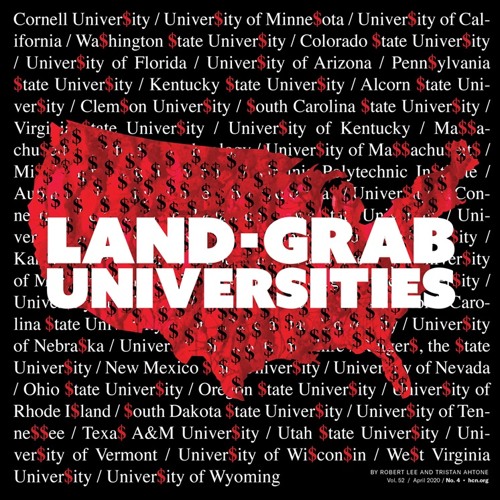




 Sonia Tycko for “The Legality of Prisoner of War Labour in England, 1648-1655,” Past and Present 246 (Feb 2020), 35-68.





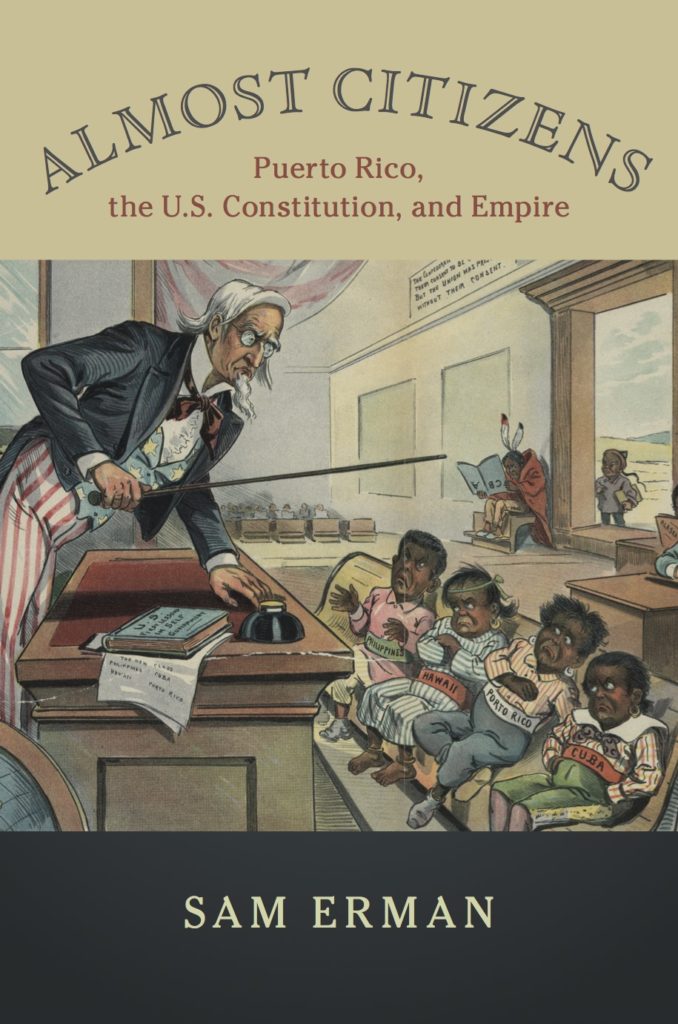


 Sam Erman of the University of Southern California for






 Bianca Premo of Florida International University and Yanna Yannakakis of Emory University for “



 Smita Ghosh, a graduate of Penn Law School and a doctoral candidate in history at the University of Pennsylvania, for her paper, “Policing the ‘Police State’: Detention, Supervision, and Deportation During the Cold War.”
