
In Memoriam
William E. Nelson
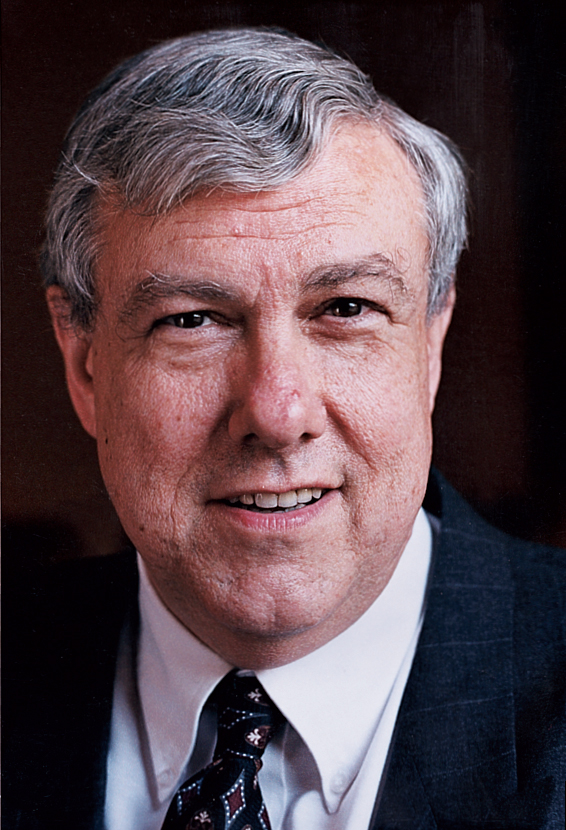
Bill Nelson, who died three months ago, was a pivotal and transformative figure in the growth of the field of American legal history. His scholarship included several monuments and field defining works. His mentorship was unmatched. Because of him, the Golieb Seminar at NYU Law School became a necessary way station for two generations of budding legal historians. And his generosity of spirit was legendary. He changed many lives, all for the better.
Bill was both an intense and serious historian and an even more intense and serious lawyer. But he also engaged with both law and history with an incredible sense of fun and joy. His work was always marked by an amazing work-ethic and what can only be called sitzfleisch. He read cases and cases and cases. He believed in reading everything, all the primary documents. When he covered a subject, he did so in ways that no else one ever did. Selectivity and sampling were not his ways. Coverage was. And the results could be immensely revealing. He worked hard, and he worked fast. And he left an extraordinary body of scholarship.
In many ways, Bill was a child of the high tide of American liberalism. For him, the postwar world of Long Island he grew up in, in which the children and grandchildren of immigrants flourished, marked a good society. He acknowledged racism and sexism and economic inequality and all the ways that liberalism failed. But he retained a deep commitment to the promises and achievements of the New Deal and postwar America. And one should add that he always remained uncomfortable with a variety of critical stances and perspectives, particularly those that came to prominence in legal academia in the last two decades of the twentieth century. He was an unapologetic liberal legalist.
His educational record was a triumphal march, both through law school at New York University School of Law and graduate school in history at Harvard University. The march was interrupted with clerkships, first with U.S. District Court Judge Edward Weinfeld, a clerkship traditionally reserved for the top student at NYU Law School, and a clerkship with Byron White on the U.S. Supreme Court. While working on his dissertation at Harvard, he held several distinguished fellowships there, before he began law school teaching. While at Harvard, he was also a member of a group of young legal historians that gathered at the law school in the late 1960s, including Morton Horwitz and Stanley Katz. Together that group made American legal history an exciting and innovative field. The modern history of the American Society for Legal History can be said to begin with their work.
His teaching career began at the University of Pennsylvania Law School, then at Yale Law School, before returning to his alma mater, NYU, where he would spend the rest of his teaching career. At NYU, he played a crucial role in the life of the law school, teaching throughout the curriculum, building connections to the rest of the university, and making NYU a leading (for some time, the leading) place to come to work on American legal history.
He had two mentors: One was John Reid, who made him a legal historian, when Bill was a law student at NYU Law School, and who became his close friend and colleague and collaborator. The other was Bernard Bailyn, the historian at Harvard who inspired Bill as a scholar and whose influence can be found in everything that Bill wrote. Both Reid and Bailyn also modeled the intense hard work and continuing curiosity, as well as the intellectual and personal generosity, that came to mark Bill.
He began his work in the high tide of the emergence of a social history of law. And his first book, the Americanization of the Common Law embodied a kind of modernization argument as well as a claim that the Revolution underwrote an American modernization. At the same time, working with others, he played an important role in the publication of colonial records. And throughout his life, he retained an interest and a love for the study of Colonial America. But in the course of his career he ranged across the whole of American history. Many of his later books focused more on constitutional history and the central political and constitutional transitions in American life. And in doing so, Bill played an important role in the changes that have marked the field of American legal history for the past generation.
He was a master both of close reading and of surveying a vast array of sources. To point to just a few highlights: his exploration of the debates over the passage of the 14th Amendment remains the best resource for anyone interested in that still live question in our politics. His later book on the judicial history of New York in the twentieth century, as always founded on herculean research, argued that the foundations of modern liberalism can be seen in that judicial history. Later on he decided to write a survey of colonial legal history, which ended up in four volumes. In those, he remained somewhat old-fashioned in his desire to find a germ for the future, particularly for American judicial review, in the late colonial records. And we argued a lot about that.
Meanwhile, in the Golieb Seminar, a weekly gathering of legal historians, he (for many years with John Reid) offered a welcoming occasion for many of us to present our work, early and late. The fellowship attached to that seminar became something close to a crucial apprenticeship for anyone hoping for a law teaching career doing legal history. And for others, some of whom did not know themselves until then as legal historians, the Golieb Seminar became a site where they could safely try out new identities. The Golieb Seminar could be said to have seduced them into our field.
And after retirement, he continued to hold weekly meetings, now by zoom, where many of us “gathered.” Bill’s usual opening — “I see two problems with this work, . . .” always began a vigorous argument. And his opening was helpful, even if often some of us disagreed with his diagnosis. Here and elsewhere he always remained an amazing reader of others, across many different fields. Always generous, always trying to find what was good in what was inevitably flawed work. The goal remained: how to help someone produce the best work possible. And in many cases, how to get her or him started on a career.
If I may write personally about Bill: He edited my first article, in the spring of 1976. For Bill, editing was something one did in person (and he always remained somewhat technologically challenged). He invited me down to New Haven, where he had just begun teaching. We walked in the cemetery while eating sandwiches. He told me what I needed to do to make my argument stronger (in part mine was a critique of an article and then a chapter in Bill’s recently published Americanization book.), and he told me that an article had to get from point A to point B, advice he took from Bailyn. And the piece became a much better one for his advice. It was the first time I had been edited so generously and helpfully.
Then, more than thirty years later, I edited Bill, when he finished his monumental study of New York law across the twentieth century. I don’t think I was as good an editor as Bill was. But what I noticed was how eager he was for criticism and engagement, how undefensive he would be. He liked the process. And I found it almost frightening how quickly he edited what he had done in light of my comments.
I taught with him in a constitutional history seminar at the New-York Historical Society in the fall of 2015. It was fun, though sometimes stressful, since we often disagreed. But there were many moments when his brilliance kicked in. I remember one session where he took apart and then rebuilt the Palsgraf decision, while reminding the group of all the cases that surrounded Palsgraf. It was a truly brilliant performance, and a model for teaching. As always I learned a great deal from him.
Altogether, Bill embodied a scholarly and pedagogical life that all of us should aspire to. And that is not to say anything here about the immense intensity and loving care he lived and embodied as a family man and as a good friend.
We all miss him. But hold him in our memory.
Hendrik Hartog